Feature story
Nature’s Vibrant Winged Wonders: Celebrating the World’s Most Beautiful Birds
From the dense, misty rainforests of Central America to the sunbaked savannahs of Africa and the icy coastal cliffs of the North Atlantic, birds paint the natural world with their vivid hues and unique charm. These creatures are more than just visually stunning, they play vital roles in maintaining ecosystem balance, from pollinating plants to dispersing seeds. Each species carries its own story of adaptation, survival, and cultural significance, making them true treasures of the animal kingdom. This guide explores some of the most breathtaking birds on Earth, highlighting their beauty, habitats, and the importance of protecting them for future generations.
Charlotte Hayes
Writer
Lounge note
Settle in — the full story and key updates are below.
Desk
Entertainment
From the dense, misty rainforests of Central America to the sunbaked savannahs of Africa and the icy coastal cliffs of the North Atlantic, birds paint the natural world with their vivid hues and unique charm. These creatures are more than just visually stunning, they play vital roles in maintaining ecosystem balance, from pollinating plants to dispersing seeds. Each species carries its own story of adaptation, survival, and cultural significance, making them true treasures of the animal kingdom. This guide explores some of the most breathtaking birds on Earth, highlighting their beauty, habitats, and the importance of protecting them for future generations.
Introduction to Nature’s Stunning Winged Creatures
Birds enrich the natural world with their bright plumage and intricate feather patterns. These colors are not just for show—they serve critical purposes, like attracting mates during courtship or helping birds blend into their surroundings to avoid predators. Every shade and pattern is a result of nature’s ingenuity, shaped by evolution to support the bird’s survival.
The science behind bird colors is equally fascinating. Warm tones like reds and yellows come from pigments called carotenoids, while iridescent blues and greens are created by light refracting off tiny structures in the feathers. This combination of pigments and structural coloration produces the dazzling sheens seen in many species, adding to their allure.
Birds also hold deep cultural meaning across civilizations. For example, the peacock symbolizes divinity in Hinduism, and the quetzal was sacred to the Maya and Aztec peoples. These connections show how birds inspire art, religion, and storytelling, bridging the gap between nature and human culture. Yet, many of these beautiful species face threats like habitat loss and climate change, making conservation efforts more important than ever.
Resplendent Quetzal: The Jewel of Central America
Nestled in Central America’s misty cloud forests, the Resplendent Quetzal boasts emerald-green plumage, a ruby-red chest, and long tail feathers that can reach three feet—creating a majestic, graceful appearance. It relies on these forests for wild avocados, a key part of its diet, highlighting its tight link to this delicate ecosystem.
Beyond its beauty, the quetzal holds deep cultural weight: it was sacred to the Maya and Aztec civilizations and now serves as Guatemala’s national bird, with its image gracing the country’s currency. Sadly, deforestation and climate change shrink its habitat, making cloud forest protection crucial for its survival. Ecotourism spots like Costa Rica’s Monteverde Cloud Forest offer chances to see it while supporting conservation.
Mandarin Duck: A Symbol of Love and Beauty
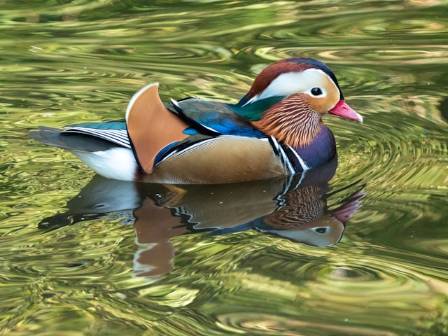
In East Asia’s calm waterways, the mandarin duck stands out with kaleidoscopic plumage—males show vibrant orange “sail” feathers during courtship, while females have soft, camouflaged tones. Its hollow feathers boost buoyancy and insulation, helping it thrive in wetlands where it plays a key ecological role.
Culturally, it symbolizes marital faithfulness in China, featuring in traditional weddings as a good-luck charm. Notably, it nests in trees (rare for waterfowl) and has established non-native populations in UK parks. Conservation efforts focus on protecting its native wetlands to keep ecosystems balanced, preserving both its beauty and ecological value.
Golden Pheasant: A Burst of Color in the Forest
Deep in China’s mountain forests, the golden pheasant dazzles with bright plumage—males have a golden crest, red belly, and intricately patterned cape, though they’re surprisingly shy, hiding in thick undergrowth. It forages on insects, grains, and berries, supporting forest ecological balance by controlling insect populations and spreading seeds.
Introduced populations in Europe (especially the UK) face habitat fragmentation challenges. Compared to relatives like Lady Amherst’s pheasant, it’s more colorful but equally elusive. As a prime example of nature’s artistry, preserving its forest habitat is key to keeping this vibrant species thriving.
Paradise Tanager: A Rainbow in the Amazon
In the Amazon’s heart, the small Paradise Tanager sports turquoise, green, yellow, and black feathers, a living rainbow that helps it blend into sun-dappled canopies, evading predators. It mainly eats fruit (supplemented with insects for protein) and plays a vital role in rainforest regeneration by dispersing seeds.
Its remote Andean foothills habitat makes studying it difficult, but its unique color mix sets it apart from other tanagers like the Green-headed Tanager. A testament to the Amazon’s biodiversity, it captivates scientists and bird lovers alike, emphasizing the need to protect this vital ecosystem.
Scarlet Macaw: The Vibrant Parrot of the Rainforest
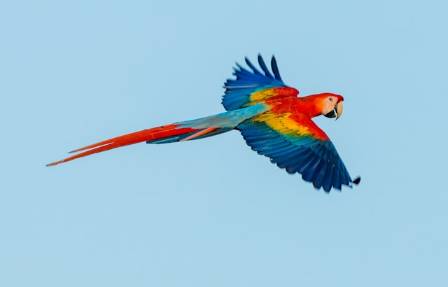
The scarlet macaw, iconic of Central and South American rainforests, stuns with bright red, blue, and yellow feathers. It relies on clay licks for essential minerals and uses its strong beak to crack tough nuts, while its monogamous bonds (lasting decades) and 60-year lifespan highlight its social, intelligent nature.
Habitat loss from deforestation and the illegal pet trade threaten its survival, though efforts like those in Guatemala’s Maya Biosphere Reserve show promise. Supporting macaw adoption programs and ecotourism helps protect this species, which is key to rainforest biodiversity.
Lilac-Breasted Roller: A Colorful Gem of Africa
Amid African savannahs, the lilac-breasted roller shines with eight plumage colors including a lilac chest and turquoise crown. It hunts by perching high to spot insects and lizards, then diving with precision, showcasing its agility and sharp eyesight.
Culturally, it symbolizes bravery in Maasai warrior traditions, with its feathers used in ceremonies. More colorful than the European Roller (and preferring open savannahs over woodlands), it performs aerial somersaults during courtship. Protecting it preserves both its beauty and its role in the savannah ecosystem.
Atlantic Puffin: The Clown of the Sea
Along North Atlantic coasts, the Atlantic puffin (dubbed the “clown of the sea”) has black-and-white plumage and a bright triangular beak that turns from gray to orange in breeding season—helping attract mates. It nests in cliff burrows, uses wings like flippers to swim underwater, and can carry up to 30 fish in its beak.
Major colonies thrive in Iceland and Newfoundland’s cold waters, but overfishing and ocean warming threaten them. In folklore, it’s a symbol of resilience in Norse and Canadian tales. Protecting its coastal habitat ensures this adaptable, charming bird remains part of the marine ecosystem.
Rainbow Lorikeet: A Splash of Color in Australia
Australia’s rainbow lorikeet adds vibrancy to skies with blue, green, yellow, and orange feathers. Its brush-tipped tongue lets it feed on nectar and pollen, making it an essential pollinator for eucalyptus trees, while it also spreads seeds via fruit in its diet.
Highly social, it forms noisy flocks in urban and forested areas though urban populations sometimes raid fruit crops. Its UV-reflective feathers aid mate attraction, and it features in Aboriginal Dreamtime stories as a symbol of joy. Protecting it supports Australia’s native plant life and cultural heritage.
Keel-Billed Toucan: The Colorful Icon of the Tropics
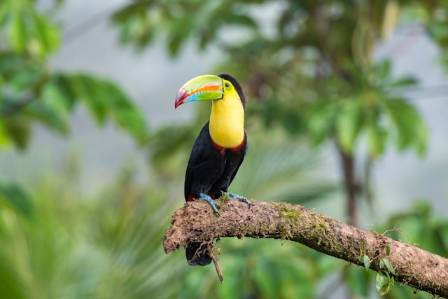
In Central American rainforests, the keel-billed toucan’s rainbow-like beak and red, green, and yellow plumage make it an iconic tropical symbol. Its lightweight, serrated beak helps eat fruit and regulate body temperature (via expanding/contracting blood vessels), keeping it cool in heat.
It nests in tree hollows and spreads seeds, supporting rainforest regrowth, and is Belize’s national bird—boosting ecotourism. Deforestation (especially from palm oil plantations) threatens it, but conservation efforts can protect this species and its habitat.
Indian Peafowl: The Majestic Peacock
Across India’s sunlit plains, the Indian Peafowl (peacock) has iridescent feathers and a fan-shaped tail with over 200 eye-patterned plumes—used in courtship displays, with nanostructures creating its dazzling sheen. Culturally, it’s linked to Hindu goddess Lakshmi (wealth) and featured in Mughal royal gardens and Indian dance.
Its heavy tail signals male fitness (the “handicap principle”) and aids reproduction. While it sometimes damages crops, buffer zones and alternative food sources balance conservation and agriculture. Protecting it preserves its cultural and ecological significance.
Wilson’s Bird-of-Paradise: A Masterpiece of Nature
On Indonesia’s remote Waigeo Island, Wilson’s Bird-of-Paradise has a fluorescent turquoise crown and curled tail wires. Males clear forest-floor “dance floors” for elaborate courtship displays—females choose mates based on dance precision with David Attenborough’s footage bringing this behavior to global attention.
More colorful than relatives like the King of Saxony Bird-of-Paradise, it relies on intact island habitats. Conservation partnerships with Papuan tribes protect it, ensuring this unique species remains a masterpiece of nature.
Gouldian Finch: The Rainbow Finch of Australia
In northern Australia’s woodlands, the Gouldian Finch has three color morphs (black, red, yellow-faced) and feeds on grass seeds, migrating to find food in dry seasons. A rare trait: its chicks’ sex depends on incubation temperature, showing evolutionary ingenuity.
Wild populations declined due to habitat loss, but captive breeding programs help preserve it. It features in Aboriginal rock art, and its vibrant colors set it apart from Australian finches like the Zebra Finch. Protecting its woodlands safeguards this rainbow-hued species.
Nicobar Pigeon: The Shimmering Pigeon of the Islands
On Indian Ocean islands, the Nicobar Pigeon (the largest living pigeon) has metallic green-copper hackles and a white tail. It disperses tropical hardwood seeds via fruit in its diet, aiding forest regeneration, and migrates in flocks between islands.
Invasive rats prey on its eggs and chicks, threatening populations. It’s evolutionarily linked to the extinct Dodo and feeds chicks with “pigeon milk.” Protecting its island habitats preserves this shimmering, ecologically vital bird.
Flamingo: The Pink Wonder of the Wetlands
In wetlands worldwide, flamingos’ pink plumage (from beta-carotene in algae/crustaceans) and long legs make them iconic. Their filter-like bills extract food from saline/alkaline lakes, where few species survive, and they form mud mounds for nesting to protect eggs.
They perform synchronized group dances to bond and vary in color (Greater Flamingos are pale pink, Andeans deeper-hued). Water pollution and mining threaten them, but conservation protects wetlands and this indicator of environmental health.
Conclusion: Celebrating and Protecting Avian Beauty
Birds’ beauty is intertwined with their ecological roles from pollination to seed dispersal—making their protection vital. Citizen science (like eBird), sustainable practices (choosing sustainable palm oil), and backyard bird-friendly spaces all help. Supporting organizations like Audubon ensures these winged wonders thrive for generations, letting us continue to marvel at nature’s artistry in every feather.
More to explore

· en
Hourglass Decor: Timeless Beauty for Your Home
Hazel Monroe
· en
The Essence of Shui-mo: Drawing Inspiration from Chinese Ink Traditions
Kate

· en
What Makes a Car a Classic, Vintage or Antique?
Lucas Anderson
· en
Moss Microlandscape: A Stunning Living Art Element for Your Space
Auren Whitlock
· en
The Giants That Shape Africa’s Ecosystems
Darien Wells
· en
All about the Common European Robin
Selene Marlowe