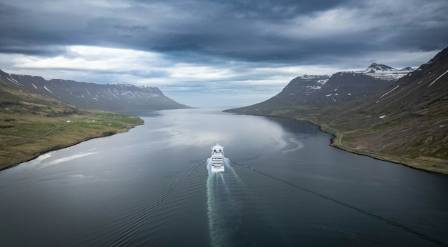
Feature story
The Shape of Iceland: Traveling Along the Fjords
There are destinations that capture your attention as soon as you arrive, while others reveal their beauty gradually. Iceland’s fjords are very much part of the latter. Their character emerges slowly through winding roads, changing coastlines, shifting weather, and the endless meeting point between mountains and sea. You do not simply stand and admire them. You move through them, travel alongside them, and follow their curves. Somewhere during that journey, sightseeing begins to feel like something deeper—a return to a feeling you may not have realized you had been searching for.
Nolan Mercer
Writer
Lounge note
Settle in — the full story and key updates are below.
Desk
Entertainment
There are destinations that capture your attention as soon as you arrive, while others reveal their beauty gradually. Iceland’s fjords are very much part of the latter. Their character emerges slowly through winding roads, changing coastlines, shifting weather, and the endless meeting point between mountains and sea. You do not simply stand and admire them. You move through them, travel alongside them, and follow their curves. Somewhere during that journey, sightseeing begins to feel like something deeper—a return to a feeling you may not have realized you had been searching for.
For many American visitors today, this may be one of Iceland’s strongest attractions. The country certainly offers spectacular scenery, but the appeal goes beyond dramatic views. What many travelers are seeking is room to breathe. They want to experience weather rather than simply check a forecast, drive roads that encourage a slower pace, and encounter landscapes that have not been transformed entirely for tourist convenience. In an age filled with notifications, screens, crowds, and tightly packed schedules, the fjords provide something increasingly rare: the opportunity to vanish into an environment that remains far bigger than any itinerary.
This is the side of Iceland that many travelers instinctively recognize before they know exactly how to describe it. They might initially plan their trip around waterfalls, volcanoes, black-sand beaches, or the famous route around the island. Yet beneath those plans, they may actually be looking for a completely different way of traveling. The fjords reveal that slower rhythm perfectly. They lengthen the journey, demand patience, and reward careful observation. They transform Iceland from a collection of famous attractions into a physical experience: chilly ocean air entering through a partly opened car window, clouds drifting across distant mountains, and the stillness of a narrow inlet reached after hours on the road.
Where Iceland Turns Inward
Geologically speaking, a fjord is a long, narrow sea inlet created by ancient glaciers and later filled with seawater. In Iceland, however, fjords influence much more than the outline of the coast. They determine how travelers navigate the country. Because roads cannot simply run directly across these deep inlets, they curve along the shoreline and follow the natural landscape. A journey is measured not only by distance but also by driving time, weather conditions, and the patience required to travel around another headland. Small communities settle wherever the terrain allows, often positioned between steep hillsides and the sea. Rather than adapting itself to the traveler, the landscape requires visitors to adjust to it.
This is one reason the fjord regions feel so unlike the Iceland that many people picture before arriving. Popular images often focus on dramatic scenes that make an immediate impression—a waterfall cascading from a cliff, geothermal steam rising from warm water, or blue ice standing against dark volcanic sand. The fjords are equally impressive, but their appeal develops over time. One inlet leads toward another, a mountain pass reveals another stretch of coastline, and a small fishing community appears in a location where you might expect the road to disappear. The experience becomes almost physical, as though you are following the natural script written by the island itself.
The Westfjords: Iceland at the Edge
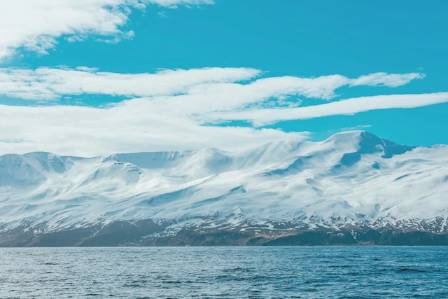
The Westfjords have a remarkable ability to make ordinary life feel extremely distant. Remote, rugged, and deeply divided by dramatic waterways, this region seems unwilling to be reduced to a simple version of Iceland. Roads hug the coastline wherever the terrain permits. Sheer cliffs tower above the ocean, while small settlements appear modest against a landscape that is much older and more imposing than human habitation.
It is precisely this sense of severity that gives the area so much emotional impact. The Westfjords remove many of the distractions found elsewhere. There is less to consume and far more to take in. Travelers become aware of changing weather patterns, the shapes and textures of the mountains, birds moving around the cliffs, and the long stretches between groups of houses. Even the silence carries a particular character. Rather than feeling like an absence, it can seem almost like another element of the landscape.
For travelers searching for a more isolated and untamed Iceland experience, Spectacular West provides a route through western landscapes influenced by volcanic terrain, glacier scenery, and the dramatic Westfjords. Iceland Grand Discovery is another appealing choice for visitors attracted to the region’s rough beauty, secluded locations, and less-traveled corners. These areas are not merely side trips away from Iceland’s main attractions. For many travelers, they become the most memorable part of the entire journey.
The Eastfjords: The Long Quiet
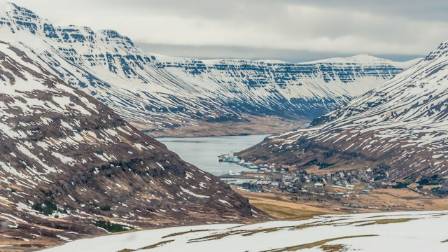
If the Westfjords represent Iceland in its most rugged and exposed form, the Eastfjords offer another expression of the country’s power. Their atmosphere is quieter and more contemplative, yet their beauty is just as striking. The fjords seem to fold into the mountains and open back toward the sea with almost sculptural elegance. Large mountains surround the water in broad, shadowed shapes, while coastal villages feel intimate instead of completely isolated. Long drives through this region create a gentle sense of discovery without demanding constant excitement.
This is the kind of Iceland that can surprise you precisely because it does not demand attention. The Eastfjords speak more quietly than many other parts of the island. You may not leave with one spectacular moment that stands out as clearly as a waterfall or glacier. Instead, what remains is a collection of impressions: pale light reflecting across calm water, mist settling near the road, a harbor becoming quiet at the end of the day, and the gradual realization that the landscape is teaching you to observe more carefully.
This understated beauty is one reason the Grand Tour of Iceland works so well for travelers seeking a broader experience. Rather than treating the fjords as scenery between more famous attractions, the journey incorporates both the Westfjords and Eastfjords into a larger progression, allowing travelers to notice how Iceland’s character changes as the coastline continues to curve and unfold.
The Real Luxury of Fjord Travel
The phrase “getting away from it all” is often used casually, but in Iceland’s fjords it can become surprisingly literal. You are not escaping into an imaginary world. Instead, you are entering an environment governed by distance, weather, mountains, and coastlines that establish their own pace. That experience can feel luxurious, although not because of traditional ideas of comfort or extravagance. The real luxury is having your attention returned to you.
A rewarding fjord journey should not be rushed. It needs space for ferries, spontaneous roadside stops, changing weather, and small details that would otherwise be missed. During the Grand Tour of Iceland, for instance, the route into the Westfjords includes a ferry crossing across Breiðafjörður Bay. The open water and scattered islands create a natural transition into a more secluded part of the country. Such moments are meaningful because they alter the atmosphere of the journey. You are not simply covering more kilometers; you are gradually entering another side of Iceland.
This is also why thoughtful planning matters so much when exploring the fjords. Their challenge is not necessarily that they are extremely difficult to reach. Instead, they are best experienced by travelers willing to avoid rushing. A good route needs to respect the shape of the land, allow enough time for each area, and incorporate local knowledge so that a remote journey feels connected and purposeful rather than like a complicated transportation problem.
For travelers who want the fjords to form the central focus of their Iceland adventure, Majestic Fjords offers perhaps the most direct interpretation of that idea. The itinerary emphasizes the Westfjords and Eastfjords, together with steep coastal inlets, dark sandy beaches, volcanic landscapes, and distinctive local communities. It is designed around the idea that the goal is not simply to move through the scenery, but to experience the journey according to the rhythm of the landscape.
Why the Fjords Stay With You
An unforgettable journey is rarely created by beauty alone. Stunning scenery is now available almost everywhere through photographs and videos. You can spend hours scrolling past extraordinary landscapes without actually feeling connected to them. What remains meaningful is the experience of entering a place deeply enough that it changes the speed and texture of your thoughts.
The fjords have that ability. They slow you down without making you feel as though you are wasting time. They bring quiet without making the experience feel empty. They create an unusual relationship between travel and landscape in which movement itself becomes part of the destination. Following the shoreline beneath a mountain for hours does not seem like a delay; it feels like exactly what you came to experience. A ferry crossing becomes part of the story. A tiny village appearing through the rain can become as memorable as a major landmark. Eventually, the journey forms a lasting image in your mind: winding coastlines, extended daylight, deep water, towering cliffs, and the freedom of being somewhere that does not need to impress you.
This explains why travelers who initially say they are visiting Iceland for its scenery often return describing something more difficult to put into words. They remember the quiet. They remember the openness. They remember the atmosphere and the sensation of being distant enough from everyday routines to hear their own thoughts once again.
Finding Your Route Into Iceland’s Fjords
Fortunately, this more personal side of Iceland does not have to remain an idea. With the right planning, it can become the focus of an actual journey. Travelers who want a trip centered around the fjords can begin with Majestic Fjords. Those hoping to combine the fjords with a broader exploration of the country may prefer Grand Tour of Iceland, which incorporates the distinctive atmosphere of both the Westfjords and Eastfjords. For visitors especially interested in the rougher landscapes of western Iceland, Spectacular West and Iceland Grand Discovery both offer routes designed around that experience.
If you are still deciding which kind of Iceland adventure suits you best, exploring the complete collection of Iceland tours can help you compare different approaches to the country. The ideal journey may not be the one designed simply to collect famous landmarks. Instead, it may be the one that matches your desire for a landscape that feels open, rugged, spacious, and genuinely connected to nature.
Ultimately, this is what Iceland’s fjords provide. They are more than another collection of beautiful places to see. They offer a deeper way of experiencing the country. The coastline twists, opens, and continually draws you farther along. The journey is shaped not by speed but by observation. And once you have spent time following the contours of these remarkable landscapes, their presence can remain with you long after you have left Iceland.
More to explore

· en
The Real Reason Roosters Make So Much Noise Every Single Morning
Foster Julian
· en
Britain's Stunning Solitary Trees
Oliver Kingsley

· en
The Ultimate Jelly Bean Ranking: Best Brands for Your Easter Basket
Marcus Chen
· en
London Bridge Has Fallen Down—But It Keeps Coming Back
Daniel Sullivan

· en
How Long Is a Tamandua’s Tongue?
Seren Blake
· en
The Most Inspiring Villages in the World
Cindy Johnson