Feature story
Humanoid Robotics: History, Today, and Challenges
Humans have always been intrigued by the question of what defines our own nature. This fascination has been explored extensively across both scientific research and artistic expression, including literature and cinema.
Lucien Ward
Writer
Lounge note
Settle in — the full story and key updates are below.
Desk
Entertainment
Humans have always been intrigued by the question of what defines our own nature. This fascination has been explored extensively across both scientific research and artistic expression, including literature and cinema.
In the 1920s, Czech writer Karel Čapek’s play Rossum’s Universal Robots introduced the term “robot” to describe human-like entities created solely to perform monotonous labor. This work profoundly influenced modern thought, inspiring the pursuit of machines—humanoids—that not only resemble humans physically but also demonstrate intelligence, reasoning, and interactive capabilities. This ambition has driven the development of robots that replicate human physical, cognitive, and social functions through coordinated motion, perception, and interaction.
Humanoid robotics is a key branch of biomimetic robotics, bridging engineering and computer science with social, legal, and ethical considerations. Early projects underestimated the complexity of creating human-like robots, yet advances in theory and technology have now enabled the creation of sophisticated humanoid machines, complementing classical Automata and Karakuri robots.
A pivotal development in humanoid robotics was Miomir Vukobratović’s zero-moment point (ZMP) theory of stability in the 1960s. Around the same time, Ichiro Kato of Waseda University, Japan, developed WABOT, the first humanoid robot capable of both static and dynamic balance. These pioneers laid the groundwork for decades of research. In 1997, Honda unveiled the Humanoid P2 at the IEEE International Conference on Intelligent Robots and Systems (IROS) in Grenoble, France, followed by the iconic ASIMO robot in 2000. ASIMO captured public attention with its human-like appearance, natural gait, automatic slope adjustment, stair-climbing abilities, and interactive capabilities, inspiring a new wave of researchers to further the development of humanoid robots.
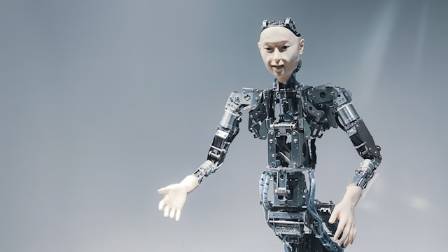
The 2015 DARPA Robotics Challenge, following the Fukushima nuclear disaster, showcased significant progress in humanoid robotics, though performance still fell short of expectations. Clearly, further research is needed—not just in mechanics and control but also in perception, recognition, and real-world interaction—before humanoid robots can truly act, reason, and interact like humans.
In building humanoid robots, providing extensive sensorimotor functions is crucial, while developing novel methods can inform task-specific service robots and other engineering domains. Notable achievements include bipedal locomotion, adaptive learning, neuro-inspired control, predictive architectures, and a range of bioinspired functionalities, making humanoids more capable in practical environments.
Humanoids also serve as research platforms for understanding humans. Neuroscience, for example, benefits from humanoid robots as experimental models of the human brain, allowing testing and validation of neural theories while providing humanoids with human-like sensorimotor abilities. At the start of this century, Mitsuo Kawato of ATR Japan suggested using humanoids to study human behavior. In Europe, numerous EU-funded projects—including NEUROBOTICS and RobotCub—have advanced these efforts, resulting in platforms such as iCub for cognitive development studies. Today, the Human Brain Project features a neurorobotics platform dedicated to implementing brain models on humanoid robots.
While the agility of Boston Dynamics’ Atlas and the conversational skills of Hanson Robotics’ Sophia are impressive, major challenges remain. Bipedal locomotion, dexterous manipulation in complex environments, perception, human-robot collaboration, intention understanding, behavioral learning, and emotion sensing remain open research areas. Integrating a comprehensive “robot brain” that combines multiple functions, decision-making mechanisms, and efficient simplicity is a continuing challenge. On the mechanical side, advances in materials and morphological computation are needed to intrinsically balance and stabilize movement. Beyond technical hurdles, social, legal, and ethical considerations are essential for humanoids to integrate seamlessly into human societies.
Milestones and Platforms
Humanoids aim to integrate innovations from multiple disciplines, including advanced locomotion, manipulation, biomechanics, AI, machine vision, perception, learning, cognition, and behavioral studies. For this special issue of humanoid robotics, we received submissions covering biomimetic design, stability and autonomous control, adaptive walking over rough terrain, natural gaiting, fall prevention, adaptive behavior, robotic learning, real-time visual recognition, multi-robot collaboration, human-robot interaction, and psychological studies, among others. Selected papers are included here, with further research to appear in future issues of Science Robotics. The editors thank all contributors and hope this field continues to advance, focusing on real-world applications as expected by society, beyond controlled laboratory environments.
More to explore

· en
What are the 5 main types of chilli pepper?
Ronan Pierce

· en
Most Comfortable Outdoor Chairs to Unwind at Home
Devon Pierce

· en
The Real Reason Roosters Make So Much Noise Every Single Morning
Foster Julian

· en
Top 5 Most Comfortable Sofas of 2026
Miles Lawson

· en
The Art of Modern Washū: 9 Architect-Designed Living Rooms & Key Elements of Elevated Style
Daisy Chapman

· en
Latte Art for Beginners: What It Is & How to Make It
Calista Bloom