Feature story
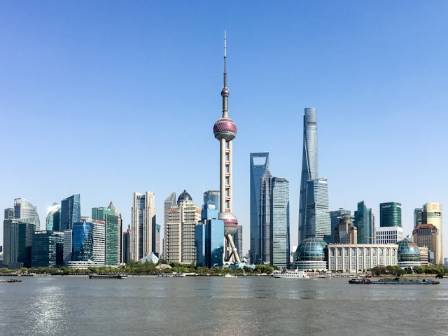
The Bund: Classical Architecture in Shanghai
Quan (Jerome) Zhai is the founder of the Shanghai Study Group of Classical Architecture and an architecture enthusiast based in Shanghai. He is also passionate about promoting American road trips and U.S. National Parks through his personal media platforms. From 2015 to 2018, Quan lived in Maryland, USA. Throughout his career, he has worked as a marketing communication specialist across various industries in China.
Raphael Sinclair
Writer
Lounge note
Settle in — the full story and key updates are below.
Desk
Entertainment
Quan (Jerome) Zhai is the founder of the Shanghai Study Group of Classical Architecture and an architecture enthusiast based in Shanghai. He is also passionate about promoting American road trips and U.S. National Parks through his personal media platforms. From 2015 to 2018, Quan lived in Maryland, USA. Throughout his career, he has worked as a marketing communication specialist across various industries in China.
All photographs featured in this article were taken by Quan (Jerome) Zhai.
According to historical records, Shanghai was originally a small fishing village and trading settlement. During the 19th century, the city rapidly developed because of its strategic port location and expanding international trade. After the First Opium War, Shanghai became one of the five treaty ports opened to foreign commerce. The Shanghai International Settlement and the French Concession were later established, transforming the city into a major commercial and financial center in the Asia-Pacific region by the 1930s. From the 1860s to the 1930s, The Bund became the heart of Shanghai’s wealth, influence, and international activity.
The Historical Background of The Bund
Understanding Shanghai’s history helps explain why the city possesses such a remarkable collection of Western-style historic architecture, especially along The Bund. Today, The Bund is not only Shanghai’s most iconic sightseeing destination but also remains an important financial and commercial area.
The Bund is a waterfront district located along a section of Zhongshan Road. It stretches approximately one mile along the western shore of the Huangpu River, beginning near the intersection of Zhongshan Road and Yan’an Road and extending southward to Waibaidu Bridge.
Within this historic area, 22 heritage buildings stand directly beside the river, along with two former British consulate buildings located inside courtyards. These structures are assigned unique addresses ranging from No.1 Bund to No.33 Bund. Some numbers have been preserved or merged and will never be reused.
The Best Time to Visit The Bund
The ideal moment to appreciate The Bund’s historic buildings is about one hour after sunrise. During the early morning, the streets are quieter, traffic is lighter, and large tourist groups have not yet arrived.
As the sun rises behind the skyscrapers across the Huangpu River, golden light gradually illuminates the detailed facades of the century-old buildings, revealing their architectural beauty in a peaceful atmosphere.
No.2 Bund: The Shanghai Club Building
The classical architecture journey begins with No.2 Bund, the second Shanghai Club building completed in 1910. Originally designed as the leading social club for British residents in Shanghai, the building is now part of the Waldorf Astoria Shanghai.
The six-story structure, with five floors above ground, represents Renaissance Revival architecture combined with rich Baroque decorative elements. Its front facade follows a three-part composition. The entrance features a Palladian-style arch with two circular openings on the spandrels, recalling the design of the Basilica Palladiana.
Six red granite Ionic columns extend across the second and third floors, while alternating pediments decorate the spaces between the columns. Beneath the Baroque-style cupolas are two Diocletian windows surrounded by carved decorative swags, which are also repeated above the main entrance arch.
The Shanghai Club’s facade is widely considered one of the most impressive architectural designs along The Bund. The British contractor Moorhead & Halse contributed this remarkable building to Shanghai.
No.7 Bund: The Great Northern Telegraph Building
The Great Northern Telegraph Building at No.7 Bund is another outstanding example of Renaissance architecture. Completed in 1908 and designed by Atkinson & Dallas Architects and Civil Engineers Ltd., the building displays many classical Renaissance features.
Its symmetrical three-part facade, alternating pediments on the second floor, and Ionic columns surrounding windows on the third and fourth floors demonstrate the influence of classical European design.
Two segmented iron domes supported by octagonal drums add distinctive Baroque characteristics, making the building stand out among its neighbors.
No.9 Bund: China Merchants Steam Navigation Company Building
The China Merchants Steam Navigation Company Building, located at No.9 Bund, is the oldest and shortest structure on The Bund.
Built in 1901 by the British firm Morrison, the building belonged to one of the earliest state-owned enterprises established during the Qing Dynasty. It represents China’s early efforts toward modernization.
The three-story structure combines brick, stone, wood, and steel. Classical Roman influences can be seen in the masonry arches on the first floor, the portico design on the upper levels, and the roof pediments. The arrangement of Corinthian columns above Tuscan columns follows traditional classical architectural principles.
No.12 Bund: The HSBC Building
Originally constructed as the headquarters of HSBC and later used as the Shanghai Municipal Government Building, No.12 Bund is regarded as the grandest structure along The Bund and one of Shanghai’s most recognizable landmarks.
Completed in 1923, it was once the largest banking building in the Far East and became a symbol of Shanghai’s prosperous “Gilded Age.” Designed by the British architectural firm Palmer & Turner, this six-story Beaux-Arts masterpiece features a highly balanced and decorative facade.
The river-facing facade follows a five-part composition, with two end pavilions, recessed side sections, and a central entrance crowned by monumental columns leading toward the dome.
The lower section features rustic stone arches, while the middle section uses paired columns, creating a design reminiscent of the Thomas Jefferson Building at the Library of Congress.
The magnificent dome maintains perfect proportions with the rest of the building and remains one of its most striking elements. A unique detail is the “Chinese-Greek composite order,” where traditional Chinese geometric patterns replace the traditional scroll designs of composite capitals.
Inside the building, the beauty continues. The octagonal entrance hall contains eight mosaic murals depicting cities where HSBC branches operated. The dome ceiling is decorated with frescoes showing the twelve zodiac signs along with symbolic representations of the sun and moon.
No.15 Bund: Russo-Chinese Bank Building
Completed in 1902, the Russo-Chinese Bank Building at No.15 Bund was designed by Heinrich Becker, the first Prussian architect working in China.
The elegant Beaux-Arts structure includes decorative arched windows with mascaron keystones and angel sculptures. Additional mascaron details appear along the frieze, while roof ornaments known as acroterions enhance the building’s distinctive appearance.
No.16, No.18 and No.24 Bund: Classical Neoclassical Designs
The Bank of Taiwan Building at No.16 Bund features a raised platform and tetrastyle portico. Its side walls contain six pilasters, creating the appearance of a Roman pseudoperipteral temple.
The Chartered Bank Building at No.18 Bund and the Yokohama Specie Bank Building at No.24 Bund were completed between 1922 and 1924. These two structures share many similarities and represent Neoclassical architecture, especially through their central sections dominated by large Ionic columns.
No.19 Bund: Palace Hotel
The Palace Hotel at No.19 Bund was reconstructed in 1906 and became one of The Bund’s finest Renaissance-style buildings.
Although its main entrance faces Nanjing Road, the eastern facade facing The Bund adds vibrant color and elegance to the waterfront. Different window sizes and decorative pediments create a rich visual rhythm across the facade.
No.29 Bund: Banque de l’Indochine Building
The Banque de l’Indochine Building combines Renaissance and Baroque influences. Designed by Atkinson & Dallas in an Italian Renaissance style, it follows the classical three-part facade arrangement.
Its magnificent entrance is one of the most beautiful on The Bund, featuring a Baroque arch, a broken pediment with a central trophy design, and decorative cartouches in various patterns.
Other Classical Architectural Highlights Around The Bund
Classical elements can also be found in the Eclectic architecture of The Bund. The entrance of the Custom House at No.13 Bund, for example, features four enormous Greek Doric columns inspired by the Parthenon.
The North China Daily News Building at No.17 Bund was Shanghai’s tallest building when completed in 1924. Its upper section features two Baroque cupolas, decorative windows, and a Doric portico supported by eight Atlantes sculptures.
The Jardine Matheson Building at No.27 Bund is famous for its impressive rusticated lower facade with large masonry arches. However, additional floors added in 1982 changed its original proportions.
Interestingly, the first row of buildings along The Bund does not feature large Corinthian orders. Some of Shanghai’s finest Corinthian columns are located nearby, such as those in the Chinese Banking Association Building on Hong Hong Road, whose interior columns closely resemble those of the Pantheon.
Another remarkable nearby structure is the Shanghai General Post Office Building, an Eclectic-style masterpiece with the longest classical facade and portico in both Shanghai and China. Today, it houses the Shanghai Post Museum.
The Gatehouse of Shanghai General Chamber of Commerce
The final classical structure highlighted here is the gatehouse of the Shanghai General Chamber of Commerce courtyard.
Designed as a triumphal arch, the facade features a central opening framed by Corinthian columns with Greek-inspired capitals. The arch faces Suzhou Creek, which was once a major commercial waterway.
Today, the historic gatehouse stands surrounded by modern buildings, creating a fascinating contrast between Shanghai’s past and present.
The Timeless Beauty of The Bund
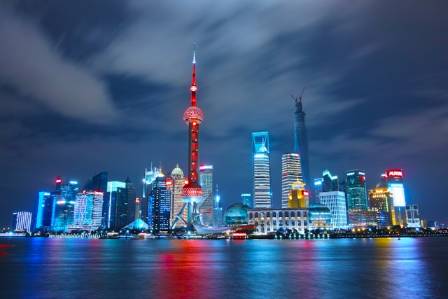
The classical and modern architecture of The Bund represents a unique meeting point between Eastern and Western cultures. It remains an extraordinary destination for architects, historians, students, and travelers interested in design and urban heritage.
This article only introduces a small selection of the many remarkable buildings found on The Bund and throughout Shanghai. Countless architectural details, stories, and discoveries are still waiting for visitors to explore.
More to explore
· en
Little Switzerland in the East — Zhuo’er Mountain
Lucas Bennett

· en
Kangaroos are the largest animals that move by hopping.
Ethan Parker

· en
Hourglass Decor: Timeless Beauty for Your Home
Hazel Monroe
· en
Tokyo Tower
Charlotte Mae Thompson
· en
A Delicious Dive into the Morning Traditions of China
Dylan Cross

· en
Principles of Selecting Ideal Women’s Sportswear for Every Activity
Harold Davenport