Feature story
Evolution of Submersibles and Deep Sea Exploration Operations
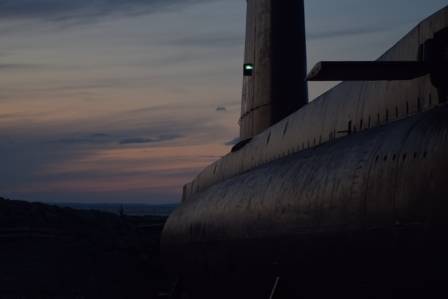
Humanity has sought methods to travel beneath the ocean surface for research, exploration, and military operations since ancient times. Primitive diving bells and early hand-powered submersibles laid the foundation for modern underwater engineering. The introduction of internal combustion engines, electric batteries, and nuclear reactors expanded underwater vessel capabilities dramatically. Submarines played pivotal roles in major global conflicts throughout the twentieth century. Beyond military applications, submersibles contribute to oceanographic research, deep-sea exploration, and maritime rescue operations. Modern submersibles feature advanced propulsion platforms, state-of-the-art sonar systems, and specialized life-support apparatus.
Julian Marshall
Writer
Lounge note
Settle in — the full story and key updates are below.
Desk
Entertainment
Humanity has sought methods to travel beneath the ocean surface for research, exploration, and military operations since ancient times. Primitive diving bells and early hand-powered submersibles laid the foundation for modern underwater engineering. The introduction of internal combustion engines, electric batteries, and nuclear reactors expanded underwater vessel capabilities dramatically. Submarines played pivotal roles in major global conflicts throughout the twentieth century. Beyond military applications, submersibles contribute to oceanographic research, deep-sea exploration, and maritime rescue operations. Modern submersibles feature advanced propulsion platforms, state-of-the-art sonar systems, and specialized life-support apparatus.
Antiquity and Early Conceptual Designs for Submerged Travel
The concept of submerged travel dates back thousands of years. Early divers utilized hollow reeds for breathing during underwater military operations in ancient times. Historical accounts suggest Alexander the Great utilized primitive diving bells during naval sieges to observe underwater barriers. European inventors began drafting detailed designs for enclosed underwater vessels during the sixteenth century. William Bourne conceptualized an adjustable wooden submersible sheathed in waterproof leather in fifteen seventy-eight. Bourne designed an internal ballast system that adjusted water volume using wooden screw plungers.
Cornelius Drebbel constructed the first operational submersible in sixteen twenty. Drebbel operated his wooden craft beneath the Thames River using submerged oars for propulsion. Constantijn Huygens documented Drebbel maneuvering his submersible beneath the surface while maintaining atmospheric pressure for passengers. Drebbel utilized heated saltpetre chemical reactions to generate oxygen inside the sealed cabin continuously. Mathematician John Wilkins highlighted the strategic potential of underwater travel in sixteen forty-eight. Wilkins noted that submersibles offered covert transport, protection from surface storms, and tactical advantages against enemy fleets.
Denis Papin built two metallic submersibles in the late seventeenth century utilizing air pumps to regulate internal pressure and buoyancy. Nathaniel Symons patented the first functional ballast tank mechanism utilizing leather bags in seventeen forty-seven. Mechanics twisted the water out of the bags using internal levers to surface the craft. These early technological milestones demonstrated the feasibility of controlled underwater navigation.
Early Modern Military Submersibles and Mechanical Innovation
The American Revolution saw the deployment of the first military submersible, known as the Turtle, in seventeen seventy-six. David Bushnell designed the single-person, hand-powered craft to attach explosive charges beneath enemy warships. The Turtle represented the first vessel to utilize screw propellers for vertical and horizontal movement. Robert Fulton constructed the Nautilus in eighteen hundred, featuring dual propulsion systems that utilized surface sails and submerged hand cranks. The French navy evaluated the Nautilus after successful mine demonstrations, but ultimately abandoned the project.
Submersible technology advanced significantly during the nineteenth century across several nations. Karl Shilder constructed a rocket-equipped submarine for the Russian military in eighteen thirty-four. Jose Rodriguez Lavandera built the Hipopotamo in Ecuador during eighteen thirty-seven, crossing the Guayas River successfully. Wilhelm Bauer constructed the Brandtaucher in Germany in eighteen fifty-one, using an internal treadwheel for propulsion. Julius Kroehl engineered the Sub Marine Explorer in eighteen sixty-three, featuring a pressurized dive chamber for pearl harvesting.
The French navy launched the Plongeur in eighteen sixty-three, marking the first submersible powered by mechanical engines. The vessel utilized compressed air engines but struggled with submerged maneuverability. Narcis Monturiol engineered the Ictineo II in Spain during eighteen sixty-seven, introducing the first combustion-powered, air-independent propulsion system. Monturiol utilized chemical steam generation that released oxygen into the hull for the crew. Robert Whitehead developed the self-propelled torpedo in eighteen sixty-six, transforming submersibles into formidable military systems.
George Garrett constructed the Resurgam in eighteen seventy-nine, featuring a closed-cycle steam engine that stored latent heat for submerged travel. Swedish industrialist Thorsten Nordenfelt refined Garrett's designs to produce steam-powered military submersibles armed with torpedoes. The Nordenfelt I and subsequent models demonstrated submerged torpedo launches, sparking global interest from major naval powers.
Electric Power Integration and the Birth of Modern Submarines
The development of high-capacity electric storage batteries during the eighteen eighties revolutionized underwater propulsion. Polish engineer Stefan Drzewiecki constructed the first electric-powered submersibles in Russia in eighteen eighty-one. James Waddington built the Porpoise in England, using electric battery sets to drive a single propeller for hours. French engineer Gustave Zede completed the Gymnote in eighteen eighty-eight, featuring electric gyrocompasses and hydroplane control surfaces.
Isaac Peral launched an all-electric submarine for the Spanish Navy in eighteen eighty-eight. The Peral submarine featured bow torpedo tubes, regenerative air systems, and cruciform control surfaces. The late nineteenth century saw rapid integration of internal combustion engines for surface travel combined with electric batteries for submerged operations.
Irish inventor John Philip Holland perfected the modern submarine design during the late eighteen nineties. The Holland Type VI utilized a gasoline engine on the surface and electric motors while submerged. The United States Navy purchased the design in nineteen hundred, commissioning it as the USS Holland. Britain, Russia, and several other nations licensed Holland's patented designs to establish their initial submarine fleets. French engineer Maxime Laubeuf developed the double-hull design with the Narval in nineteen hundred, placing a heavy pressure hull inside an outer streamlined shell.
Submarine Fleet Expansion Through Global Conflicts and Beyond
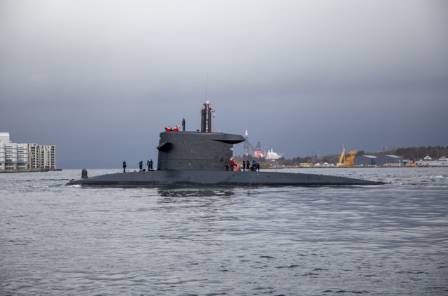
Submarine technology advanced rapidly prior to the outbreak of World War I. Royal Navy D-class submarines introduced diesel engines, saddle ballast tanks, wireless radio masts, and bow deck guns. Diesel engines replaced dangerous gasoline power plants, extending operational ranges significantly. Imperial Germany commissioned the U-1 in nineteen zero-six, establishing its formidable U-boat fleet. German engineers refined U-boat designs to carry multiple torpedo tubes and heavy deck guns.
German engineer James Richardson patented an early submarine snorkel design in nineteen sixteen, allowing diesel engines to run while submerged at periscope depth. German naval forces implemented operational snorkels during World War II to avoid detection by surface radar. The introduction of nuclear propulsion in the mid-twentieth century eliminated the need for atmospheric oxygen entirely, allowing submarines to remain submerged indefinitely. Modern submersibles serve diverse roles today, including deep-sea scientific research, oceanographic mapping, commercial salvage, and national defense.
More to explore

· en
The Top 6 Classic Coupés
Grace

· en
A Guide to Train Travel in the USA
Leon Fairmont

· en
9 Amazing Secrets of Snowy Mountain Ranges
Ethan Carter

· en
French Custard Tart: A Timeless Classic Reinvented
Emma
· en
The Astonishing Way Suzhou Seamlessly Blends Ancient Waterways With Futurist Skyscrapers
Lucian Everhart

· en
5 Must-Have Coats for Winter
Victoria