Feature story
The Top Classic Muscle Cars of All Time
American muscle cars defined the golden era of automotive culture during the 1960s and 1970s. With massive V8 engines, tire-shredding torque, and bold, aggressive styling, they delivered an unfiltered driving experience that left a lasting mark on car history and enthusiast culture.
Isabella Clarke
Writer
Lounge note
Settle in — the full story and key updates are below.
Desk
Entertainment
American muscle cars defined the golden era of automotive culture during the 1960s and 1970s. With massive V8 engines, tire-shredding torque, and bold, aggressive styling, they delivered an unfiltered driving experience that left a lasting mark on car history and enthusiast culture.
Modern interpretations have tried to capture that same spirit. Cars like the Dodge Challenger SRT Hellcat and Ford Shelby GT500 revived classic muscle DNA with modern engineering and tech, but tightening emissions rules have gradually pushed many of these icons out of production, much like what happened to their predecessors decades ago.
Still, collectors, restorers, and fans keep the legacy alive. Many of these machines survive in private collections, museums, or occasionally on the street. Below is a curated list of some of the most legendary American muscle cars ever built.
1970 Ford Mustang Boss 429
The Mustang name is legendary, but the Boss 429 sits in a special category. Built primarily to homologate Ford’s massive 429 cubic-inch V8 for NASCAR, it featured extreme performance hardware and a seriously aggressive look with hood scoops and functional vents everywhere.
It was rated at around 375 horsepower and 450 lb-ft of torque, though real output was likely higher. Paired with a four-speed manual, it delivered brutal acceleration for its era. Fewer than 500 units were made in 1970, and its rarity has made it one of the most desirable Mustangs ever produced.
1969 Chevrolet Camaro ZL1
The Camaro started as a competitor to the Mustang, but the ZL1 version turned it into something far more extreme. Built under Chevrolet’s COPO ordering system for drag racing, it featured an all-aluminum 427 cubic-inch V8 engineered for maximum strength and performance.
Official figures listed around 430 horsepower and 450 lb-ft of torque, though many enthusiasts believe real output was significantly higher. Only about 50 were built, making it one of the rarest performance Camaros ever made.
1970 Dodge Challenger T/A
The Challenger T/A was a special homologation model created for Trans Am racing. It stood out with its matte black hood, hood scoop, and bold racing stripes, giving it an unmistakably aggressive identity.
Power came from a 340 cubic-inch V8 with a trio of two-barrel carburetors, producing roughly 290 horsepower. Lightweight tuning and racing intent made it a serious competitor in its class, and its limited production ensures its collectible status today.
1971 Plymouth Barracuda Hemi ‘Cuda
By 1971, the Barracuda had evolved into a true muscle icon. The top-tier Hemi ‘Cuda came equipped with a 426 cubic-inch Hemi V8 delivering around 425 horsepower and 490 lb-ft of torque.
Available in coupe and convertible form, it featured bold styling, including the famous shaker hood scoop. Extremely rare manual convertible versions exist in very small numbers, and high-quality examples regularly achieve multi-million-dollar auction prices.
1970 Chevrolet Corvette ZR1
The ZR1 package turned the Corvette into a focused performance machine. It used the LT-1 350 cubic-inch small-block V8 with high-compression internals and performance upgrades, producing around 370 horsepower.
While not the most powerful Corvette of its time, it is highly respected for its balance of lightweight design and sharp handling. Its styling, inspired by the Mako Shark concept, remains one of the most iconic Corvette shapes ever created.
1966 Pontiac GTO
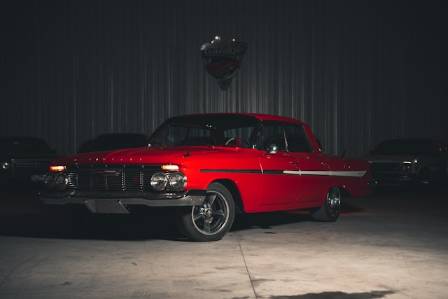
Often credited as one of the first true muscle cars, the GTO began as an option package before becoming its own model. It offered V8 engines producing between 335 and 360 horsepower, depending on configuration.
With its stacked headlights and long, clean body lines, the 1966 version is especially admired for its balanced styling. It could be ordered as a coupe or convertible and helped define the muscle car era.
1970 Chevrolet Chevelle SS 454
The Chevelle SS 454 is one of the most famous big-block muscle cars ever built. Its LS6 454 cubic-inch engine produced about 450 horsepower and 500 lb-ft of torque, making it a street and strip legend.
With fewer than 5,000 units produced with this setup, it remains highly collectible. Performance was impressive even by modern standards, with strong acceleration figures thanks to its massive torque output.
1969 Plymouth Road Runner
Designed as a budget-friendly performance car, the Road Runner delivered serious speed without luxury pricing. It offered big V8 options, including 440 and 426 Hemi engines.
The car was known for its simplicity, light weight, and strong straight-line performance. It later served as the foundation for the aerodynamic Superbird NASCAR homologation car, further boosting its legacy.
1970 Dodge Charger R/T
The Charger R/T became one of the most recognizable muscle cars ever built, thanks to its long fastback design and hidden headlight grille. It could be equipped with engines ranging from big-block V8s to the legendary 426 Hemi.
With horsepower ratings up to roughly 425, it was capable of mid-five-second 0–60 mph times—extremely fast for its era. It remains one of the most iconic American performance cars.
1969 Pontiac Firebird Trans Am
The Firebird Trans Am debuted as a performance-focused version of the Firebird lineup. The Ram Air IV variant used a 400 cubic-inch V8 producing around 345 horsepower.
Finished in distinctive white with blue striping, it became instantly recognizable. Extremely limited production numbers make surviving examples especially valuable today.
1970 Oldsmobile 442
The 442 name originally referenced its performance package roots, and by 1970 it had evolved into a full muscle car. It came with a 455 cubic-inch V8 producing around 365 horsepower, with performance W30 versions offering even more.
With strong torque and aggressive styling upgrades, it delivered serious straight-line speed while still maintaining Oldsmobile’s slightly more refined character.
1987 Buick GNX
The GNX broke the traditional muscle car formula by using a turbocharged V6 instead of a V8. Despite that, it produced around 276 horsepower and massive torque, delivering shocking acceleration for its time.
It could sprint from 0–60 mph in under five seconds, outperforming many exotic cars of the era. Today, it’s widely regarded as one of the most underrated performance cars in American history.
1971 Plymouth GTX
The GTX offered multiple high-performance V8 options, including 440 cubic-inch engines and the 426 Hemi. Output ranged up to around 425 horsepower depending on configuration.
A redesign in 1971 gave it a more aggressive front end and coupe profile. While not as famous as the Road Runner or Charger, it remains a strong example of Mopar muscle engineering.
1970 Ford Torino Cobra
The Torino Cobra often flies under the radar, but it packed serious performance. Its 429 cubic-inch V8 produced around 370 horsepower and strong torque output.
With available manual and automatic transmissions, it could hit 60 mph in about six seconds. Ford even developed prototype aero versions capable of extreme speeds, showing its racing ambitions.
1969 AMC AMX/3
AMC’s AMX/3 was a rare mid-engine experiment that stood apart from typical American muscle cars. It used a mid-mounted V8 producing around 340 horsepower.
Its design resembled European supercars of the era, blending exotic styling with American engineering. Only a handful were built before the project was discontinued, making it one of the rarest entries on this list.
More to explore
· en
The Dramatic Story of McLaren and Its Quest for Motorsport Glory
Nathan Collins

· en
6 Greek Yogurt Breakfast Bowls to Brighten Your Mornings
Katie Wells

· en
Coastal Towns and Villages
Rowan Sinclair

· en
The Best Sci-Fi Spaceships from Across the Galaxies
Eleanor Price

· en
The Most Breathtaking Coastal Scenery in the World: Must-Visit Ocean Destinations
Merry

· en
Virat Kohli's Border - Gavaskar Trophy 2024 - 25 Woes: Form Recovery Tactics
Cam