Feature story
The world’s most realistic humanoid robots ever
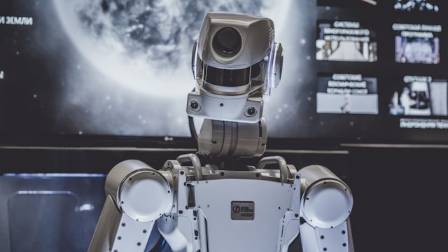
Humanoid robots are increasingly designed to resemble human appearance and behavior, and many now rely on artificial intelligence to support decision-making and interaction. Over the decades, they have evolved from simple mechanical demonstrations into highly advanced systems used in research, communication, and real-world applications such as caregiving, manufacturing, and exploration.
Vincent Hale
Writer
Lounge note
Settle in — the full story and key updates are below.
Desk
Entertainment
Humanoid robots are increasingly designed to resemble human appearance and behavior, and many now rely on artificial intelligence to support decision-making and interaction. Over the decades, they have evolved from simple mechanical demonstrations into highly advanced systems used in research, communication, and real-world applications such as caregiving, manufacturing, and exploration.
One of the earliest known humanoid robots was “Elektro,” built in the 1930s by Westinghouse Electric Corporation. Standing about 7 feet (2.1 meters) tall, Elektro could walk, speak roughly 700 words, inflate balloons, and even simulate smoking a cigarette. It was showcased at the 1939 New York World’s Fair and is widely considered one of the first humanoid robots introduced to the public. Elektro also appeared alongside a robotic dog named Sparko, making it a landmark demonstration of early robotics.
Decades later, humanoid robotics has advanced dramatically. Modern systems can now imitate human speech, gestures, emotions, and behavior using AI and machine learning. These robots are no longer just exhibition pieces; they are increasingly being developed for practical roles such as assistance, healthcare, industrial work, rescue missions, and scientific research.
Below are five of the most lifelike humanoid robots ever created, selected for their human resemblance and expressive capabilities.
Sophia
Sophia is a humanoid robot developed by Hanson Robotics, a company based in Hong Kong that focuses on AI-driven robotic systems for healthcare, education, research, and entertainment. Since its activation in 2016, Sophia has gained global attention for its highly expressive face and human-like interaction style.
Sophia uses artificial intelligence and neural networks combined with natural language processing, allowing it to hold conversations, respond to questions, and simulate eye contact and facial expressions. It can also recognize human gestures and emotional cues, adapting its responses based on interaction history.
The robot has appeared at major global events such as CES and United Nations technology conferences, where it demonstrated conversational abilities in public settings. It is designed to improve over time through machine learning based on real interactions.
One of Sophia’s most notable milestones was being granted citizenship by Saudi Arabia in 2017, making it the first robot to receive legal recognition of this kind. It has also been named a UN Development Programme innovation ambassador. According to its creators, Sophia is intended for roles such as elder care assistance, customer service, education, and companionship.
Ameca
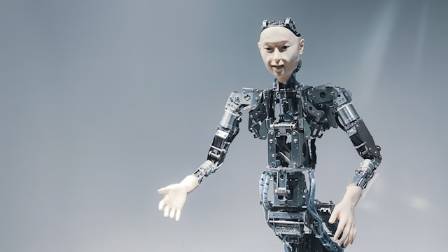
Ameca is a highly expressive humanoid robot created by Engineered Arts in the United Kingdom and first revealed in 2021. It is widely known for its extremely realistic facial expressions and smooth motion capabilities.
Equipped with cameras in its eyes and microphones in its ears, Ameca can perceive faces, voices, and environmental cues. Its modular mechanical design allows independent movement of the face, head, arms, torso, and hands, enabling lifelike gestures such as blinking, smiling, and reacting in real time.
Ameca runs on Engineered Arts’ Tritium operating system, which supports remote control functions and fast interaction processing. It is designed primarily as a research and demonstration platform for artificial intelligence, human-robot interaction, and robotics development.
Although walking capability is still under development, Ameca is already used in exhibitions, public demonstrations, and research environments to study how humans respond to highly realistic robotic faces.
Geminoid DK
Geminoid DK, introduced in 2011, is part of the Geminoid series developed through collaboration between Japanese robotics expert Hiroshi Ishiguro and researchers at Aalborg University in Denmark.
This robot was designed to closely replicate the appearance of Professor Henrik Scharfe, including detailed facial structure, skin texture, and even facial hair. Its construction includes a metal skeleton covered in silicone skin, along with embedded mechanical components that simulate natural facial movements.
Unlike fully autonomous robots, Geminoid DK is primarily teleoperated. It mirrors the expressions and movements of a human operator using motion capture technology, while sensors and cameras allow the operator to see and hear through the robot in real time.
The purpose of Geminoid DK is to study human reactions to lifelike robotic replicas of real individuals, particularly in social interaction scenarios.
Nadine
Nadine is a social humanoid robot developed at Nanyang Technological University in Singapore in collaboration with Japanese robotics company Kokoro. It is modeled after Professor Nadia Magnenat Thalmann, a pioneer in digital human research.
Nadine is designed for roles such as receptionist work, social companionship, and assistance for individuals with special needs. It can perform tasks like storytelling, video communication, email interaction, and conversational engagement.
The robot supports multiple languages and can recognize faces, remember past interactions, and respond with context-aware behavior. It also displays emotional expressions and can adjust its behavior based on how it is treated by users.
Its control system follows a Perception–Decision–Action framework. Sensors such as cameras and microphones collect environmental data, which is processed by decision-making algorithms, and then translated into physical expressions or spoken responses.
BINA48
BINA48 is a humanoid bust-style robot developed by Hanson Robotics in collaboration with entrepreneur Martine Rothblatt. Unlike full-bodied humanoid robots, BINA48 consists of a head and shoulders mounted on a stationary base.
It was created as part of a project exploring digital consciousness and the concept of mind uploading. The system uses detailed “mindfiles,” which are digital archives containing personality traits, memories, beliefs, and personal experiences of a real individual.
BINA48 is modeled after Bina Aspen, Rothblatt’s wife, with the goal of preserving aspects of her personality in a robotic form. Over 100 hours of personal data were used to build its conversational and behavioral model.
The robot is capable of internet connectivity, speech, and facial expressions through multiple motors controlling emotional gestures. It has been described as highly advanced in simulating human-like conversation and self-awareness within its programmed limitations.
The name BINA stands for Breakthrough Intelligence via Neural Architecture, and the number 48 refers to its system design and computational framework.
More to explore

· en
Indoor Plants: A Year-Round Source of Wellness
Olivia Bennett

· en
How to Grow and Care for Asparagus Fern
Emma Wallace

· en
Vietnamese Fresh Spring Rolls
Evelyn Ravenscroft
· en
The Most Inspiring Villages in the World
Cindy Johnson

· en
The Symbolism of Koi Fish in Asian Cultures You Should Know
Roy

· en
10 Fun Facts About the Berlin TV Tower
Shelly