← Back home2 min read
Feature story
Ethan Parker
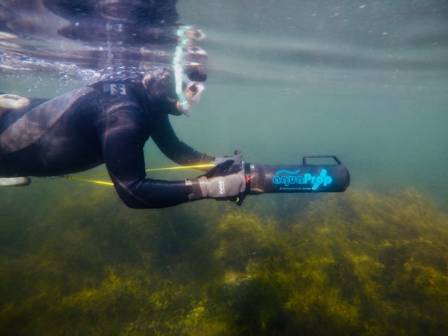
Gliding silently through oceans and lakes, underwater robots—also known as unmanned underwater vehicles (UUVs)—have become indispensable tools for science, industry, and environmental monitoring.
6
6 Key Roles Filled by Underwater Robots
Writer
Lounge note
Settle in — the full story and key updates are below.
Desk
Entertainment
Gliding silently through oceans and lakes, underwater robots—also known as unmanned underwater vehicles (UUVs)—have become indispensable tools for science, industry, and environmental monitoring. These machines are used for mapping, research, inspection, and recovery operations in places too deep, dangerous, or inaccessible for humans.
What Are Underwater Robots?
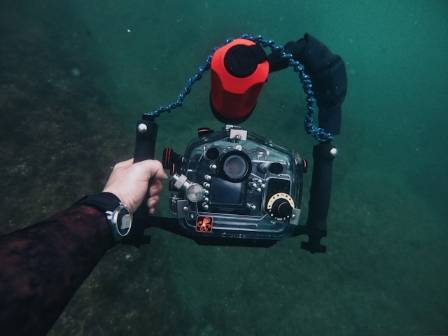
UUVs fall into two main categories: autonomous underwater vehicles (AUVs), which navigate independently using AI, and remotely operated vehicles (ROVs), which are controlled by humans from a distance. AUVs are often torpedo-shaped or eel-like, designed for smooth movement through water, while ROVs usually have a boxy frame equipped with cameras, propellers, and manipulator arms.
AUVs can follow pre-programmed paths or use AI to adapt to changing conditions, operating independently in remote areas. ROVs are ideal for tasks requiring close observation and careful control, such as salvage missions or precise inspections.
Applications of UUVs
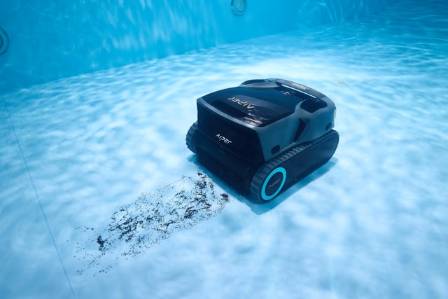
Thanks to their small size and maneuverability, underwater robots can explore extreme depths and perform tasks humans cannot.
1.Mapping the Ocean Floor Despite space exploration advances, much of the seafloor remains unmapped. UUVs equipped with sonar are helping projects like Seabed 2030 chart the ocean floor, revealing underwater topography and previously unknown regions.
2.Studying Marine Life Underwater robots monitor marine ecosystems, capture images, measure temperature, salinity, and currents, and collect water or sediment samples. This data helps biologists understand behavior, habitats, and the health of coral reefs and other ocean environments.
3.Searching Shipwrecks and Crashes Robots can survey wrecks and debris without disturbing sites, providing high-resolution images, maps, and sometimes even recovering artifacts. In 2021, UUVs helped locate two B-52 bombers lost in 1967 and assisted in recovering crew remains.
4.Maintaining Offshore Structures In oil and gas operations, UUVs inspect pipelines and rigs, detecting corrosion or damage while performing maintenance tasks like cleaning, reducing risks for human workers.
5.Detecting Trash and Pollution Equipped with AI and sensors, underwater robots identify and locate plastic, metal, and rubber waste. Some carry bioreporter microbes that glow in response to toxins, allowing researchers to quickly assess water quality. These robots can also sample microorganisms to evaluate ecosystem health and pollution levels.
The Future of Underwater Robotics
Advances in battery life, AI, and sensor technology promise longer missions and more complex capabilities. From environmental monitoring to scientific discovery and industrial inspections, underwater robots are rapidly becoming essential tools for exploring Earth’s last frontier.
More to explore

· en
5 Must-Have Coats for Winter
Victoria

· en
Oil Painting: A Profound Outlet for Self-Expression
Mason Blake

· en
Top 8 Fascinating Secrets of Baku’s Maiden Tower
Jack

· en
How to Grow and Care for Asparagus Fern
Emma Wallace

· en
5 Sustainable "Cities of the Future" Redefining Urban Living
William Brown

· en
Discovering Grace Bay: A Turquoise Treasure of the Caribbean
Alex