← Back home2 min read
Feature story
Tapirs: Ancient Relatives of Horses and Rhinos
Tapirs may look like unusual pigs with small trunks, but they are actually much closer relatives of horses and rhinoceroses.
C
Chloe
Writer
Lounge note
Settle in — the full story and key updates are below.
Desk
Entertainment
Tapirs may look like unusual pigs with small trunks, but they are actually much closer relatives of horses and rhinoceroses. Their evolutionary history is extremely ancient, and scientists believe that tapirs have remained relatively unchanged for millions of years, making them some of the world’s most remarkable surviving mammals
Behavior and Feeding
Tapirs have a short, flexible snout that works like a small trunk. This specialized nose and upper lip can move and grasp objects, helping them collect food.
They use this trunk-like structure to pull leaves from branches and pick fruits from plants. Tapirs usually feed during the early morning and evening when temperatures are cooler.
During these active periods, they travel along narrow pathways through dense vegetation. These trails are gradually created by generations of tapirs moving between feeding areas and water sources.
As they eat fruits and move through the forest, tapirs spread seeds through their droppings. In this way, they help support the growth and regeneration of tropical plants.
Life in Water
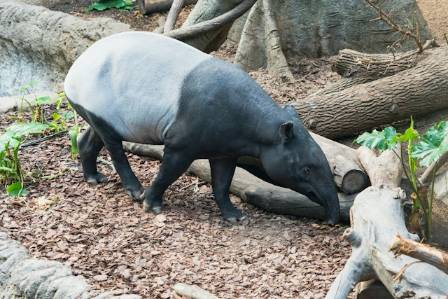
Although tapirs have large, heavy-looking bodies, they are highly comfortable in aquatic environments. They frequently enter rivers and pools to cool themselves down.
These animals are strong swimmers and can even dive underwater while searching for aquatic plants. They also enjoy rolling and resting in mud, which may help protect their thick skin and remove parasites such as ticks.
Different Tapir Species

Most New World tapirs are found in the forests and grasslands of Central and South America. One unusual species is the mountain tapir, also known as the woolly tapir, which lives at high elevations in the Andes Mountains.
The mountain tapir gets its name from its thick, insulating coat that helps it survive in colder mountain environments. It is also the smallest species of tapir.
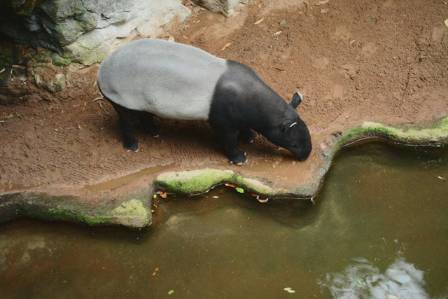
The largest tapir species lives in the Old World, specifically in Southeast Asia. The Malayan tapir, recognized by its distinctive black-and-white coloring, can reach weights of up to 800 pounds (360 kilograms). It inhabits tropical forests and swamp areas of Malaysia and Sumatra.
Threats and Conservation
All tapir species face conservation challenges. Their populations have declined mainly because of habitat destruction and hunting.
As forests continue to disappear, these ancient mammals are losing the habitats they need for food, shelter, and survival.
More to explore

· en
Davenport Pier Swing – How To See This Hidden Gem
Lyanna Foster

· en
Top Four Iconic Aqueducts in France
Brielle Montrose

· en
Mountain Lakes of the High Sierra
Elara Winslow
· en
The Real Difference Between Alpacas and Llamas And Why It Matters
Hayward Benjamin

· en
5 Pespectives for Understanding the Dynamics of Social Media in Public Opinion Formation
Dominic

· en
Cute Rabbits to Draw
Taylor Reed