Feature story
Exploring the Life and Secrets of Squirrel Monkeys
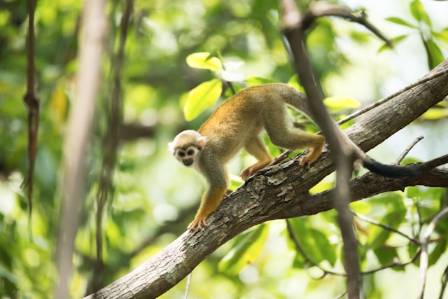
Squirrel monkeys are small-bodied primates with a body length of about 9 to 14 inches and a weight ranging from 1.3 to 2.5 pounds. Females are generally slightly smaller than males. Their tails are longer than their bodies, usually measuring between 14 and 17 inches, and they rely on these long tails for balance as they travel through the forest.
Hazel Moore
Writer
Lounge note
Settle in — the full story and key updates are below.
Desk
Entertainment
Squirrel monkeys are small-bodied primates with a body length of about 9 to 14 inches and a weight ranging from 1.3 to 2.5 pounds. Females are generally slightly smaller than males. Their tails are longer than their bodies, usually measuring between 14 and 17 inches, and they rely on these long tails for balance as they travel through the forest.
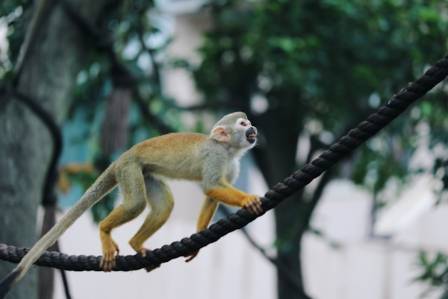
These agile monkeys move through the trees by jumping from branch to branch. Their body structure is specially adapted for leaping, with shorter thighs compared to their lower legs, which helps increase their jumping ability. While moving through the canopy, their tails act as stabilizers. Squirrel monkeys also produce musk that spreads through their fur. This scent serves several functions, including marking territory, discouraging predators, and helping other members of their group follow their path.
Unlike many other New World monkeys, squirrel monkeys do not have a grasping tail that can be used to hold onto branches.
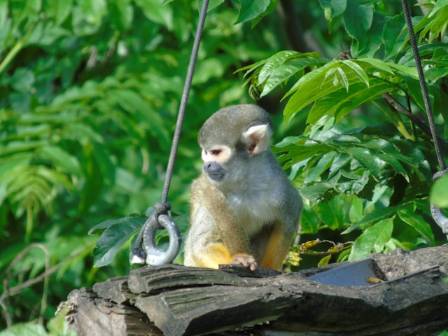
Squirrel monkeys have dense, soft, short fur. Their lips and the area around their nostrils are black and hairless. Most individuals have white fur around the eyes, ears, throat, and sides of the neck, while the crown of the head ranges from black to gray. The rest of the body is usually covered in reddish or yellowish fur, especially along the back, limbs, and tail. The end of the tail is typically black.
Habitat and Ecology
Squirrel monkeys live throughout Central and South America, with the largest populations occurring in the Amazon Basin and nearby regions. They can be found in countries including Brazil, Bolivia, Peru, French Guiana, Suriname, Guyana, Venezuela, Colombia, and Ecuador.
One species, the black-crowned Central American squirrel monkey, lives in Costa Rica and Panama. These primates inhabit both mature forests and regenerating forests, especially areas near rivers and streams.
They use different layers of the forest but spend much of their time traveling and searching for food in the lower canopy and understory regions.
Diet
Squirrel monkeys are omnivorous animals, although fruit makes up an important part of their diet. During the early morning hours, they mainly focus on locating and gathering fruit. For the remainder of the day, they search for insects, spiders, and other small creatures.
When the dry season arrives and fruit becomes less available, squirrel monkeys rely much more heavily on animal-based foods. Their diet usually consists of small invertebrates, but they may also consume bird eggs or young birds when opportunities arise.
Behavior and Social Life
Squirrel monkeys are highly social animals that live in groups ranging from around 12 individuals to as many as 300. These groups usually contain more females than males, though several males may also live within the same community.
Males are often dominant over females, but social rankings can vary depending on location and even among different populations of the same species. Squirrel monkeys are frequently seen associating with capuchin monkeys, forming mixed-species groups while moving through the forest.
Communication is an important part of their daily lives. They use a wide variety of vocal signals, with at least 26 different calls identified by researchers. When traveling, they often move in a line, following routes previously used by other members of their group.
Reproduction
The breeding period for squirrel monkeys usually occurs between September and November. Both males and females may mate with multiple partners during this time.
Pregnancy lasts approximately five to six months. The timing of births is closely connected to seasonal food availability, allowing infants to arrive when insects and other arthropods are especially abundant.
Newborn squirrel monkeys remain closely attached to their mothers, usually riding on their backs during the first month of life. This close contact provides protection and support during their early development.
Conservation Status
Several different species of squirrel monkeys exist, and their conservation situations vary. Most species are currently classified as Least Concern by the IUCN Red List. However, some species face greater risks, including the golden-backed squirrel monkey, which is listed as Near Threatened, and the black-crowned Central American squirrel monkey and black squirrel monkey, which are considered Endangered.
The biggest threats facing these primates include habitat destruction caused by deforestation and expanding human development. Because squirrel monkeys depend on connected forest environments, gaps created by roads or other human activities can prevent populations from moving between areas. Over time, this habitat fragmentation can isolate groups and reduce their chances of survival.
Squirrel monkeys have also been targeted by the illegal wildlife trade. Like other primates, they are not suitable as household pets. They are intelligent animals with complex social requirements, and when kept in unsuitable environments, they may develop destructive behaviors.
Another unusual behavior is urine washing. Squirrel monkeys often urinate on their hands and then rub the scent onto their fur, using it to communicate and mark their surroundings. While this behavior is natural in the wild, it makes them especially challenging animals to keep in a home environment.
Interesting Facts
Squirrel monkeys have one of the highest brain-to-body mass ratios among all primates. Their brain size relative to their body is about twice the proportion found in humans.
Female squirrel monkeys have a unique structure known as a pseudo-penis, which they use as a visual signal to display dominance over smaller individuals.
Squirrel monkeys practice urine washing, spreading urine onto their hands and feet before rubbing it onto their bodies as a way to mark territory and communicate with others.
More to explore

· en
Desk Buying Guide
Kate Fletcher

· en
Why Autumn Leaves Are a Hidden Treasure for Your Lawn
Sienna Lowell

· en
A Beginner's Guide to Watercolor Flowers
Noah Flynn

· en
Top 8 Fascinating Secrets of Baku’s Maiden Tower
Jack

· en
How to Grow & Care for Anthurium
Cleo Bennett

· en
A Lakeside Swedish Log House In The Snow
Callum Hayes