Feature story
Capybaras: Get to know the world’s largest rodent
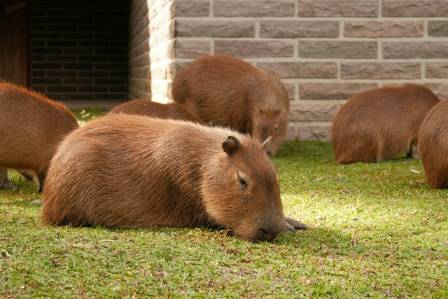
Capybaras have become a major sensation across the internet. Their calm temperament, sociable personalities, and famously unhurried way of life have made them stars of social media.
Soren Calloway
Writer
Lounge note
Settle in — the full story and key updates are below.
Desk
Entertainment
Capybaras have become a major sensation across the internet. Their calm temperament, sociable personalities, and famously unhurried way of life have made them stars of social media.
However, there is much more to these unusual animals than their popularity in viral videos. Behind their relaxed appearance is a fascinating collection of adaptations and behaviors that many people may not know about.
How Many Species of Capybara Are There?
Capybaras are mammals that belong to the order Rodentia, the group that contains more than 2,000 species of rodents. The genus Hydrochoerus contains two recognized species: the greater capybara and the lesser capybara.
The greater capybara is the species most people are familiar with. It holds the distinction of being the largest rodent in the world. Adults can reach approximately 1.3 metres in length and weigh more than 60 kilograms. Females are generally a little larger than males.
Greater capybaras are distributed throughout South America and are closely associated with habitats where water is readily available. They can be found in wetlands, swamps, and open grasslands.
The lesser capybara is considerably smaller, reaching around 28 kilograms in weight and approximately one metre in length. Unlike the greater capybara, it tends to favor forested environments and shaded wetlands. Its distribution is more limited, occurring in parts of northern South America and southern Panama.
The two species also differ in appearance. Greater capybaras have sturdy, heavy-set bodies covered in coarse fur that resembles straw, while lesser capybaras have a more slender build and softer, darker coats.
The name of their genus, Hydrochoerus, comes from a Greek term meaning “water pig.” The species name of the greater capybara, hydrochaeris, is also derived from Greek and combines words associated with “water” and feelings of happiness or joy.
Capybaras are particularly well suited to spending time in water. Their eyes, ears, and nostrils are positioned toward the top of their heads, allowing them to remain largely submerged while still being able to see, hear, and breathe.
What Do Capybaras Eat?
Capybaras are primarily herbivores and mainly consume tough, fibrous plants such as grasses. Because this type of vegetation can be difficult to break down and digest, obtaining enough nutrients from their food can be challenging.
They have a way of dealing with this problem called coprophagy, which involves eating their own feces again. Rabbits and cows also use similar digestive strategies. By passing the food through their digestive system a second time, capybaras can absorb nutrients that were not fully extracted during the first passage.
Their teeth are also specially adapted to their plant-based diet. Like other rodents, capybaras have continuously growing incisors. These sharp, chisel-shaped front teeth must be regularly worn down to prevent them from becoming excessively long. Chewing materials such as bark, coarse grasses, and aquatic vegetation helps keep their incisors at an appropriate length.

What Kind of Lifestyle Do Capybaras Have?
Wild capybaras are highly social animals. They generally live in groups of approximately 10 to 20 individuals, with both males and females included. During the dry season, when available water becomes limited, these groups can become considerably larger, sometimes reaching around 30 animals.
Group living is an important part of capybara survival, so finding one completely alone in the wild is relatively unusual.
Females generally give birth to between two and eight young at a time. Capybara pups are precocial, meaning they are relatively well developed when they are born. They can stand, walk, and begin grazing very soon after birth.
Mothers usually nurse their offspring until they are around three months old. Interestingly, young capybaras do not necessarily feed only from their own mother. They may also nurse from other females within the group.
Young capybaras remain with their parents' social group until they are approximately one year old. Their first year is particularly dangerous because they are vulnerable to numerous predators. These include caimans, harpy eagles, anacondas, and ocelots.
Adult capybaras help protect the younger members of the group by remaining alert to potential danger. When an adult notices a predator or another threat, it may produce a barking sound to warn the rest of the group. The capybaras will then move toward the water, where they can find greater protection.
Fully grown capybaras face fewer predators than their offspring. Jaguars are their main natural predator, although in some parts of their range people also hunt capybaras for their meat and hides.
What Makes Capybaras Such Strong Swimmers?
Capybaras are semi-aquatic animals and are remarkably capable swimmers. Their feet are partially webbed, which helps them move efficiently through the water. They can also remain underwater for as long as five minutes, an ability that can be extremely useful when escaping predators.
Swimming is not a skill that capybaras have to develop later in life. Newborn pups are already capable of swimming and can follow their parents into the water soon after birth.
Their physical features are particularly well suited to an aquatic lifestyle. Their eyes, ears, and nostrils are located high on their heads, allowing them to keep most of their body beneath the surface while still seeing what is happening around them, hearing sounds, and breathing.
So, the next time a relaxed-looking capybara appears in your social media feed, remember that there is far more to these animals than their calm expressions and internet fame. They are highly social herbivores, skilled swimmers, devoted group members, and animals with a remarkable collection of adaptations for life around water.

More to explore

· en
Cosmos in the Garden
Zoe Carter

· en
Little Switzerland in the East — Zhuo’er Mountain
Lucas Bennett

· en
Peony flower symbolism and colours meaning
Cole Everett

· en
Best Off-Road Vehicles
Edward Richardson

· en
The Ultimate Blueberry Smoothie: A Simple Blend for Energy, Nutrition, and Wellness
Miles Harrison
· en
Silver Pheasant: A Striking Bird of Beauty and Speed
Selene Vaughn