← Back home4 min read
Feature story
The 7 Most Colorful Birds in the World
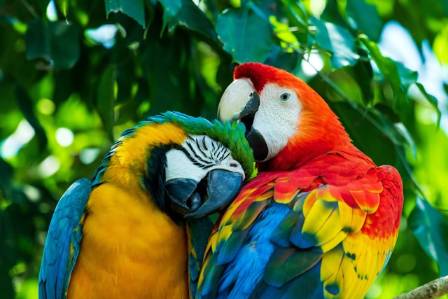
Bright colors are rarely considered a favorable evolutionary trait—they can make prey stand out and hinder predators’ hunting. Yet countless bird species boast stunning, vivid plumage, shaped by reasons like mating displays, camouflage, and distracting predators. Below are seven birds with some of nature’s most extraordinary feathers, each unique in color and behavior.
D
David
Writer
Lounge note
Settle in — the full story and key updates are below.
Desk
Entertainment
Bright colors are rarely considered a favorable evolutionary trait—they can make prey stand out and hinder predators’ hunting. Yet countless bird species boast stunning, vivid plumage, shaped by reasons like mating displays, camouflage, and distracting predators. Below are seven birds with some of nature’s most extraordinary feathers, each unique in color and behavior.
1.Mandarin Duck
The Mandarin duck (Aix galericulata) dazzles with a mix of blue, gold, purple, green, and white, but these vibrant hues only appear on males during mating season. To assert dominance and attract females, males grow this colorful plumage and perform an intricate mating dance, complemented by rare whistling calls (they are typically silent). Once paired, Mandarin ducks mate for life. After breeding, males molt into brown and gray feathers, matching the females’ more muted appearance. Native to Japan, China, Korea, and parts of Russia, these ducks are a striking example of seasonal color adaptation.
2.Peacock
Few birds rival the peacock (Pavo cristatus) for iridescent beauty, with feathers blending green, brown, yellow, and blue. Its secret lies in photonic crystals in the feathers, which manipulate light to create shifting shades depending on the viewing angle—an adaptation purely for sexual selection, not survival. Males use their massive, colorful tails in elaborate mating rituals to impress females (called peahens). Peacocks are native to India and Sri Lanka, favoring open forests near water. Unlike males, peahens have dull green and brown plumage, providing camouflage during their month-long egg incubation period.
3.Lesser Flamingo
The Lesser flamingo (Phoeniconaias minor) embodies the phrase “you are what you eat.” Chicks are born white or gray, but within two years, their diet of algae and crustaceans—rich in the same pigments that turn shrimp pink when cooked—gives them their iconic bright pink feathers. Plumage brightness varies based on habitat and food availability. This bold coloration is a luxury: their habitats have few predators, and few animals dare to wade into the harsh waters they frequent, such as Tanzania’s Lake Natron, known for extreme pH levels. Flamingos here have evolved thicker skin and specialized legs to survive, and they are primarily found across Africa.
4.Keel-Billed Toucan
The keel-billed toucan (Ramphastos sulfuratus) features a black body, yellow chest, and green feathers around its eyes, but its most striking feature is its enormous, vibrant bill. Both males and females have these colorful bills, suggesting they serve less for mating and more for camouflage in the rainforest’s vivid landscape. Beyond appearance, the bill is a multi-tool: it cuts fruit, trims leaves, and incapacitates small prey like birds, lizards, and rodents. Researchers also believe the bill helps dissipate heat, keeping the bird cool in its South American tropical habitat.
5.Rainbow Lorikeet
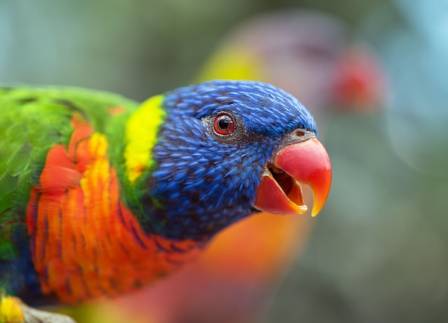
The rainbow lorikeet (Trichoglossus moluccanus) is a feast for the eyes, with blue heads and bellies, yellowish-orange breasts, and green wings, tails, and backs. Found in coastal northern and eastern Australia and parts of New Zealand, both males and females share this colorful plumage. They are strong fliers, capable of traveling over 30 miles in search of fruit, nectar, pollen, and seeds. Highly vocal and social, they often gather in flocks and roost in tree cavities. Their quick reproduction (up to three clutches per season) and stunning appearance make them popular pets.
6.Spangled Cotinga
The spangled cotinga (Cotinga cayana) boasts a magenta throat and turquoise-and-black body—subtler than some colorful birds but no less breathtaking. Historically hunted for its beauty in its Amazon rainforest habitat, females have muted brownish-gray plumage for better predator protection. These birds live high in the forest canopy, making them hard to spot, and they are mostly silent, adding to the challenge for birdwatchers. Widespread across the Amazon, their understated yet vivid colors make them a hidden gem of tropical birdlife.
7.Scarlet Macaw
The scarlet macaw (Ara macao)’s vivid red, blue, and yellow plumage might seem like a liability for hiding from predators, but it’s actually a defense strategy called “disruptive coloration.” When flocks flee, their bright, mixed colors confuse predators—whose forward-facing eyes are adapted to focus on single targets—making it nearly impossible to lock onto one bird. Native to the rainforest canopies of southern Mexico, Central America, and South America, these macaws can learn 5-10 human words. While globally listed as Least Concern, some regional populations are threatened by habitat loss and the pet trade.

More to explore

· en
The Past, Present and Future of Red Rock
Helena Fairfax

· en
Seeking the world’s largest glaciers
Ronan Whitlock

· en
What to See Along The Bund in Shanghai
Callum Rhodes

· en
Paris at Golden Hour: The Best Spots to Watch the Sunset
Andrew Coleman

· en
The Tallest Coastal Mountains in the World
Henry

· en
The Definitive Handbook for Contemporary Men’s Outerwear
Nathaniel Ryan Pembroke