Feature story
The Tallest Coastal Mountains in the World
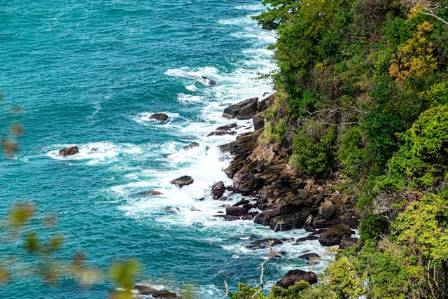
The Sierra Nevada de Santa Marta in Colombia is not only the highest coastal mountain range on Earth but also one of the most geologically intriguing. Rising abruptly from the Caribbean coast, these peaks tell a dramatic story of shifting continents, volcanic cycles, and ancient magnetic signatures. Recent research has pieced together the epic 170-million-year history of this mountain range, uncovering how it traveled from faraway lands to its present position.
Henry
Writer
Lounge note
Settle in — the full story and key updates are below.
Desk
Entertainment
The Sierra Nevada de Santa Marta in Colombia is not only the highest coastal mountain range on Earth but also one of the most geologically intriguing. Rising abruptly from the Caribbean coast, these peaks tell a dramatic story of shifting continents, volcanic cycles, and ancient magnetic signatures. Recent research has pieced together the epic 170-million-year history of this mountain range, uncovering how it traveled from faraway lands to its present position.
A Long Geological Voyage
The mountains did not always stand where they do today. Evidence from magnetic patterns in the rocks indicates that the Sierra Nevada originated near northern Peru. Over time, tectonic activity propelled the massif roughly 1,367 miles (2,200 kilometers) northward until it settled on Colombia’s Caribbean shore. This long migration reflects the restless movements of Earth’s plates, which constantly reshape the planet’s surface.
Messages Written in Stone
The rocks within the Sierra Nevada act as natural storytellers. When molten lava cooled millions of years ago, particles of iron inside aligned with the Earth’s magnetic field, freezing a record of the planet’s orientation at that latitude. By comparing these magnetic signals, scientists confirmed that the mountains formed far from where they stand today. These findings fill a significant gap in the geological history of South America.
Birth and Death of Volcanoes
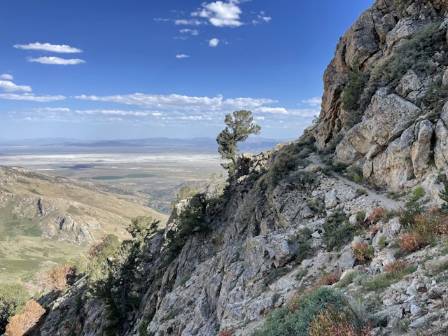
The rock layers also reveal cycles of volcanic activity. Some of the mountains’ foundations are thought to be remnants of volcanoes that once roared with fiery eruptions but were later destroyed by immense geological forces. These vanished peaks left behind complex rock records that scientists now examine to understand how landscapes evolve.
Ancient Foundations
Beneath the visible ridges lies an even older core. Some rocks are more than a billion years old, hinting at vanished mountain chains and continents that predate modern geography. This deep history links the Sierra Nevada not only to the Caribbean but also to the story of Earth itself, stretching back to prehistoric supercontinents.
Earthquakes and Ocean Canyons
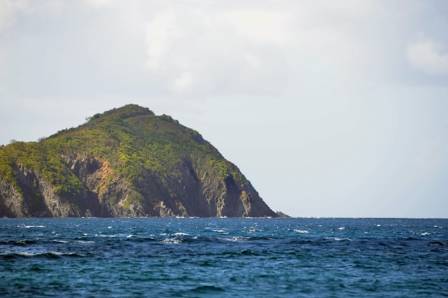
Other investigations show that the region has endured massive earthquakes, reshaping both land and sea. Off the coast, a vast submarine canyon carved into the Caribbean seafloor provides further evidence of the power of tectonic processes at work in this area.
Conclusion
The Sierra Nevada de Santa Marta is far more than a striking backdrop to Colombia’s coastline—it is a geological epic written in stone. From its origins near Peru to its present-day home beside the Caribbean, its journey spans hundreds of millions of years and countless natural upheavals. Studying these mountains not only solves long-standing geological puzzles but also reminds us of the dynamic forces that continue to shape our planet.
More to explore

· en
Ten Things You Might Not Know About Dandelions
Nessa Wilder

· en
Meet 5 Largest Eagle Species
Mason

· en
Things we love about lemurs!
Freya Lennox

· en
Mastering Urban Skylines: 8 Techniques for Captivating Cityscape Photography
Isabella Mae

· en
Oriental Stork
Charlotte Hayes
· en
Which Brown Bear Was Named Alaska’s Fattest?
Ronan Clarke