Feature story
The Incredible Evolution of the Telescope Through the Ages
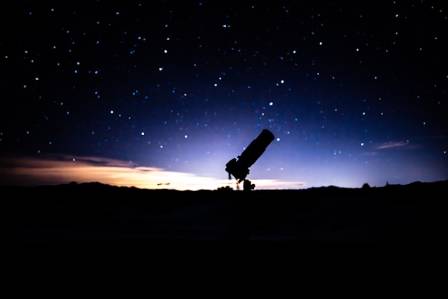
The story of optical viewing tools stretches back long before the first official device emerged in the Netherlands around 1608. An eyeglass builder named Hans Lippershey filed the earliest known patent application during that year. Although local authorities denied his official patent, word of the groundbreaking concept spread across Europe at remarkable speed. These initial refracting instruments combined a convex front lens with a concave eyepiece. Galileo Galilei refined this basic setup the following year and pointed his new device toward the night sky. In 1611 Johannes Kepler explained how a superior viewing system could be built using two convex lenses instead. By 1655 dedicated stargazers like Christiaan Huygens were crafting high power Keplerian systems equipped with compound eyepieces.
Lily Patterson
Writer
Lounge note
Settle in — the full story and key updates are below.
Desk
Entertainment
The story of optical viewing tools stretches back long before the first official device emerged in the Netherlands around 1608. An eyeglass builder named Hans Lippershey filed the earliest known patent application during that year. Although local authorities denied his official patent, word of the groundbreaking concept spread across Europe at remarkable speed. These initial refracting instruments combined a convex front lens with a concave eyepiece. Galileo Galilei refined this basic setup the following year and pointed his new device toward the night sky. In 1611 Johannes Kepler explained how a superior viewing system could be built using two convex lenses instead. By 1655 dedicated stargazers like Christiaan Huygens were crafting high power Keplerian systems equipped with compound eyepieces.
Isaac Newton created a major technological leap in 1668 when he built the first working reflecting instrument. His design featured a small angled flat mirror that bounced gathered light out through an eyepiece mounted on the side of the main tube. Shortly after in 1672 Laurent Cassegrain outlined an alternative design featuring a small convex secondary mirror that redirected light through a central opening in the primary mirror.
Color distortion remained a massive problem for early lens makers. The invention of the achromatic lens dramatically reduced these unwanted color fringes in objective lenses. This breakthrough made shorter and far more practical instruments possible for the first time. Chester Moore Hall built an early prototype in 1733 without publishing his discovery. John Dollond later learned of the technique and began manufacturing color corrected instruments in large commercial quantities starting around 1758.
Reflecting instruments advanced rapidly after John Hadley produced larger parabolic metal mirrors in 1721. Léon Foucault introduced a process for coating glass mirrors with real silver in 1857. Technicians later adopted durable aluminum coatings for primary mirrors in 1932. The specialized Ritchey Chretien optical layout was developed around 1910 and gained widespread popularity after 1950. Modern scientific instruments like the famous Hubble Space Telescope rely heavily on this design because it provides a much wider clear field of view than traditional setups. Between 1850 and 1900 metal mirrors fell out of favor due to rapid tarnishing. Engineers built massive glass lens refractors reaching up to one meter in diameter. This movement culminated in the giant Yerkes Observatory instrument in 1897. Glass mirror reflectors took over completely in the early twentieth century. Key milestones included the Mount Wilson sixty inch scope, the hundred inch Hooker instrument in 1917, and the famous two hundred inch Hale instrument in 1948. Scientists built numerous four meter class instruments on high altitude mountain tops across Hawaii and the Chilean desert between 1975 and 1985. Computer controlled mounting systems developed in the 1970s and active optics technology in the 1980s opened the door for giant modern observatories. These innovations paved the way for the ten meter Keck instruments in the 1990s alongside the Very Large Telescope, Gemini Observatory, and Subaru Telescope.
The era of invisible light astronomy began when Karl Guthe Jansky unexpectedly discovered space radio signals in 1931. Twentieth century engineers developed diverse instruments capable of detecting wavelengths across the entire electromagnetic spectrum from radio waves to energetic gamma rays. The launch of orbital space observatories after 1960 gave scientists clear access to radiation bands that Earth's atmosphere blocks. Astronomers could finally observe space through detailed X-ray and long wavelength infrared bands without atmospheric interference.
Early Foundations of Visual Optics and Early Inventions
Polished objects resembling magnifying lenses date back nearly four thousand years although researchers still debate their exact original purpose. Ancient Greek thinkers documented how water filled glass spheres bend light rays during the fifth century BC. Later scholars wrote extensively about light reflection, refraction, and color properties across several centuries. Notable contributors included Ptolemy in the second century, Ibn Sahl in the tenth century, and Ibn Al Haytham in the eleventh century. Functional reading lenses came into widespread use when glassmakers in Northern Italy began crafting wearable spectacles during the late thirteenth century. Nicholas of Cusa introduced concave lenses to correct nearsighted vision in 1451.
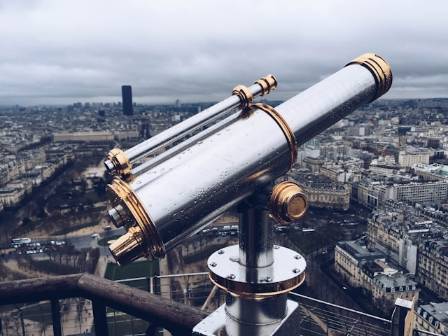
Official documentation of the first viewing tube appears in Dutch records from October 1608. Spectacle maker Hans Lippershey submitted a formal patent application to local officials for a device designed to see distant objects clearly. Jacob Metius applied for a similar patent just a few weeks later. Official leaders declined both applications because basic knowledge of the concept seemed widespread, but they compensated Lippershey to produce several official copies. Early Dutch instruments contained one convex lens and one concave lens. This combination preserved an upright image but offered only three times magnification. News of the invention traveled rapidly and instruments quickly spread across European cities.
Several historical figures later claimed credit for inventing the viewing device. Dutch diplomat William de Boreel investigated local rumors in 1655 regarding an early maker named Hans. A local craftsman named Johannes Zachariassen claimed his father Zacharias Janssen invented both the telescope and microscope around 1590. Writer Pierre Borel published this claim in 1656. Modern historians remain skeptical because of timeline contradictions in the testimony. English scholars also pointed to sixteenth century writings by Leonard Digges and his son Thomas Digges. Descriptions suggested Leonard constructed a large perspective mirror lens combination during the mid 1500s. Scholar William Bourne examined this setup in 1580 and noted its narrow field of view and massive physical size. Spanish documents uncovered in 1959 suggested French born optical maker Juan Roget built functional viewing devices before Lippershey filed his patent. Italian physicist Alessandro Bettini analyzed drawings by Leonardo da Vinci and suggested the polymath might have conceptualized a dual lens viewing arrangement as well.
Rapid Global Expansion and Revolutionary Discoveries
News of the Dutch spyglass reached Italian polymath Galileo Galilei while he visited Venice in June 1609. Galileo quickly figured out the underlying optical principles. He built his first functional lead tube viewing device the very next day in Padua. His design paired a convex objective lens with a concave eyepiece lens. Galileo presented an improved instrument to Venetian officials and received a lifetime university appointment with double his previous salary.
Galileo continuously improved his manufacturing methods to achieve higher magnification levels. His early versions magnified objects three times, but he soon constructed instruments capable of twenty three times magnification. He began detailed astronomical observations in late 1609. He discovered four major moons orbiting Jupiter, mapped lunar craters, observed the phases of Venus, and tracked dark spots moving across the solar surface. The shifting phases of Venus and orbiting Jovian moons provided undeniable physical proof supporting Copernicus's sun centered model of the universe over ancient Earth centered theories.
The word telescope was coined in April 1611 by Greek scholar Giovanni Demisiani during a banquet hosted by Prince Federico Cesi. The term combined Greek words meaning far and to view. Knowledge of the revolutionary instrument reached East Asia by 1626 when German Jesuit scholar Johann Adam Schall von Bell published an explanatory treatise in Chinese and Latin.
Refractor Refinements and Giant Aerial Instruments
Johannes Kepler detailed the theoretical benefits of building viewing tubes with two convex lenses in his 1611 optical treatise. Jesuit astronomer Christoph Scheiner built the first practical model of this layout and published his findings in 1630. Inventor William Gascoigne added a small crosshair mechanism at the shared focal point between the lenses. This addition created the micrometer and allowed precise astronomical measurements. Keplerian instruments gained widespread popularity by the middle of the seventeenth century because they offered a significantly wider field of view than Galilean systems.
Image sharpness in early refractors suffered heavily from chromatic aberration caused by light bending unevenly through simple lenses. Lens makers tried to overcome this issue by crafting lenses with extremely long focal lengths. Christiaan Huygens built a twelve foot instrument and discovered Saturn's massive moon Titan in 1655. Giovanni Cassini discovered the moon Rhea in 1672 using an eleven meter tube. Astronomer Johannes Hevelius constructed massive wooden structures holding lenses with focal lengths reaching forty six meters. These enormous tubes vibrated heavily in light winds and often collapsed.
Astronomers eliminated heavy wooden tubes entirely after 1675 to simplify operations. Workers mounted the objective lens on an adjustable ball joint atop high poles or trees. The observer held the eyepiece by hand or on a small stand while searching for the focal image. These open arrangements were known as aerial telescopes. Christiaan Huygens and his brother crafted focal lengths extending up to sixty four meters. Italian maker Giuseppe Campani supplied Cassini with high quality lenses that enabled the discovery of two additional moons of Saturn in 1684.
Evolution of Reflecting Instruments and Mirror Design
Scholars knew curved mirrors could gather light since ancient times. Italian physicist Niccolò Zucchi attempted to replace front lenses with a bronze concave mirror in 1616, but he struggled to view a clear image. Marin Mersenne proposed a dual parabolic mirror setup in 1636. Scottish mathematician James Gregory outlined a detailed reflecting design in 1663 that corrected optical distortion, but he could not find skilled opticians to build it. Isaac Newton built the first working reflecting instrument in 1668 after discovering that lenses inherently split white light into colors. Newton used a polished tin and copper alloy mirror paired with a small diagonal secondary mirror to bounce light out the side. His compact three centimeter mirror successfully revealed Jupiter's moons and the crescent shape of Venus.
French thinker Laurent Cassegrain introduced an alternative reflector layout in 1672 that bounced light off a convex secondary mirror through a central hole in the primary mirror. Major progress stalled for fifty years until John Hadley developed reliable methods for grinding precise parabolic metal mirrors. Hadley presented a six inch parabolic reflector to the Royal Society in 1721 that matched the performance of much larger aerial refractors. James Short built high quality Gregorian reflectors during the 1730s and earned a substantial fortune selling them across Europe. Russian scholar Mikhail Lomonosov designed a tilted primary mirror system in 1762 to avoid light loss from secondary mirrors.
Astronomer William Herschel began grinding mirror surfaces in 1774 and built an eighteen inch instrument that he used for decades. He completed a giant forty foot telescope featuring a forty nine inch mirror at Slough in 1789. Herschel tilted his main mirror to view images directly without a secondary mirror. He discovered Saturn's moons Enceladus and Mimas during his first weeks using the instrument. William Parsons built a mammoth seventy two inch Newtonian reflector in 1845 dubbed the Leviathan of Parsonstown. With it he discovered the spiral structure of distant galaxies. However, metal mirrors tarnished quickly and required constant repolishing, limiting their practical use.
Mastering Color Correction with Achromatic Lenses
Early scientists assumed optical color distortion was an unavoidable flaw of glass curvature. Chester Moore Hall realized in 1733 that combining two distinct glass types could cancel out unwanted color dispersion. He successfully paired crown glass and flint glass elements to produce a color corrected lens that focused red and blue light to the same point. Hall kept his discovery private. Mathematician Leonhard Euler published theoretical calculations in 1747 suggesting water and glass combinations could create color free lenses. English optician John Dollond disputed Euler's assumptions initially. However, Swedish mathematician Samuel Klingenstierna presented geometric proofs that disproved earlier Newton theories on light dispersion. Dollond conducted practical experiments, patented the achromatic lens design, and began mass production in 1758.
More to explore

· en
How to Create Atmosphere in the Garden With Light and Shadow
Lydia Foster

· en
The largest known terrestrial gastropod is the giant African land snail
Therin Cole

· en
The Stunning Golden Rapeseed Fields of the Cotswolds
Adelaide Sterling

· en
The symbolism and colour meaning of tulips
Vera Langley

· en
Paint a Winter Mountain Landscape
Rowan Blake

· en
Top Rowing Competitions Around the World
Kate