Feature story
Choosing a Floor Lamp
A floor lamp is one of those home accessories that combines practicality with style. It can provide useful lighting while also serving as an attractive decorative feature that complements the rest of a room. Since floor lamps come in countless shapes, sizes, and designs, it’s easy to find an option that works with almost any decorating style.
Everett Kingsley
Writer
Lounge note
Settle in — the full story and key updates are below.
Desk
Entertainment
A floor lamp is one of those home accessories that combines practicality with style. It can provide useful lighting while also serving as an attractive decorative feature that complements the rest of a room. Since floor lamps come in countless shapes, sizes, and designs, it’s easy to find an option that works with almost any decorating style.
Before purchasing one, however, it’s worth taking a little time to determine exactly what you need. Thinking about the type of illumination, available floor space, lamp height, controls, and extra features beforehand can help you choose a lamp that looks right and performs well.
Ambient Lighting vs. Task Lighting
The first thing to determine is what kind of light you want the floor lamp to provide.
Ambient lighting is designed to spread illumination throughout a room. These lamps generally send light outward or upward, creating a softer and more evenly distributed glow that contributes to the overall brightness of the space.
Task lighting, on the other hand, focuses illumination on a specific area. The light is usually directed downward or toward a particular surface, making this type of lighting especially useful for reading, crafting, writing, or working.
Floor Lamps for Ambient Lighting
Shaded Floor Lamps
A traditional shaded floor lamp typically consists of a lampshade positioned on top of a vertical pole. A single-pole design is especially convenient for corners or areas beside sofas and chairs because it occupies relatively little floor space.
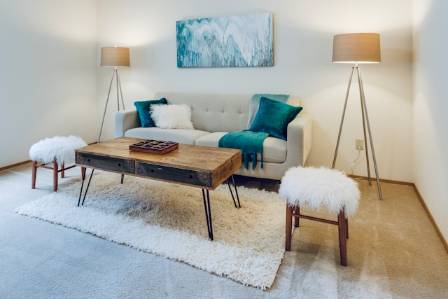
Some shaded lamps come with tripod-style bases. These can add extra visual interest, but they also require more room. Make sure the surrounding area is open enough so that the lamp doesn't feel cramped or create an obstacle that someone could trip over.
Torchiere Lamps
Torchiere lamps feature a tall, narrow body topped with a shade that points upward. Instead of directing light straight into the room, the fixture sends illumination toward the ceiling, where it reflects back and creates a soft overall glow.
Their slim profile makes torchieres a practical choice for smaller rooms or areas where floor space is limited.
Arc Lamps
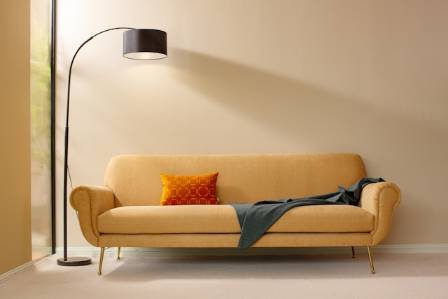
Arc floor lamps are designed with a long curved arm that extends outward from the base. The light source can be positioned at the end of the curve, and some models feature multiple lights.
Because the arm reaches considerably farther into the room, arc lamps need more open floor space. They are particularly useful next to large sofas and sectional seating areas, where the extended arm can bring light directly over the seating without requiring a table beside the furniture.
Floor Lamps for Task Lighting
Pharmacy Reading Lamps
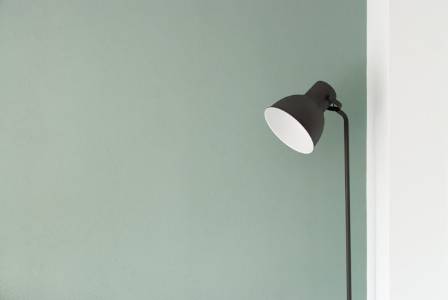
Pharmacy-style floor lamps are designed with adjustable heads and bases, allowing you to change the height and direction of the light.
This flexibility makes them particularly useful for reading or other activities that require concentrated illumination. You can position the light exactly where you need it rather than relying on a fixed lighting angle.
Tree Torchiere Lamps
A tree torchiere combines multiple lighting functions in one fixture. The main light points upward to provide general illumination, while several smaller lights extend from the central pole and can be directed toward specific areas.
This makes the design useful when you want both ambient illumination and focused task lighting from a single floor lamp.
Swing Arm Floor Lamps
Swing arm lamps offer another highly flexible lighting solution. Their adjustable arms allow you to reposition the light source depending on what you're doing.
Because the lamp can be moved into different positions, it can provide focused light for reading or working and then be repositioned to contribute more general illumination when needed.
Important Things to Consider
Lamp Height
The height of your floor lamp matters both for comfort and appearance. If you're placing the lamp directly beside a chair or sofa, the bottom edge of the shade should ideally sit around eye level or slightly below it when you're seated. This helps prevent the bulb from shining directly into your eyes.
If the lamp isn't positioned beside seating, a taller design may work better.
Keep in mind that taller lamps generally distribute their light over a broader area. For activities that require concentrated task lighting, a shorter or adjustable lamp that places the light source closer to you may be more effective.
You should also consider the scale of the lamp in relation to the other furniture in the room. A very small lamp can look out of proportion next to large furniture, while an oversized fixture may overwhelm a compact space. Adjustable-height models can be particularly useful if you want the flexibility to change the lamp's position later.
Switch and Control Options
Think about how you prefer to operate the lamp before making your choice.
Many floor lamps use a foot-operated switch, which allows you to turn the light on and off without bending down. Other designs use a pull chain or a small rotary control located on the lamp itself.
The best option largely depends on where the lamp will be positioned and which type of control feels most convenient for everyday use.
Choosing the Right Bulb
Most floor lamps use replaceable incandescent or LED bulbs, allowing you to change the light source when necessary.
Some newer fixtures, however, come with integrated LED lighting. These built-in LEDs can remain functional for many years, often for a decade or more.
The trade-off is that an integrated LED generally cannot be replaced in the same simple way as a conventional bulb once it eventually reaches the end of its lifespan. This is worth considering when comparing different lamp designs.
Built-In USB Charging
If you frequently need to charge your phone while relaxing in a chair or sofa, consider choosing a floor lamp that includes an integrated USB port.
This small feature can be particularly convenient beside a reading chair or in a living room, allowing you to charge a device without having to locate another outlet.
Built-In Shelf or Table Space
When floor space is limited, a floor lamp with an integrated shelf or small table can serve two purposes at once.
The additional surface gives you somewhere to place useful items such as a remote control, reading glasses, a book, or other small essentials. This can be especially helpful when there isn't enough room for a separate side table.
Choosing the Best Lamp for Your Space
A shaded floor lamp can be an excellent way to brighten an otherwise dark corner while taking up relatively little room.
A torchiere works especially well in compact spaces because its slim profile provides upward ambient illumination without requiring a large footprint.
For a large sectional sofa, an arc lamp can extend over the seating area and provide light exactly where it's needed while adding a contemporary decorative element.
If reading is your main purpose, a pharmacy-style lamp can provide focused, adjustable illumination that helps make reading more comfortable and reduces unnecessary eye strain.
A tree torchiere is a versatile option when you want a combination of general room lighting and smaller task lights.
For maximum flexibility, a swing arm floor lamp allows you to move the light source into the position that works best for whatever activity you're doing.
Finally, a floor lamp with a built-in shelf can be an especially practical choice when you want to keep frequently used items such as the television remote within easy reach.
More to explore

· en
Atlantic Green Sea Turtle
Ronan Ellwood

· en
Pink-necked green pigeon
Justin Powell

· en
6 Things You Should Consider Before Buying the Perfect Coffee Cup
Isabella

· en
Macaws: The Colorful Parrots of the Rain Forest
Veya Collins

· en
Humanoid Robotics: History, Today, and Challenges
Lucien Ward
· en
Indoor Plants: A Year-Round Source of Wellness
Olivia Bennett