Feature story
Landmark rockets and the engineering breakthroughs
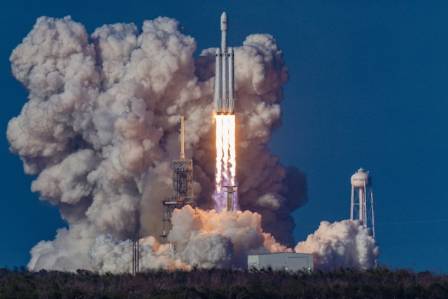
Rocket technology has advanced through many individual engineering achievements rather than through one revolutionary invention. Certain vehicles introduced propulsion concepts that later became standard practice, while others demonstrated new possibilities in lightweight construction, reusable components, or manufacturing methods. Together, these designs influenced the development of launch vehicles far beyond the missions for which they were originally created.
Rhys Gray
Writer
Lounge note
Settle in — the full story and key updates are below.
Desk
Entertainment
Rocket technology has advanced through many individual engineering achievements rather than through one revolutionary invention. Certain vehicles introduced propulsion concepts that later became standard practice, while others demonstrated new possibilities in lightweight construction, reusable components, or manufacturing methods. Together, these designs influenced the development of launch vehicles far beyond the missions for which they were originally created.
V-2 – Making Large Liquid-Propellant Rockets Practical
Developed in Germany during World War II, the V-2 was created as a weapon, but its engineering principles had a profound effect on the later development of spaceflight. It became the first large-scale liquid-fueled rocket and employed a turbopump to deliver fuel and oxidizer into its combustion chamber. Its engine produced approximately 25 metric tons of thrust.
Following World War II, engineers in the United States, Soviet Union, Britain, and France drew heavily on V-2 technology. The challenges addressed by its designers, including high-pressure propellant delivery, combustion, engine cooling, and guidance, became core engineering problems that future rockets would also have to solve.
R-7 – The Booster Cluster That Began the Space Age
Designed under the direction of Sergei Korolev, the R-7 featured a distinctive configuration. Four tapered boosters were arranged around a central core, with all five sections operating during liftoff. This clustered arrangement allowed the relatively light launch vehicle to generate an enormous amount of initial thrust.
An R-7 derivative placed Sputnik 1 into orbit in 1957 and later versions carried Yuri Gagarin as well as numerous other spacecraft. The architecture also survived through the development of Soyuz. The European Space Agency identifies Soyuz as a direct descendant of the R-7 and one of the most successful launch systems in spaceflight history.
Atlas – Reducing Structural Weight with Balloon Tanks
Atlas introduced an unusual but highly effective structural concept. Rather than constructing propellant tanks that were rigid enough to support the rocket without assistance, engineers created extremely thin “balloon” tanks whose strength depended on internal pressure.
This approach significantly reduced structural weight, although it also created a major operational challenge. An unpressurized Atlas could not easily support its own weight, meaning the tanks had to remain pressurized to maintain their structural strength.
The balloon-tank concept continued through several generations of Atlas vehicles and also influenced the Centaur upper stage. Atlas demonstrated that reducing structural mass could produce substantial gains in launch performance.
Centaur – Bringing Cryogenic Propulsion to Deep-Space Missions
Centaur became an exceptionally important rocket stage, even though it was not itself a complete launch vehicle. Developed around liquid hydrogen and liquid oxygen, it was the first major rocket stage to make extensive use of liquid hydrogen propulsion.
Its high-energy performance made it particularly valuable for demanding missions beyond Earth orbit. Centaur helped send Surveyor spacecraft toward the Moon and later played major roles in missions such as Viking, Voyager, and Cassini.
The stage demonstrated the advantages of hydrogen propulsion, especially after a rocket had climbed above much of Earth's atmosphere. Centaur consequently became one of the most influential upper-stage designs in American spaceflight.
Saturn V – Making Extreme Rocket Scale Possible
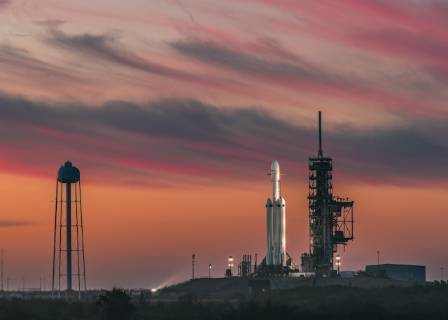
Saturn V showed what could be accomplished when several advanced rocket technologies were combined into one enormous launch system. Its first stage contained five powerful F-1 engines that generated approximately 7.5 million pounds of thrust at liftoff.
The upper stages used hydrogen-powered J-2 engines. Developing the vehicle required engineers to overcome numerous difficult problems, including combustion instability, turbopump performance, massive structural loads, and the handling of cryogenic propellants on an unprecedented scale.
The final result was a three-stage rocket capable of carrying astronauts and spacecraft from Earth toward the Moon, making Saturn V one of the most significant launch vehicles ever constructed.
Space Shuttle – Making Reusability Part of the Launch System
The Space Shuttle was not completely reusable, but it fundamentally changed how launch vehicles could be designed around recovery and reuse. Its orbiter returned to Earth and could fly additional missions, while the solid rocket boosters were recovered, refurbished, and used again.
The complete system combined three liquid-fueled main engines, two reusable solid rocket boosters, and a large expendable external tank. NASA describes the Shuttle as the first reusable spacecraft system designed to launch vertically and return to Earth by landing on a runway in a manner similar to an aircraft.
Its influence continues today. NASA's Space Launch System, or SLS, uses solid rocket boosters whose development is directly connected to decades of experience gained from the Shuttle program.
Ariane 5 – Designing Heavy-Lift Launches Around Payload Efficiency
Europe's Ariane 5 followed a distinct commercial strategy centered on carrying large payloads efficiently. The vehicle was frequently configured to launch two telecommunications satellites during a single mission.
Its cryogenic core, powered by the Vulcain engine, worked together with large solid rocket boosters. Later versions progressively improved the vehicle's overall performance and payload capability.
The Vulcain engine represented decades of European development in liquid-hydrogen propulsion and high-temperature engineering. Ariane 5 completed 117 launches between 1996 and 2023, carrying missions ranging from Galileo satellites to the James Webb Space Telescope. Its long service made it a major element of Europe's independent access to space.
Falcon 9 – Turning Routine Rocket Reuse into Reality
SpaceX's Falcon 9 transformed both the economics and operating model of orbital launches by making its first stage reusable. Instead of treating the booster as hardware that would be discarded after one mission, SpaceX designed it to withstand atmospheric reentry, guide itself through a controlled descent, land, and fly again.
NASA identifies Falcon 9 as the first orbital-class reusable rocket. Achieving this required recovery to be incorporated into the vehicle's fundamental design. Engines, guidance systems, landing hardware, thermal protection, and structural components all had to work together to survive and support repeated recovery.
Falcon 9 helped establish reusability as one of the central goals of modern commercial rocket development.
Electron – Using Electric Turbopumps and Additive Manufacturing
Rocket Lab's Electron took a different approach to designing a small orbital launch vehicle. Its Rutherford engines use electrically driven turbopumps powered by batteries, replacing much of the conventional turbomachinery found in traditional pump-fed rocket engines.
The propulsion system also makes extensive use of additive manufacturing, while Electron's main structure is built from carbon-fiber composites. NASA describes Rutherford as the world's first 3D-printed, electric-pump-fed rocket engine.
Electron demonstrated that advanced propulsion technologies could be produced in a compact and manufacturing-focused form, particularly suited to the expanding small-satellite launch market.
Delta – Developing a Rocket Through Continuous Evolution
The Delta family illustrated another important philosophy in rocket engineering: improving an established launch vehicle over time rather than replacing the entire system with every major upgrade.
Its origins can be traced to the Thor ballistic missile, combined with upgraded upper-stage technology derived from the Vanguard program. Engineers continued modifying the basic architecture through numerous versions, adjusting the vehicle to accommodate changing payload requirements and mission objectives.
NASA's Goddard Space Flight Center notes that the Delta family served the United States for more than four decades. Its long development history demonstrated the advantages of incremental improvement: retain proven components when they remain effective, upgrade areas that require better performance, and gradually build greater capabilities across successive generations.
More to explore

· en
Autumn in New York City
Eveline Crowe

· en
A Culinary Odyssey: 10 Delectable Dishes from Around the World
Sophia Rose

· en
Unraveling the Wonders of Coconut Palms
Zoey Harper

· en
Who’s the Coolest Robot of All?
Evren Calder

· en
Wandering Dubrovnik’s City Walls
Freya Caldwell

· en
London Bridge Has Fallen Down—But It Keeps Coming Back
Daniel Sullivan