Feature story
Things we love about lemurs!
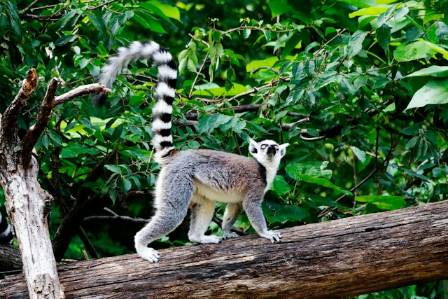
When people hear the word “lemur,” the first animal that often comes to mind is the famous ring-tailed lemur, one of Madagascar’s best-known creatures. It is easy to understand why these fluffy, big-eyed animals are so popular, especially because some of their behaviors can seem surprisingly similar to those of humans.
Freya Lennox
Writer
Lounge note
Settle in — the full story and key updates are below.
Desk
Entertainment
When people hear the word “lemur,” the first animal that often comes to mind is the famous ring-tailed lemur, one of Madagascar’s best-known creatures. It is easy to understand why these fluffy, big-eyed animals are so popular, especially because some of their behaviors can seem surprisingly similar to those of humans.
However, ring-tailed lemurs are only one part of Madagascar’s remarkable lemur diversity. Along with the more than 100 other native lemur subspecies, they belong to what is considered the most threatened group of mammals on Earth, facing serious pressure from deforestation and subsistence hunting.
To celebrate World Lemur Day and these fascinating primates, here are some interesting facts about the unusual world of lemurs.
Variety Is the Spice of Life
Although lemurs may look somewhat similar to other monkeys, they actually belong to a different group of primates known as “prosimians.” This term refers broadly to primates that are neither monkeys nor apes.
Lemurs share this group with animals such as bushbabies, lorises, and pottos. Their evolutionary lineage separated from other primates approximately 60 million years ago. Today, Madagascar is home to an extraordinary variety of lemurs. Different species range from the tiny mouse lemur, which can measure only around 9 centimeters, to the much larger indri, which can approach 70 centimeters in length and is roughly comparable in size to a small child. They also display an impressive assortment of body colors, patterns, and markings.
Spirits of the Night
The word “lemur” comes from the Latin term lemures, meaning “spirits of the night.” The name may partly reflect the fact that many lemur species are active after dark, but it also connects with traditional Malagasy beliefs about these unusual animals.
Visitors to Madagascar may encounter the concept of “fady,” a Malagasy term that can be translated approximately as taboo or something sacred. Fadys influence many aspects of everyday life and are taken seriously by local communities. They can also affect how people interact with nature and wildlife. These traditions differ from one village to another, and several different fadys are associated with lemurs.
Not a Fad, a Fady!
One traditional legend tells of the indri, also known as “Babakoto,” a name that can be interpreted as “ancestor of man.” According to this belief, the spirits of Malagasy ancestors continue to live within the indri. Such traditions can provide an important form of protection for this critically endangered lemur because local people may regard hunting the animal as a serious taboo.
The situation is very different for the endangered aye-aye. Some Malagasy beliefs associate these rarely encountered and unusual animals with bad fortune. According to one traditional belief, if an aye-aye points its long, thin finger at a person, that person may soon experience misfortune, illness, or even death.
Because of these fears, people have sometimes responded to sightings by killing the animal. This practice has contributed additional pressure to already declining aye-aye populations, creating an even greater challenge for conservationists working to protect them.
Who Runs the Lemur World? Girls!
According to research, only a small number of non-human mammal species have societies in which females take the leading role. Lemurs are unusual in this respect because female dominance is considered the normal pattern across all lemur families.
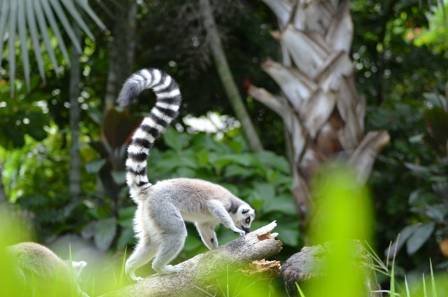
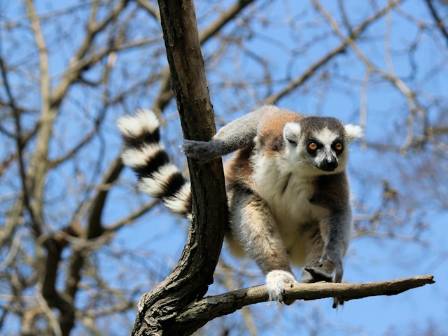
A dominant female ring-tailed lemur can lead a group containing as many as 30 individuals. Female leaders influence where the group goes, how it spends its time, and access to food. They can even force male members to leave the group.
Female lemurs may also be remarkably assertive toward males. They can bite their partners, take food directly from them, strike them, or push them away from preferred sleeping locations. Females scent-mark territories just as regularly as males, and males may wait until the females have finished eating before taking their own share.
Interestingly, this strong female dominance remains something of a biological mystery because female lemurs do not possess an obvious physical advantage over males.
Show Off Your Smarts!
Scientists have long understood that primates can acquire new abilities by watching and learning from other members of their social groups. However, research has suggested that lemurs demonstrate an interesting additional behavior: they appear to value innovation, and individuals that develop new skills can become more socially popular as they continue to demonstrate those abilities.
Primates commonly show social bonds through activities such as grooming, physical contact, and sitting close together. These interactions are often mutual, with individuals giving and receiving attention.
In one study, lemurs that repeatedly demonstrated innovative problem-solving abilities attracted more attention from their companions. The task involved figuring out how to retrieve a grape from inside a Plexiglas box. The lemurs that successfully displayed this creative behavior received considerably more grooming from their peers, even though they did not necessarily groom others more often themselves.
In other words, for a lemur, developing a clever new skill may come with an unexpected social benefit: more attention and more friends.
More to explore

· en
Fun and Adorable Kids’ Room Ideas
Ella Monroe

· en
Innovative Ways to Enjoy the Sweetness of Honey Mangoes
Declan Hugo Whitfield

· en
Top 8 Fascinating Secrets of Baku’s Maiden Tower
Jack

· en
The Hidden Meanings Behind Red Plum Blossoms
Eamon Vale

· en
The Smart Space Solution: How Multifunction Tables Elevate Small-Space Living
Elias Bennett

· en
Golf: A Gentle Sport with Big Health and Social Benefits
Ethan Caldwell