Feature story
The Hidden Meanings Behind Red Plum Blossoms
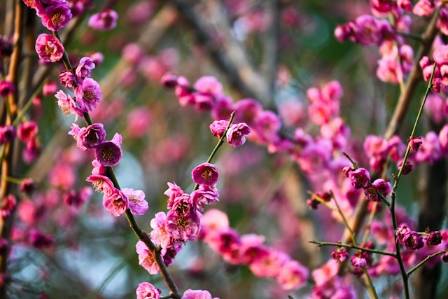
Red plum (Prunus mume) is a deciduous small tree belonging to the Rosaceae family and native to China. As a distinctive cultivated form of the plum blossom, it has been grown and appreciated for more than three thousand years. Beyond its value as an ornamental plant, the red plum carries deep cultural significance and has become a powerful symbol of the moral principles, perseverance, and resilient character traditionally associated with the Chinese people.
Eamon Vale
Writer
Lounge note
Settle in — the full story and key updates are below.
Desk
Entertainment
Red plum (Prunus mume) is a deciduous small tree belonging to the Rosaceae family and native to China. As a distinctive cultivated form of the plum blossom, it has been grown and appreciated for more than three thousand years. Beyond its value as an ornamental plant, the red plum carries deep cultural significance and has become a powerful symbol of the moral principles, perseverance, and resilient character traditionally associated with the Chinese people.
Botanical Definition and Taxonomic Classification
Scientific Classification and Origins
From a botanical perspective, the red plum blossom is classified within the genus Prunus. Its origins can be traced to the high-altitude areas of southwestern China. Within horticulture, it is regarded as the principal representative of the Cinnabar Plum group and is particularly valued for its exceptionally rich and intense red coloration.
Defining Characteristics
Although the term “red plum” is often used broadly in everyday conversation, genuine botanical red plum blossoms are identified by several defining characteristics.
Saturated Floral Color: The petals display strong crimson, vermilion, or rose-red shades with relatively stable coloration. Pale pink flowers and varieties with irregular or mottled pigmentation are not included among the true red plum types.
Red-Veined Wood (Guli Hong): The most important anatomical feature is the coloration of the wood. In these varieties, the xylem develops a distinct purplish-red appearance because of substantial anthocyanin accumulation. When the wood is cut across, its characteristic red coloration becomes visible, giving rise to the description “red-veined wood” and distinguishing these plants from other plum varieties.
Consistent Pigmentation: The reddish-brown or purple coloration is often repeated throughout other parts of the plant. Sepals, flower stalks, and young branches commonly display tones that correspond with the color of the blossoms, creating a visually cohesive appearance.
Morphological Traits and Iconic Varieties
Morphology and Growth Habits
The red plum blossom is a deciduous tree recognized for its sturdy, almost iron-like branches. One of its most distinctive growth characteristics is its tendency to flower before producing leaves. From January through March, red plum flowers emerge along otherwise bare branches during the colder months, filling the surrounding air with their strong, fresh fragrance.
Representative Cultivars
The ancestry of red-flowering plum varieties can ultimately be connected to wild plum populations originating in southwestern China. Among the most notable examples are Guli Hong and Hongxu Zhusha.
Guli Hong, also known as Bone-Red, is regarded as one of the most outstanding forms of the species. Its blossoms have an exceptionally deep crimson color, while the wood itself is strongly purplish-red throughout. The combination is closely associated with the traditional imagery of iron-like determination and a crimson heart.
Hongxu Zhusha is another distinguished member of the Cinnabar Plum group. It is characterized by vermilion-colored petals and strikingly red stamens, giving the flowers particularly strong ornamental appeal.
The Cultural Spirit: From Biology to Philosophy
The symbolism associated with the red plum blossom can be understood as a philosophical interpretation of its remarkable biological ability to withstand difficult conditions.
Resilience in Adversity
The red plum can flower in temperatures reaching as low as -15℃, earning it the description of a “Winter Herald.” Its ability to bloom amid severe cold has traditionally been connected with perseverance and endurance. The flower therefore represents a determined spirit that remains firm rather than yielding when confronted with the metaphorical “frost and snow” of hardship.
Integrity and the “Crimson Heart”
The red coloration visible in the wood has also inspired poetic interpretations. The combination of sturdy branches and crimson wood is associated with the traditional idea of “Iron Bones and a Crimson Heart.” The strong branches represent firmness and incorruptible character, while the vivid red interior is interpreted as a symbol of sincerity, passion, and unwavering conviction.
The Spirit of the Trailblazer
Because plum blossoms are among the first woody plants to flower as winter gives way to spring, they have come to represent courage, innovation, and the willingness to move forward first. The plum blossom breaks the quietness of winter before many other flowers appear, making it a natural metaphor for pioneers, entrepreneurs, and people associated with bold reform and change.
Modesty and Selfless Devotion
The plum blossom signals that spring is approaching, yet it does not remain at the center of attention once the other flowers begin to bloom in abundance. This seasonal pattern has been interpreted as an expression of modesty and selfless contribution. It offers a message of hope at the end of winter without demanding recognition or glory for itself.
Artistic Expression and Folklore
The Five Blessings
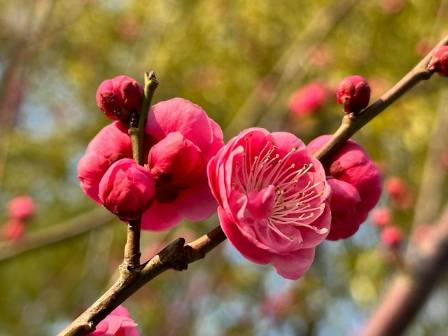
According to traditional folklore, the five petals of the red plum blossom represent the “Five Blessings”: Prosperity, Health, Longevity, Virtue, and a Peaceful End.
Even when the blossoms appear in softer shades of red, the plum continues to carry associations with resilience and renewal. A delicate flower opening among unopened buds can symbolize quiet strength and the promise of new life as spring approaches.
The five-petaled structure of the plum flower has therefore become a familiar cultural image connected with good fortune and the Five Blessings.
The “Four Gentlemen” of Art
Within the history of Chinese art, the plum blossom is one of the “Four Gentlemen,” a traditional group that also includes the orchid, bamboo, and chrysanthemum. Plum blossoms are especially prominent in ink-wash painting, where their branches and flowers often express a life shaped by hardship while still retaining hope and beauty.
Conclusion
The red plum blossom is far more than an ornamental plant or botanical specimen. It serves as a living connection between the natural world and traditional human virtues. Its ability to withstand cold and flower under difficult conditions corresponds closely with the qualities of perseverance, strength, and integrity represented by the red plum.
For centuries, the red plum has continued to unite botanical beauty with cultural meaning. Its vivid flowers, resilient branches, and distinctive red wood have made it a lasting symbol of endurance, sincerity, courage, modesty, and renewal within Chinese cultural tradition.
More to explore

· en
Landmark rockets and the engineering breakthroughs
Rhys Gray

· en
Basic Fruit and Yogurt Smoothie
Mia Martin

· en
Which Brown Bear Was Named Alaska’s Fattest?
Ronan Clarke

· en
The Astonishing Way Suzhou Seamlessly Blends Ancient Waterways With Futurist Skyscrapers
Lucian Everhart

· en
Taj Mahal: The Eternal Marble Masterpiece
Riley Parker

· en
11 Must-Visit Beaches and Coastlines
Victoria Parker