Feature story
The Colorful Reef Fish Full of Surprises
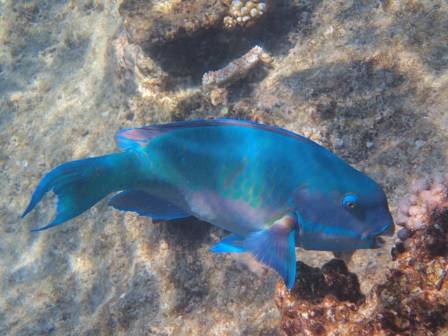
Among the many extraordinary traits of parrotfish, it is difficult to decide which is the most remarkable. Their unusual way of feeding, ability to change both their coloration and sex, and distinctive nighttime defense mechanism make them some of the most fascinating creatures inhabiting coral reefs.
Leander Shaw
Writer
Lounge note
Settle in — the full story and key updates are below.
Desk
Entertainment
Among the many extraordinary traits of parrotfish, it is difficult to decide which is the most remarkable. Their unusual way of feeding, ability to change both their coloration and sex, and distinctive nighttime defense mechanism make them some of the most fascinating creatures inhabiting coral reefs.
A Coral-Based Diet
One of the most unusual features of parrotfish is the way they obtain their food. These brightly colored reef fish primarily feed on algae growing inside small pieces of coral that they remove from reef surfaces.
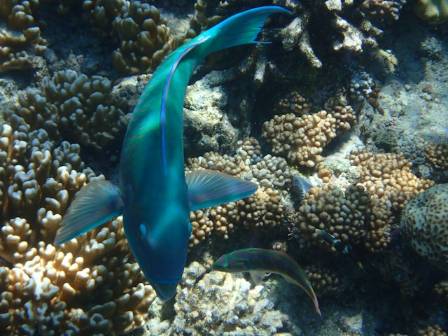
Parrotfish have strong teeth that are fused together into structures resembling a bird’s beak. They use these powerful teeth to scrape and bite chunks of coral from the reef. Once the material reaches the throat, specialized grinding structures crush the coral, allowing the fish to reach the tiny algae-filled polyps contained within it.
The coral itself is not the main source of nourishment and cannot be completely digested. Instead, the remaining coral particles travel through the digestive tract and are eventually expelled as extremely fine sand. Across many tropical coastal regions, a significant portion of the pale sand found along beaches is produced from coral material processed and excreted by parrotfish.
Color Changes and Sexual Transformation
Parrotfish possess another remarkable biological ability: certain species can change sex during their lifetime. Depending on their social environment and reproductive needs, an individual may transition from female to male.
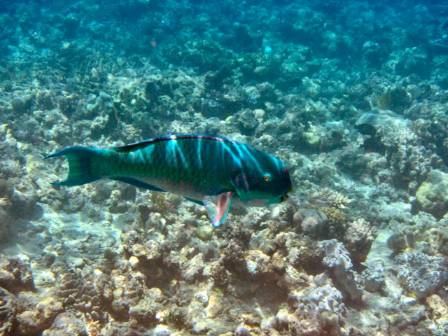
Their coloration is equally diverse. Different species can have dramatically different patterns, while individuals of the same species may also change appearance as they move through different stages of life. Juveniles, females, and adult males can look so unlike one another that even experienced researchers may have difficulty determining whether they belong to the same species.
A Protective Nighttime Cocoon
Some parrotfish species have evolved an unusual form of protection for the hours when they rest at night.
Before settling down to sleep, these fish release a transparent layer of mucus that forms a membrane around their entire bodies. A specialized organ located on the head produces this protective substance.
Researchers believe the mucus covering may help disguise the fish's scent. By reducing the chemical signals it releases into the surrounding water, the membrane could make it more difficult for nocturnal predators, including moray eels, to detect the sleeping fish.
Distribution and Population
Parrotfish are closely related to wrasses and occur widely in tropical coral reef environments throughout the world's oceans.
Approximately 80 species of parrotfish are currently known. Their body sizes vary considerably, ranging from less than 30 centimeters (1 foot) in length to around 1.2 meters (4 feet).
These fish play an important ecological role on coral reefs. By consuming algae and turning coral fragments into sand, parrotfish help prevent algae from overwhelming reef surfaces while also contributing to the natural production of sand that forms tropical beaches.
Parrotfish as Food
Parrotfish are not widely eaten in the United States, but they are regarded as an important food source in various other parts of the world.
Among Polynesian communities, parrotfish was traditionally consumed raw and was once considered a special delicacy associated with royalty.
More to explore

· en
The Incredible Evolution of the Telescope Through the Ages
Lily Patterson
· en
The ubiquitous White Wagtail
Nina Walker
· en
Unraveling the Wonders of Coconut Palms
Zoey Harper
· en
One of the most beautiful reefs, coral reef
David Miller

· en
Meet the electric polar explorer conquering Antarctica
Reid Ames

· en
Best Off-Road ATVs
Ethan Clark