Feature story
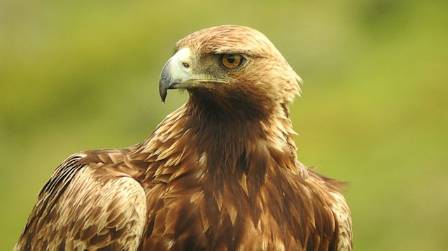
The golden eagle is a bird of massive size and imposing presence.
The Golden Eagle is a large and impressive bird of prey, recognized by the golden feathers covering the back of its head and neck.
Mason Blake
Writer
Lounge note
Settle in — the full story and key updates are below.
Desk
Entertainment
Introduction
The Golden Eagle is a large and impressive bird of prey, recognized by the golden feathers covering the back of its head and neck. This species is distributed across the Northern Hemisphere, including areas of North America, Europe, Asia, and parts of northern Africa. Golden Eagles usually inhabit wide, open environments, especially mountainous regions where they can hunt efficiently and find suitable cliffs for nesting.
In North America, these birds are much more frequently seen in western regions than in the eastern parts of the continent. As one of the biggest and strongest raptors in North America, the Golden Eagle has inspired both respect and fear among humans. Throughout history, people have also been responsible for many threats to this species. Native American groups once captured and killed eagles for ceremonial purposes. In the western United States, many ranchers shot Golden Eagles because they believed the birds regularly attacked livestock.
Beginning in 1936, aerial shooting campaigns were carried out using aircraft. Between 1940 and 1962, it is estimated that approximately 20,000 eagles were killed in Texas and New Mexico by ranchers and others. In 1962, legal protection under the Bald Eagle Protection Act was expanded to include Golden Eagles, protecting adult birds, chicks, eggs, and nesting sites in the United States. By 1972, the species was also protected in Canada, the United States, and Mexico through the Migratory Bird Treaty Act.
Identification
The Golden Eagle is a large, dark-colored raptor with distinctive golden-brown feathers on its crown and neck. Adult plumage is usually fully developed when the bird reaches four to five years old. Mature Golden Eagles generally have dark brown bodies, along with grayish tails marked by darker bands.
Young Golden Eagles have more noticeable white markings, including white patches near the bases of their flight feathers and a mostly white tail with a broad dark band near the end and a narrow white edge. As they continue to mature through several molts, the amount of white coloring on their wings and tail gradually decreases.
When soaring, Golden Eagles typically hold their wings slightly raised in a shallow “V” shape. During active flight, they use slow and powerful wingbeats, often followed by short gliding periods after several flaps. They are capable of extremely fast dives, sometimes reaching speeds similar to large falcons. Compared with Bald Eagles, Golden Eagles have a smaller head and a more compact beak.

Breeding Habits
Golden Eagles build nests in a variety of open or partially open environments, including grasslands, shrublands, agricultural areas, forests, and tundra regions. They generally avoid areas with dense forest cover. Nest locations may include cliffs, trees, hillsides, artificial structures, or even the ground.
Most nests are positioned near hunting grounds and provide a wide view of the surrounding landscape. When nesting in trees, they usually select one of the largest trees available. Construction normally begins one to three months before eggs are laid, using mainly large branches. Both members of a breeding pair participate in nest building and continue adding fresh vegetation throughout the nesting season.
Female Golden Eagles usually contribute most of the nesting materials during the brooding period. Some non-migratory pairs also improve their nests outside the breeding season. A pair may maintain several alternative nests within its territory, commonly two or three. Golden Eagles often reuse the same nests for many years, sometimes for decades, and old nests can become extremely large over time.
Most Golden Eagles begin reproducing at four or five years of age. They are generally monogamous, and pairs are believed to remain together for life. However, if one partner dies, the surviving bird usually finds another mate. In resident populations, pairs often remain together throughout the entire year.
Before breeding begins, pairs defend their territory through aerial displays, calls, and nest preparation activities. Courtship behaviors include flying together, circling, chasing, diving, and simulated attacks. During “sky dancing,” males perform repeated steep dives and climbs, sometimes completing up to 20 wave-like movements in one display. Another behavior, known as “pendulum flight,” involves diving, rising back to the original height, turning over, and repeating the same pattern.
The nesting cycle of Golden Eagles lasts six months or longer, and pairs may skip breeding when food supplies are limited. Females usually lay two eggs, with the second egg arriving several days after the first. Because hatching occurs at different times, the younger chick often receives less food and may not survive. Competition between siblings is common, and in some cases the stronger chick kills the weaker one, especially during periods of food shortage.
Incubation lasts about 43 to 45 days. Females perform most incubation and provide early care for the chicks. For roughly the first ten days after hatching, females continuously protect the young. The male supplies most of the food for the female and chicks during the early weeks. Later, the female spends less time brooding and joins the male in hunting.
Although both parents bring food to the nest, the female usually feeds the chicks directly. Young birds begin tearing apart food themselves at around 34 to 37 days old. They leave the nest between 45 and 84 days after hatching, although many cannot fly well until they are at least 64 days old. Some young Golden Eagles continue receiving food from their parents for up to six months after leaving the nest.

Feeding Habits
The Golden Eagle is a highly skilled predator that hunts both from elevated positions and while flying. While airborne, it searches for prey through soaring and low-level flight close to the landscape. Hunting techniques depend on weather conditions, terrain, and the type of prey available.
Flying close to the ground while following the shape of the landscape is considered one of its main hunting methods. Some pairs cooperate when capturing larger animals. Most prey is caught on the ground, although Golden Eagles can also capture birds in flight. Large prey is usually consumed where it is killed.
Golden Eagles are opportunistic hunters and eat many different types of animals. Their diet changes depending on location and season. They mainly prefer small and medium-sized mammals. In North America, common prey includes rabbits, hares, ground squirrels, prairie dogs, and marmots.
During breeding season, mammals make up most of their diet, followed by birds and occasionally reptiles or fish. Birds commonly hunted include pheasants, grouse, and partridges, while waterfowl are important prey in some areas.
Despite usually targeting smaller animals, Golden Eagles are powerful enough to attack much larger species, including bighorn sheep, mountain goats, deer, pronghorn, caribou, seals, coyotes, badgers, and bobcats. Large birds such as wild turkeys, swans, cranes, herons, and ospreys may also become prey. The species also feeds on carrion, especially during winter. Although attacks on domestic animals are uncommon, Golden Eagles have often been considered a threat to livestock.
Migration
Golden Eagles are among the 26 species of North American raptors that show partial migration patterns. Birds living in the northern parts of their range are more likely to migrate than those breeding farther south.
Some northern individuals travel more than 5,000 kilometers between breeding and wintering areas, although most migrations involve shorter distances. Birds living in warmer regions often remain in the same area year-round, but they may move when food becomes scarce.
Like many raptors, Golden Eagles begin migration across broad areas but gradually gather along mountain ranges and other natural pathways. They are commonly seen migrating along north-south mountain systems where rising air currents help them soar. They usually avoid long crossings over open water.
In North America, major migration routes include the Appalachian Mountains in the east and the Rocky Mountains in the west. Most Golden Eagles migrate alone or in small groups of two to five birds. Their travel speed may reach 50 to 55 kilometers per hour.
During autumn migration, younger birds usually leave breeding areas before adults. In spring, adults typically begin their return journey earlier than younger birds. Golden Eagles often continue hunting while migrating.
At Hawk Mountain Sanctuary, the largest numbers are usually recorded after cold fronts pass. Most Golden Eagle migration there occurs in November. Long-term records from 1934 to 2002 show an average annual count of 54 birds, while the average during 1993 to 2002 increased to around 100. In autumn 2003, 159 Golden Eagles were recorded, including a single-day record of 31 birds on November 20.
Conservation Status
The global Golden Eagle population is estimated to be greater than 120,000 individuals. In North America, the breeding population is believed to range between 40,000 and 50,000 birds. Although certain regional populations have experienced declines, the overall global population appears stable or may be increasing.
Golden Eagles have few natural predators, making human activities the primary cause of mortality. Historically, they suffered from direct persecution, including shooting, trapping, and destruction of nests. Today, the species receives legal protection throughout North America, and direct persecution has become less common.
Other threats include electrocution, collisions with vehicles, power lines, wind turbines, and other human-made structures. Poisoning can occur when Golden Eagles feed on baited carcasses intended for predator control or consume animals containing lead ammunition.
Because Golden Eagles mainly eat mammals, they were not heavily affected by widespread organochlorine pesticide use. However, disturbances near nesting areas may cause pairs to abandon their nests. Habitat loss caused by urban expansion, agriculture, wildfires, and mining reduces available living space and decreases prey populations. In eastern North America, forest recovery has also reduced some open habitats that Golden Eagles require.
More to explore

· en
8 Little-Known Facts About Independence Hall
Ethan Clark
· en
A Migratory Divide in the Far East: Eastern Buzzard Subspecies Separated by the Sea of Japan
Julian

· en
New Framework Strategies to Protect Agricultural Water Supply Networks Around the World
Miles Turner

· en
6 Greek Yogurt Breakfast Bowls to Brighten Your Mornings
Katie Wells

· en
Top 5 Most Famous Print Series in Art
Sophie Lane

· en
A Comprehensive Guide to the Flavors of Vietnam
Gladys Irene Price