Feature story
A Comprehensive Guide to the Flavors of Vietnam
Vietnam is a gastronomic paradise for those who adore soups, noodles, and the intricate balance of sweet, salty, and sour. The nation’s culinary identity is a sophisticated blend of indigenous traditions and historical influences from China and France. Navigating a Vietnamese menu for the first time might feel overwhelming, but embracing the unknown often leads to the most memorable dining experiences.
Gladys Irene Price
Writer
Lounge note
Settle in — the full story and key updates are below.
Desk
Entertainment
Vietnam is a gastronomic paradise for those who adore soups, noodles, and the intricate balance of sweet, salty, and sour. The nation’s culinary identity is a sophisticated blend of indigenous traditions and historical influences from China and France. Navigating a Vietnamese menu for the first time might feel overwhelming, but embracing the unknown often leads to the most memorable dining experiences.
1. Traditional Noodle Soup (Pho)
Commonly referred to as the soul of Vietnamese cuisine, Pho (pronounced "fuh") is a ubiquitous staple served from sunrise to sunset. This dish consists of flat rice noodles submerged in a deeply aromatic, clear broth. Diners typically choose between beef (Pho Bo) or chicken (Pho Ga). The soup is served with an array of fresh accompaniments, including lime wedges, bird’s eye chilies, bean sprouts, and fragrant herbs like Thai basil and cilantro, allowing everyone to customize their bowl to taste.
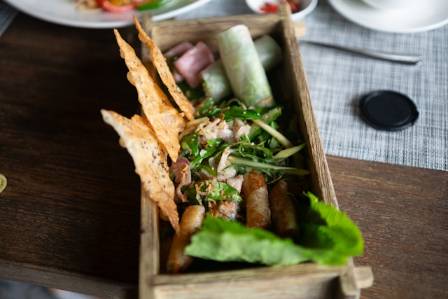
2. Fresh Summer Rolls and Crispy Spring Rolls (Goi Cuon / Nem Ran)
For a lighter bite, Summer Rolls (Goi Cuon) offer a burst of freshness. These are translucent rice paper wraps filled with vermicelli, fresh greens, and protein, usually served with a rich peanut dipping sauce. For those seeking something more indulgent, Nem Ran (fried spring rolls) provide a crunchy, golden alternative. Both versions are fundamental appetizers found on almost every local menu.
3. Vietnamese Baguettes (Banh Mi)
A clear testament to French colonial influence, the Banh Mi is perhaps the world’s most famous sandwich fusion. These airy, crispy baguettes are typically smeared with pork liver pâté and mayonnaise, then stuffed with Vietnamese sausage, pickled daikon and carrots, cucumber, and fresh cilantro. It is a hearty, portable meal that provides a satisfying textural contrast to the country’s many noodle-based dishes.
4. Charcoal-Grilled Pork (Thit Nuong)
Barbecue lovers will find their match in Thit Nuong. This pork is marinated in a savory-sweet glaze and grilled over glowing coals until caramelized. It is incredibly versatile: you can find it skewered as a street snack, tucked into a Banh Mi, or served over a bowl of dry rice noodles (Bun Thit Nuong). The smoky aroma of grilling meat is a constant presence in Vietnamese city streets.
5. Savory Sizzling Crepes (Banh Xeo)
Banh Xeo is a crispy, savory crepe made from rice flour and turmeric, which gives it a vibrant yellow hue. It is usually stuffed with pork, shrimp, and bean sprouts. To eat it like a local, tear off a piece of the crepe, wrap it in a large lettuce leaf along with mint and mustard greens, and dip the bundle into Nuoc Cham—a classic dipping sauce that hits every flavor note: sweet, sour, salty, and spicy.
6. Beef Vermicelli Salad (Bun Bo Nam Bo)
For those looking for a "soupless" noodle experience, Bun Bo Nam Bo is a perfect choice. This dish features tender stir-fried beef served over soft vermicelli noodles. It is garnished with a generous amount of crunchy peanuts, fried shallots, and fresh herbs. A light dressing of diluted fish sauce is poured over the top, creating a refreshing and filling salad that highlights the quality of the ingredients.
7. Heritage Pork Noodles (Cao Lau)
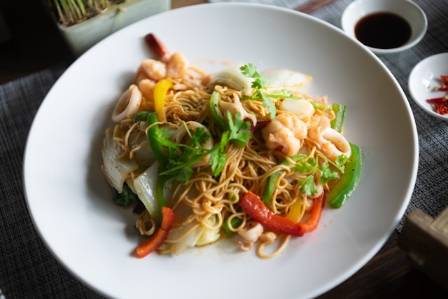
Unique to the historic port town of Hoi An, Cao Lau is a dish defined by its exclusivity. The thick wheat noodles have a firm, chewy texture similar to Japanese udon. These are topped with succulent slices of pork and a small amount of concentrated broth. Garnished with crispy rice crackers and local greens, Cao Lau represents the fascinating intersection of Japanese, Chinese, and Vietnamese trading history.
8. Savory Chicken Sticky Rice (Xoi Ga)
Sticky rice is far more than a side dish in Vietnam; it is often the main event. Xoi Ga is a popular, comforting meal consisting of a mound of glutinous rice topped with shredded chicken and crispy fried shallots. Seasoned with soy sauce and sesame, it is a dense, energy-packed dish frequently enjoyed for breakfast or as a substantial midday snack.
9. Unique Egg Coffee (Ca Phe Trung)
Vietnam’s coffee culture is legendary, often defined by strong beans and sweet condensed milk. However, the Egg Coffee of Hanoi is a must-try specialty. It features a creamy, meringue-like fluff made from whisked egg yolks and sugar poured over intense Vietnamese espresso. The result is a rich, custard-like beverage that tastes remarkably like liquid tiramisu.
10. Draught Beer Culture (Bia Hoi)
Bia Hoi is more than just a beverage; it is a social institution. This light, fresh draught beer is brewed daily and delivered to street corners every afternoon. It is incredibly affordable, making it the focal point of local nightlife. Sitting on a small plastic stool on a busy sidewalk with a glass of Bia Hoi is the quintessential way to soak up the energy of a Vietnamese evening.
Frequently Asked Questions
Where are the best places to eat in Hanoi and Ho Chi Minh City?
In Hanoi, look for legendary spots like Pho 10 Ly Quoc Su or Banh Mi 25. In Ho Chi Minh City, Cuc Gach Quan and Banh Mi Huynh Hoa are highly regarded. Both cities offer a mix of humble street stalls and refined dining rooms.
Is it easy to find vegetarian options?
Yes. Buddhism has a strong influence on Vietnamese cuisine, meaning "Com Chay" (vegetarian food) is widely available. Many standard dishes can be made meat-free upon request, and dedicated vegetarian restaurants offer creative plant-based versions of classics like Pho and spring rolls.
What is the secret to the flavor in most dishes?
The backbone of Vietnamese seasoning is Nuoc Mam (fish sauce). It provides an essential umami depth to broths and serves as the base for almost every dipping sauce. Even if you aren't a fan of fish, you'll likely find that its savory quality is what makes the food so addictive.
More to explore

· en
Chinese Blue Breasted "Button" Quail
Cassiel Ward

· en
Exploring Solar Sail: Next-Gen Propulsion for Interstellar Travel
Nathan Cole

· en
Fun Facts About Clownfish
Sophie Hayes

· en
The temples on the Acropolis of Athens
Mirelle Ashford

· en
The Remarkable Impact of Indoor Plants on Psychological Wellness
Jordan Gray

· en
Nagasaki’s Glittering Secret: A Practical Guide to Omura’s Glass Beach
James Anderson