Feature story
The temples on the Acropolis of Athens
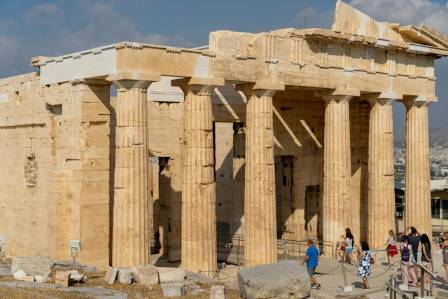
Rising dramatically above Athens, the Acropolis, meaning “high city,” is widely regarded as one of the defining symbols of both ancient and modern Greece and of Western civilization as a whole. It is therefore unsurprising that it ranks among the most visited archaeological sites in the world. At its core, the citadel is a limestone outcrop that was already enlarged in Antiquity through the construction of enormous artificial terraces. The honey-colored marble structures standing on top are largely the result of an ambitious rebuilding program led by the Athenian statesman and general Pericles during the second half of the fifth century BCE.
Mirelle Ashford
Writer
Lounge note
Settle in — the full story and key updates are below.
Desk
Entertainment
Rising dramatically above Athens, the Acropolis, meaning “high city,” is widely regarded as one of the defining symbols of both ancient and modern Greece and of Western civilization as a whole. It is therefore unsurprising that it ranks among the most visited archaeological sites in the world. At its core, the citadel is a limestone outcrop that was already enlarged in Antiquity through the construction of enormous artificial terraces. The honey-colored marble structures standing on top are largely the result of an ambitious rebuilding program led by the Athenian statesman and general Pericles during the second half of the fifth century BCE.
This era is now regarded as the Classical period in its fullest expression. It represented the height of the Athenian city-state and was characterized by extraordinary achievements in art, architecture and intellectual life. Yet the monuments commissioned under Pericles were not the first temples to occupy the Acropolis. They replaced earlier structures that had stood there during the Archaic period until 480 BCE, when an invading Persian army commanded by King Xerxes I destroyed them by fire.
The devastation of the Acropolis deeply affected the Athenians. In the centuries that followed, the Persian invasion became an important subject in Athenian visual art, theater and literature. On the Acropolis itself, damaged and blackened buildings and objects appear to have been intentionally preserved as lasting reminders of the disaster.
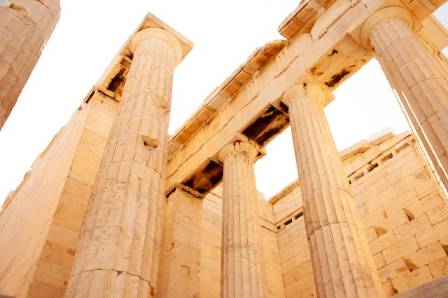
The scale of the loss becomes easier to understand when considering the religious importance of the Acropolis. The citadel was the sacred home of Athena Polias, meaning Athena “of the Acropolis,” the city’s principal deity. Other gods and goddesses were worshipped there as well, but the most important temples, including the magnificent Parthenon and the smaller temple famous for its sculpted maidens known today as caryatids, were associated with Athena Polias.
Modern visitors walking around these remarkable monuments are usually introduced to many different stories. These include their mythological beginnings, the restoration campaigns carried out over successive centuries, and the political disputes surrounding the sculptures now held in London’s British Museum, commonly called the “Elgin Marbles” or “Parthenon Marbles.” Yet concentrating on the later history, ownership and presentation of these sculptures can distract from a more fundamental question: what did these temples actually do in Antiquity?
Temples as repositories of sacred treasures
The temples of the Acropolis, like religious buildings elsewhere in ancient Greece and in many other cultures, served as places where offerings and valuable objects were stored. Archaeological research on the Acropolis has uncovered numerous dedications, and inscriptions on some of these objects identify them as offerings to Athena.
Many of these artifacts can now be seen in the Acropolis Museum and the National Museum of Athens. One particularly remarkable example is a bronze lamp fashioned in the shape of a warship. It was discovered inside the Caryatid Temple and carries the inscription hieron tes Athenas, meaning “holy item of Athena.” The object is now housed in the Acropolis Museum.
Archaeological evidence, however, provides only a limited view of how Greeks collected and stored treasures in temples. This is especially true because many of the most valuable objects have not survived. The Acropolis is no exception. Through centuries of religious change, warfare and sieges, most of its precious holdings disappeared.
Fortunately, ancient record-keeping provides considerably more information than the surviving objects alone. Classical Athenians created extensive inventory inscriptions on marble slabs. Modern scholars have painstakingly reconstructed some of these records from fragments discovered during excavations. A number of them are now displayed at Athens’ relatively little-known Epigraphical Museum.
The Athenian inventory system
These inventories were prepared each year by a group of officials known as the tamiai, with tamias as the singular form. The practice of carving the records onto stone began around 434 or 433 BCE, when the Parthenon and possibly the Caryatid Temple were ready to receive treasures, and continued through the end of the fourth century BCE.
However, valuable objects were certainly stored on the Acropolis both before and after the period when these annual inscriptions were created. Important evidence for this comes from an inscription known as the “Hekatompedon decrees,” dated to 485 or 484 BCE. At that time, the older temples were still standing, several decades before the Persian army destroyed them in 480 BCE.
The inscription instructed the tamiai to open the doors of a structure called the Hekatompedon so that its treasures could be inspected at designated times. The building was most likely the predecessor of the Parthenon. Interestingly, the Parthenon itself was also originally referred to as Hekatompedon.
The practice can be compared with other ancient systems of recording and managing sacred property. Within the broader context of the Gods’ Collections project, the Classical Athenian approach shows similarities to record keeping associated with the temple of Mut at Karnak in Egypt and with Hōryūji in Japan.
The Athenian inscriptions record hundreds of objects and, when appropriate, provide their weights in gold or silver. The listed treasures covered an enormous range of objects, including vessels, crowns, armor, weapons, figurines, lamps, incense burners, furniture and musical instruments.
One particularly common form of treasure was the silver phiale, a shallow bowl normally associated with offerings. Inside the treasury system, however, these vessels appear to have functioned in much the same way as a form of stored wealth that could potentially be converted into money.
Although the inscriptions provide valuable information about the most important and expensive objects, they represent only part of what was present. Less valuable materials were generally not recorded. The sanctuaries must therefore be imagined as containing many additional objects made from bronze, stone, terracotta and wood, filling spaces both within and around the temples.
Wealth, religion, and Athenian democracy
The elaborate inventory system appears to have been designed to keep track of what entered and left the Acropolis. Its purpose was not simply administrative. The wealth was considered sacred because it belonged to the gods, most commonly Athena Polias or Athena Nike, the goddess associated with victory, although other deities also possessed treasures.
The Athenian historian Thucydides provides an extraordinary indication of the scale of this wealth. In his account of the period immediately before the Peloponnesian War, he states that the total value of the treasures on the Acropolis, excluding money, reached 500 talents. This amount corresponds to approximately 13 metric tons of silver.
Thucydides also explains that the treasures had a practical purpose. The state could borrow them during emergencies, including periods when money was required to finance warfare, provided that the borrowed value would eventually be restored to Athena or whichever god owned the objects.
This arrangement can be understood as partly reflecting the principles of Athenian democracy. Public administrators were expected to be accountable, and annual inscriptions created a transparent record that allowed the accumulated wealth to be measured and checked for possible theft.
There is evidence that treasures did sometimes disappear. During the fourth century BCE, a dishonest tamias named Glauketes was accused of stealing an extraordinary gilded Persian sword known as an akinakes. The weapon had reportedly belonged to Mardonios, a prominent Persian general and enemy of Athens.
For modern researchers, the inventory inscriptions provide a remarkable record of the wealth that once filled the Acropolis. Without them, almost none of these precious objects would be known to us, because the treasures themselves have disappeared.
Athena as the greatest treasure
Perhaps the most extraordinary treasure associated with the Acropolis was Athena herself, represented by the enormous chryselephantine statue created by the celebrated sculptor Phidias.
The statue stood in the large eastern chamber of the Parthenon, where the surviving base of its pedestal can still be seen. The original has vanished since Antiquity, but written descriptions and smaller copies provide some indication of its impressive appearance.
Athena was approximately 12 metres tall and wore the military equipment traditionally associated with her. Mythological scenes and figures decorated her helmet, shield and sandals. In one hand she held a life-sized image of Nike, apparently presenting victory to those who approached the goddess.
Despite the enormous religious significance of the statue, it was still considered part of the wider treasury system of the Acropolis. Athena’s golden clothing could be removed when the state needed the precious metal.
The idea that even the goddess could be “undressed” helps explain why some modern writers have described the Parthenon as functioning more like a bank than a temple. Yet such a description oversimplifies the situation. Storing wealth was an essential function of Greek temples, and the financial role of the Parthenon does not make its religious purpose any less important.
Where the treasures came from
The wealth accumulated on the Acropolis was not gathered all at once. It developed over many generations as offerings arrived from the Athenian state and from private individuals. Participants in religious and athletic competitions were among the groups who made dedications.
The inscriptions occasionally preserve the names of those who offered particular objects. One especially famous individual associated with the records was Roxane, a princess from Central Asia who later became the wife of Alexander the Great.
According to the inventory records, she may have dedicated a silver drinking horn, or rhyton, to Athena. If the tamiai correctly identified its donor, Roxane apparently chose to offer a valuable object to Athena despite living far from Athens.
Such a dedication would not have been unusual in principle. The Acropolis was the most prominent sanctuary of Athena in the ancient world, and its religious importance could attract offerings from people who lived far beyond Athens.
What the inventories reveal about the Acropolis
The inventory inscriptions are especially valuable because they do more than list objects and their value. They also provide clues about where the treasures were kept. This information helps researchers reconstruct the layout of the Acropolis temples, an area that remains incompletely understood even after centuries of archaeological investigation.
The location headings in the inscriptions mention several names, including Hekatompedos Neos, meaning “Hundred-foot Temple,” Proneos, or “Fore-temple,” Opisthodomos, meaning “Backroom,” Archaios Neos, or “Ancient Temple,” Parthenon, meaning “Place of the Virgins,” and Chalkotheke, or “Bronze-store.”
Researchers continue to debate the precise archaeological identities of some of these rooms and buildings. There is, however, broad agreement about the Hekatompedos Neos. Confusingly from a modern perspective, this name appears to refer to the eastern chamber of the building we now call the Parthenon, which in Antiquity was itself sometimes called Hekatompedon or Hekatompedos Neos.
One of the strongest pieces of evidence is the fact that the inscriptions describe the colossal statue of Athena as standing in the Hekatompedos Neos. Since the statue was certainly located in the eastern chamber, the identification is highly persuasive.
Scholars have proposed that the treasury referred to as the Parthenon occupied a smaller room within the same building. Another interpretation, however, places the Parthenon treasury in the western portion of the Caryatid Temple.
This latter possibility is based on indications that the western section was connected to the Temple of Athena Polias and was specifically associated with the mythical virgin princesses of Athens. In that context, the name Parthenon, meaning “Place of the Virgins,” would be particularly appropriate.
Treasures used for rituals and festivals
The treasures stored on the Acropolis were not necessarily valuable only because of their financial worth. They may have served a variety of additional purposes, although the inscriptions rarely explain why a particular object was important or exactly how it was used.
Thucydides provides one important clue when he describes certain treasures as “holy objects for the processions and the games.” He was probably referring to the Panathenaia, Athens’ most important religious festival, which included athletic competitions held in honor of Athena.
The Parthenon’s sculpted frieze almost certainly depicts a procession connected with the Panathenaia. Among its reliefs are women carrying vessels and incense burners that resemble objects documented in the treasury inscriptions.
This suggests that at least some of the objects stored on the Acropolis played active roles in religious ceremonies and public celebrations rather than simply being passive reserves of wealth.
Ancient objects and historical memories
Other treasures may have been preserved because of their historical significance rather than simply because they were made from valuable materials.
This possibility offers a convincing explanation for several unusual objects recorded in the treasury known as the Parthenon. These included a gilded mask that recalls Bronze Age burial customs in Greece, a mysterious gilded representation of a wheat field and an ivory object bearing what were described as “Phoenician” letters.
Such artifacts may have been ancient objects whose value came partly from their real or perceived age. Their collection on the Acropolis can be compared with the preservation of archaeological objects in Thai monasteries.
Another useful comparison comes from the sanctuary of Athena at Lindos on the island of Rhodes. There, treasures accumulated over many years were recorded in an inscription along with stories about their supposed donors. These accounts included a cuirass said to have belonged to the Egyptian pharaoh Amasis and a mixing vessel attributed to Daedalus, the legendary inventor.
Treasures described by Pausanias
Further confirmation that ancient treasures remained inside the Acropolis temples comes from the writings of Pausanias, the second-century CE traveler and author of a famous guide to Greece.
Pausanias visited the Acropolis roughly five centuries after the Classical inventory inscriptions were created. During his tour, he selectively recorded some of the treasures he encountered.
Inside the Caryatid Temple, which he called the “Temple of the Polias,” he considered three objects notable enough to mention: a folding chair, a cuirass and a Persian sword.
The folding chair was traditionally believed to have belonged to Daedalus, although there is no explanation for how such an object supposedly made by the famous mythical craftsman came into Athenian possession.
The cuirass was said to have belonged to the Persian general Masistios. The sword was attributed to Mardonios. This appears to have been the same weapon that the tamias Glauketes was accused of stealing during the fourth century BCE, suggesting that the sword had eventually returned to the treasury where it belonged.
According to tradition, both the cuirass and the sword had been recovered from the battlefield of Plataea, where the Greeks defeated the Persians in 479 BCE.
Other ancient sources add that the stool used by the Persian king Xerxes while watching the naval battle of Salamis in 480 BCE was also preserved on the Acropolis.
There is little reason to doubt that objects of these kinds were actually stored there. The inventory inscriptions from the Parthenon treasury mention several folding chairs, cuirasses, Persian swords and stools. What cannot be determined with certainty is whether the later stories attached to particular objects were historically accurate. Traditions could easily have transformed ordinary ancient objects into relics associated with famous people and dramatic events.
The Acropolis as an ancient museum
Pausanias’ observations about the Caryatid Temple, along with similar accounts from other Greek sanctuaries, suggest that Greek temples could operate in ways that resemble museums.
They accumulated objects that possessed either genuine historical significance or a reputation for historical importance. However, the comparison should not be taken too literally, because there is no certainty that these treasures were openly displayed for ordinary visitors in the same way objects are presented in modern museums.
Nevertheless, some objects within the Acropolis temples clearly carried historical meaning. They emphasized the age and prestige of the sanctuary while providing tangible reminders of important events from the past.
The connection with the Persian Wars was especially meaningful. Salamis and Plataea were major Greek victories, including victories for the Athenians, and they helped preserve the independence of the Greek city-states from the Persian Empire.
It was therefore particularly appropriate for objects associated with those battles to be stored on the Acropolis, a sacred site that had itself suffered destruction during the Persian invasion.
Keeping Persian objects within Athena’s sanctuary created a powerful symbolic message. The presence of enemy treasures inside the restored sanctuary emphasized the Athenian victory and the rebirth of the Acropolis after its destruction.
Treasure collecting after the ancient Athenian period
The Classical Athenians were not the only people who continued to place valuable objects in sacred spaces on the Acropolis.
After Christianity reached Athens, the Parthenon was transformed first into an Orthodox church and later into a Catholic church dedicated to the Virgin Mary. Like other important Christian churches, it would almost certainly have contained valuable religious objects.
Unfortunately, there is very little detailed information about the objects kept inside the Parthenon during its Christian period. Some medieval travelers, however, described unusual sacred features, including a holy light that reportedly burned without wood and a golden dove suspended above the altar that was said to rotate mysteriously within a golden circle or cross.
During the fifteenth century, after the Acropolis became a Turkish military garrison, the Parthenon church was converted into a mosque and equipped with a minaret.
Seventeenth-century accounts state that the building was highly respected by dervishes, the Islamic Sufi religious figures. According to these descriptions, the walls were decorated with taffeta cloths, colorful banners and unusual objects from foreign lands.
The building also contained two rectangular luminous stones that visitors were forbidden to touch. Around them were reportedly arranged ostrich eggs, lamps and crystal balls.
Valuable objects therefore continued to occupy the Parthenon, which had survived largely intact through many centuries. Yet the distinctive Classical Athenian system, in which religious wealth was simultaneously integrated with state administration and political finance, had long since disappeared.
Destruction, restoration, and the birth of a modern museum
The Acropolis suffered catastrophic damage in 1687 when Venetian forces besieged the Ottoman defenders occupying the site. Venetian artillery struck the Parthenon, which was being used as a mosque, along with other buildings, reducing much of the complex to ruins.
The Ottoman forces returned soon afterward and constructed a small mosque within the remains of the earlier one. That mosque remained standing until well into the nineteenth century.
Beginning in 1833, after Athens became part of the newly independent Greek kingdom, the Acropolis underwent a systematic transformation. Ottoman additions that were now regarded negatively were removed, and the site was reshaped into a powerful symbol of Classical Greece.
The sacred character of the Acropolis did not disappear. Instead, the site gradually became something close to a holy monument of the Greek nation and, more broadly, of Western civilization.
The new “gods” of this modern sacred landscape were also given treasures. During the nineteenth century, archaeologists converted the small mosque inside the ruined Parthenon into the first museum for objects excavated on the Acropolis.
This may initially have been a practical solution because no dedicated museum building existed. Yet the symbolic meaning is difficult to ignore. Ancient Greek objects were being stored inside a former Ottoman mosque that itself stood within the remains of a Classical Greek temple.
Between 1864 and 1874, a new museum building was constructed on the southeastern side of the Acropolis. It remained in use until 2009, when the spectacular new Acropolis Museum opened in the lower city.
With the construction of this modern museum, the long tradition of keeping archaeological treasures on the Acropolis itself finally came to an end.
The enduring legacy of the Acropolis treasures
For the ordinary visitor today, little of this long history of collecting and storing treasures is immediately visible. Most people arrive to admire the surviving marble structures of Antiquity and to photograph the iconic monuments that have come to symbolize Athens.
Yet the museums of the city continue to preserve objects and inscriptions that reveal how central treasure was to religious life on the Acropolis.
These artifacts demonstrate that the sacred wealth of the citadel served several purposes at once. It had financial importance, played roles in religious rituals and festivals, preserved memories of important historical events and reinforced the prestige of the sanctuary.
The Acropolis was therefore far more than a collection of magnificent temples. Across centuries of political, religious and cultural transformation, it remained a place where sacred objects, wealth, memory and identity were brought together.
More to explore

· en
A Look at Some of the Littlest Vehicles from Around the Globe
Riley Brooks

· en
Top Four Iconic Aqueducts in France
Brielle Montrose

· en
Most Reliable SUVs
Anthony Morgan

· en
The Shape of Iceland: Traveling Along the Fjords
Nolan Mercer

· en
When Night Falls: The World's Most Spectacular City Skylines
Christopher Reed

· en
Meet 5 Largest Eagle Species
Mason