Feature story
The Structure, Uses, and Properties of Lotus Leaves
A lotus leaf is the broad, round foliage of the sacred lotus (Nelumbo nucifera), a water-loving plant that grows in ponds, lakes, and wetlands throughout Asia, Australia, and parts of North America. Rooted deep in muddy sediments, the lotus produces leaves that can reach nearly one meter in diameter.
Casey Brown
Writer
Lounge note
Settle in — the full story and key updates are below.
Desk
Entertainment
A lotus leaf is the broad, round foliage of the sacred lotus (Nelumbo nucifera), a water-loving plant that grows in ponds, lakes, and wetlands throughout Asia, Australia, and parts of North America. Rooted deep in muddy sediments, the lotus produces leaves that can reach nearly one meter in diameter.
These leaves are especially famous for their extraordinary water-repellent surface, a phenomenon known in science as the “lotus effect.” In addition to their biological significance, lotus leaves have long been valued in culinary traditions, herbal beverages, and traditional healing practices.
Size, Shape, and Growth Pattern
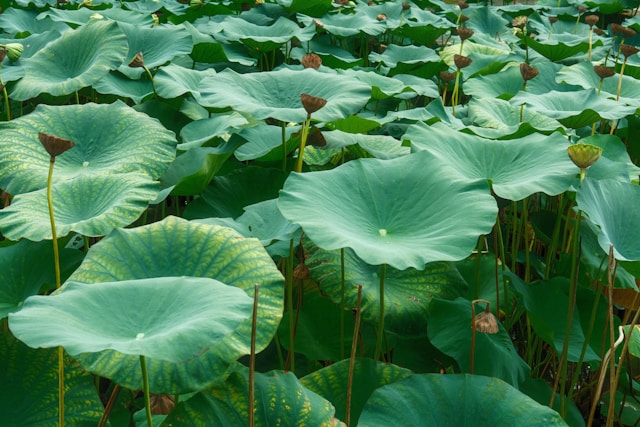
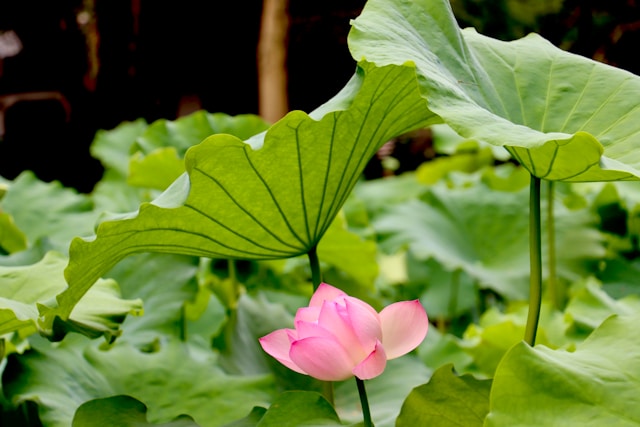
Lotus leaves are nearly circular in form, with smooth margins that lack any splits or indentations. Unlike most plants, where the stem connects at the edge of the leaf, the lotus leaf stalk attaches directly beneath the center, much like the handle of an umbrella. Veins extend outward from this central attachment point, while the leaf surface gently curves inward toward the middle, creating a shallow basin-like appearance.
Leaf size varies considerably, ranging from around 20 centimeters to nearly 100 centimeters across. Newly formed leaves float on the water's surface, but as they mature, sturdy stalks elevate them above the water. Fully developed leaves may stand as high as two meters above the pond. During winter, the plant survives through underground tuber-like roots buried in mud. With the arrival of warmer temperatures, fresh shoots emerge and send leaves upward to capture sunlight.
Why Lotus Leaves Stay Dry
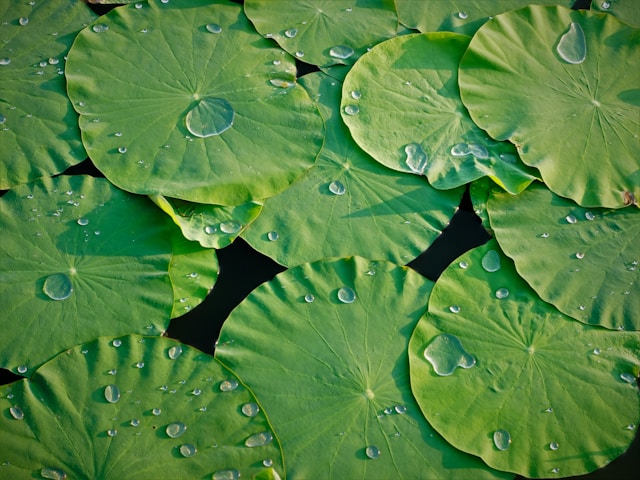
One of the most remarkable features of a lotus leaf is its ability to remain dry. Water droplets gather into nearly perfect beads and roll away effortlessly, carrying dust and dirt with them.
This effect results from the leaf’s highly specialized surface. The outer layer contains microscopic protrusions formed by epidermal cells, while an additional coating of tiny wax crystals sits atop these structures. Together, they create a rough texture at both microscopic and nanoscopic levels.
Because water touches only the tips of these tiny structures, air remains trapped beneath the droplets, preventing them from spreading. This creates an extremely water-repellent condition known as superhydrophobicity. Even when damaged, the lotus leaf can restore its protective surface. The microscopic structures recover first, followed by the regeneration of fresh wax crystals, allowing the leaf to maintain its self-cleaning ability throughout its lifespan.
A Natural Air-Transport Network
Lotus leaves possess a unique gas-exchange system that differs from most aquatic plants. Inside the leaf, stem, and roots is an extensive network of air channels that transport gases throughout the plant.
Large stomata located near the center of the leaf connect to these channels and regulate airflow. During the day, these pores open and close according to a specific rhythm, opening in the morning, closing around midday, and reopening later in the afternoon.
When the stomata close, airflow within the plant temporarily changes direction. This process helps push oxygen-rich air toward the submerged roots growing in oxygen-deficient mud. At the same time, carbon dioxide from the underwater environment may be transported upward to support photosynthesis. This active movement of air makes the lotus far more sophisticated than many other aquatic plants, whose stomata simply allow passive gas exchange.
Distinguishing Lotus Leaves from Water Lily Pads
Although lotus leaves and water lily pads may appear similar at first glance, several features make them easy to tell apart.
Water lily leaves generally float directly on the water's surface and contain a distinct notch extending from the edge toward the center. Lotus leaves do not have this opening. While young lotus leaves may float initially, mature leaves rise above the water on long stalks.
Another key difference is water repellency. Water lily leaves often become wet, whereas water droplets roll freely across lotus leaves without soaking in. Observing how water behaves on the surface is one of the easiest ways to identify a lotus leaf.
Lotus Leaves in Cooking
Dried lotus leaves are widely used in Asian cuisine, particularly in Chinese cooking, where they serve as natural wrappers for steamed dishes.
One of the most famous examples is lo mai gai, a traditional dim sum dish consisting of sticky rice, chicken, mushrooms, and seasonings wrapped in softened lotus leaves before steaming. Prior to use, the leaves are soaked in warm water to make them flexible and are often lightly coated with oil.
As the food cooks, the leaf imparts a subtle earthy aroma and delicate sweetness that cannot be duplicated by modern wrapping materials. Lotus leaves are also used to enclose fish, pork, and other ingredients throughout various Southeast Asian culinary traditions. In addition, dried leaves are commonly brewed into herbal tea with a mild, refreshing flavor.
Chemical Components of Lotus Leaves
Lotus leaves contain a variety of bioactive compounds, particularly flavonoids and alkaloids.
Scientists have identified at least fourteen flavonoids within the leaves, many of which are forms of quercetin, a powerful antioxidant also found in foods such as apples and onions. These compounds often occur in combination with different sugar molecules, influencing how they are absorbed by the body.
The leaves also contain alkaloids such as nuciferine and roemerine. These substances have attracted scientific interest because of their potential effects on the nervous system and metabolic processes.
A study involving female university students examined the effects of consuming lotus leaf extract three times daily over an eight-week period. Participants who consumed the extract experienced a measurable reduction in total cholesterol compared with the control group. Researchers also observed trends toward lower body fat, reduced abdominal fat, decreased triglycerides, and lower LDL cholesterol, along with slightly higher HDL cholesterol levels. However, these additional changes were not statistically significant. Current evidence suggests potential benefits for cholesterol management, although stronger proof is needed regarding weight loss and overall metabolic health.
Cultural Importance
The lotus plant carries profound symbolic value in numerous cultures and religions, especially Buddhism and Hinduism.
Its growth pattern—from roots buried in muddy water to a pristine flower rising above the surface—represents purity, spiritual development, and enlightenment. The leaf itself reinforces this symbolism through its ability to repel water and dirt while remaining clean and unblemished.
This symbolic and biological uniqueness has inspired extensive scientific research. Engineers and material scientists study the lotus leaf as a model for developing self-cleaning materials, waterproof coatings, and anti-fouling technologies. The leaf's natural design continues to influence innovations that combine efficiency, durability, and environmental adaptability.
More to explore

· en
The Three Cities of Malta: A Journey into Living History
Jack Peterson

· en
Chinese Trumpet Creeper Vine: Trumpet Creeper Care Basics
Lucien Blackwood

· en
Essential Guide to Sculpting Figures with Polymer Clay
Dorothy May Langford
· en
Paint Watercolor Sunflowers In Easy Steps
Skyler Quinn
· en
The Multiple Benefits of Green Apples
Isabella Grant

· en
Health Benefits of Exercise
Lucian Graves