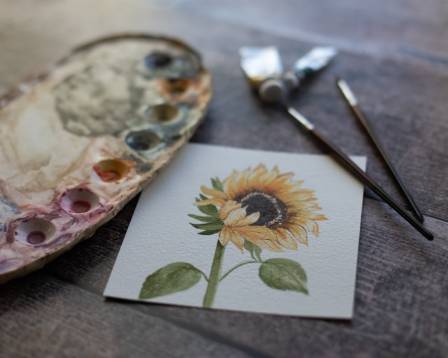
Feature story
Paint Watercolor Sunflowers In Easy Steps
Vincent Van Gogh’s abstract sunflower paintings from the 1880s remain iconic and continue to inspire artists around the world. In this guide, we’ll explore how to capture the vibrant energy of sunflowers in a loose, expressive watercolor style using just a few essential colors.
Skyler Quinn
Writer
Lounge note
Settle in — the full story and key updates are below.
Desk
Entertainment
Vincent Van Gogh’s abstract sunflower paintings from the 1880s remain iconic and continue to inspire artists around the world. In this guide, we’ll explore how to capture the vibrant energy of sunflowers in a loose, expressive watercolor style using just a few essential colors.
Tools & Supplies
Brushes:
Princeton Round Detail Brush 9650R-2
Princeton Heritage Series 4050 Round Brush
Watercolor Essentials:
Watercolor palette
Binder clips (to secure individual sheets)
Adjustable desktop easel
Paint Colors:
Ultramarine Blue (Winsor & Newton / Daniel Smith)
New Gamboge (Winsor & Newton / Daniel Smith)
Burnt Umber (Winsor & Newton / Daniel Smith)
Paper:
Arches Cold Press Watercolor Block, 9” x 12”, 140 lb
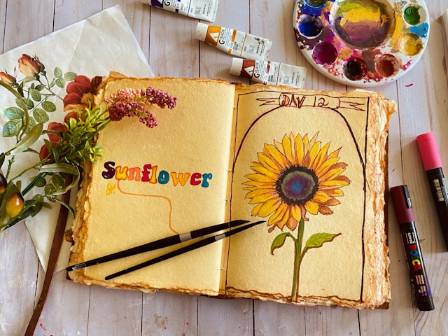
Step-by-Step: Painting Abstract Sunflowers
Step 1: Lay Down the Base Shapes
For a lively and spontaneous effect, work quickly. Pre-mix your colors and keep them in separate wells for convenience.
Mix a soft mid-green: 70% New Gamboge + 30% Ultramarine Blue, diluted to a thin, tea-like consistency.
Prepare a warm neutral for the sunflower centers: Burnt Umber + a touch of Ultramarine, cream consistency.
Tilt your paper about 30 degrees. Using the larger round brush, loosely paint three sunflower heads in New Gamboge. Focus on the general shapes, not individual petals. A springy synthetic brush works well for these organic forms.
Step 2: Paint the Stems
Using some of the pre-mixed green, add the stems. Allow the yellow flower to slightly blend with the green—natural color merging creates a lively effect. Avoid overworking the paint; a few confident strokes are enough.
Step 3: Add Leaves
Create a few leaf shapes along the stems, offset from each other rather than perfectly symmetrical. Connect them to the stems with thin lines.
Step 4: Build Up Stems and Leaves
Repeat the process for additional stems and leaves. Introduce darker green touches in some areas for depth and tonal variation.
This technique is called a variegated wash, where slight variations in hue mimic the natural diversity of color found in plants. It adds realism and visual interest.
Step 5: Paint the Flower Centers
Ensure the previous layers are mostly dry before moving on. Check the paper by lightly touching the back of your hand—if it feels cool, it’s still slightly wet.
Switch to a smaller detail brush and paint the seed clusters using the Burnt Umber + Ultramarine mix. The Ultramarine cools the brown slightly, giving a warm neutral that contrasts beautifully with the yellow petals.
Step 6: Shade the Petals
Once the centers are complete, glaze the petals with thin layers of New Gamboge to add dimension. Watercolor is transparent, so each glaze deepens the color of the underlying layer naturally.
By following this approach, you’ll create a lively, abstract sunflower painting that captures the essence of the flower without getting lost in minutiae. Loose shapes, wet-on-wet blending, and subtle variegated washes combine to make a dynamic and vibrant watercolor piece.
More to explore

· en
A Look at Some of the Littlest Vehicles from Around the Globe
Riley Brooks
· en
Cute Rabbits to Draw
Taylor Reed
· en
The Horned Grebe: An Aquatic Specialist
Michael Reynolds
· en
Everything You Need to Know About Guinea Pigs
Declan Frost

· en
Blue-breasted Bee-eater
Mason Carter
· en
Describe the beauty of the Jiangnan water town
Blake Rivers