← Back home5 min read
Feature story
Racing Steel: The World’s 10 Fastest High-Speed Trains
Blending speed with precision, high-speed rail systems have transformed modern travel. From Japan’s lightning-fast Shinkansen to the trailblazing French TGV, these marvels of engineering have redefined how nations connect.
A
Alex
Writer
Lounge note
Settle in — the full story and key updates are below.
Desk
Entertainment
Blending speed with precision, high-speed rail systems have transformed modern travel. From Japan’s lightning-fast Shinkansen to the trailblazing French TGV, these marvels of engineering have redefined how nations connect.
Once a niche innovation, these ultra-fast trains now rival planes in cost and efficiency, particularly as budget rail operators make waves across Europe. Nations like China, France, Japan, Italy, Germany, and Spain operate sophisticated rail networks, some pushing past 300km/h regularly.
Massive investments continue to shape this sector. Despite political delays and financial challenges—like those seen with California’s high-speed rail, Australia’s slow-moving proposals, or the UK’s beleaguered HS2 project—Asia dominates the development scene, especially with China’s rapidly expanding system.
Technological leaps like magnetic levitation are pushing the boundaries even further. With continued innovation, the next generation of trains promises even greater speed, environmental responsibility, and global integration.
Here’s a look at the ten fastest bullet trains currently in commercial service, ranked by routine operating speed.
1. Frecciarossa 1000 – 300km/h (Italy)
Crafted through a collaboration between Alstom and Hitachi Rail Italy, this Italian powerhouse—nicknamed the “Red Arrow”—was designed to challenge domestic rival Italo. Known officially as the ETR1000, it seats 457 and stretches 200 meters across eight cars.
Though engineered to hit 400km/h, it operates at 300km/h. One of its trainsets touched 389km/h in trials. The ETR1000 is also used in Spain under private operator Iryo.
A tragic derailment in 2020 near Livraga was the first deadly incident involving Italian high-speed rail, leading to tighter safety scrutiny.
2. KTX-Sancheon – 305km/h (South Korea)
South Korea’s high-speed journey began in 2004 with trains partially based on France’s TGV. The KTX-Sancheon, built by Hyundai Rotem, is the first fully domestically designed model. It gets its name from a native fish—the cherry salmon—and accelerates from zero to 300km/h in just over five minutes.
Currently, 71 sets are in operation. The newer EMU-320 variant is slated for launch, boasting faster acceleration and a top planned speed of 320km/h.
South Korea joins a small elite of countries to develop rail vehicles capable of topping 420km/h in test runs.
3. Renfe AVE 103 – 310km/h (Spain)
Spain’s AVE 103, part of Siemens' Velaro family, races along routes like Madrid to Barcelona at 310km/h. Introduced as part of Renfe’s high-speed expansion, these eight-car trainsets carry 404 passengers.
Interestingly, each set is built as two symmetrical halves with independent power systems. Passengers seated at the front can peer into the driver’s cab—unless the view is dimmed for privacy.
In testing, one reached 403.7km/h—a national speed milestone.
4. Al Boraq – 320km/h (Morocco)
Africa’s high-speed debut came with Morocco’s Al Boraq, linking Tangier and Casablanca via a mix of new and upgraded track. Operated by ONCF, this line uses double-decker Euroduplex trains built by Alstom.
With a capacity of 533, these trains run at 320km/h on a dedicated 323km stretch. Trial runs reached 357km/h. The $2 billion project slashed travel time by more than half, making it one of the continent’s premier infrastructure feats.
5. Shinkansen E5/H5 – 320km/h (Japan)
Japan’s famed Shinkansen network, the original high-speed rail pioneer, stretches nearly 3,000km today. Its E5 and H5 series trains operate at 320km/h.
The H5 version, tailored for colder climates, includes reinforced features like snowploughs and weatherproof connections.
The Shinkansen legacy also includes a prototype that hit 443km/h in 1996, while the future L0 Series Maglev—expected to begin service in 2027—is targeting a stunning 500km/h operation speed, with tests already reaching 603km/h.
6. SNCF TGV – 320km/h (France)

France’s high-speed legend, the TGV, has been setting records since the 1980s. Operationally, trains like the Duplex and POS models cruise at 320km/h, but experimental versions have broken global records, including 574.8km/h in 2007.
Produced by Alstom and run by SNCF, the TGV network also connects with neighboring countries including Germany, Italy, and the UK via the Channel Tunnel.
The latest generation, TGV-M, promises more efficiency and a 350km/h top speed when it rolls out.
7. ICE 3 – 330km/h (Germany)
Germany’s Intercity-Express 3 (ICE 3) represents a collaboration between Siemens and Bombardier. These sleek units usually operate at 320km/h but can legally reach 330km/h on specific lines, such as the Frankfurt-Cologne corridor.
On trial runs, some ICE 3 variants have touched 368km/h. The design influenced Siemens’ global Velaro series, which now serves countries from Spain to China—and soon, Egypt.
8. CR Fuxing – 350km/h (China)
China’s Fuxing series marks its leap into high-speed independence. Built without foreign tech licensing, these EMUs dominate routes like Beijing–Shanghai, reducing the journey to under five hours.
With routine operations at 350km/h and test runs at 420km/h, Fuxing represents China's technological confidence. A special variant even serves the high-altitude Qinghai-Tibet line.
This year, a batch of Fuxing trains will also begin operating in Indonesia on the Jakarta–Bandung route.
9. CR Harmony – 350km/h (China)
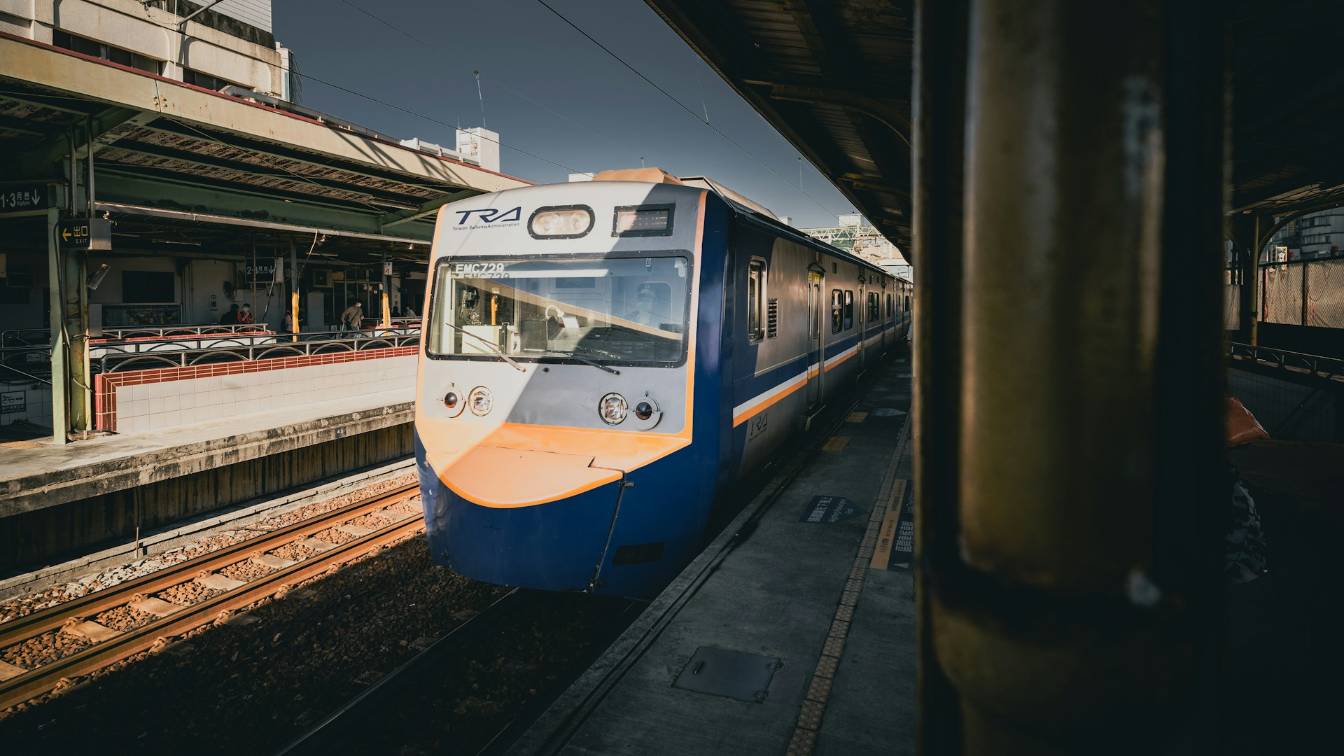
Before Fuxing, China developed its Harmony series under joint-venture agreements. Models like the CRH380A and CRH380D achieved record speeds of 486.1km/h and 483km/h, respectively, during testing.
Operating daily at 350km/h, these trains still rank among the fastest in active service. Harmony models were built with tech from global giants like Siemens and Bombardier, but gradually paved the way for China’s domestic expertise.
10. Shanghai Maglev – 460km/h (China)
Topping the charts is the Shanghai Maglev—an electromagnetic train that defies traditional rail mechanics. Launched in 2004, it connects Shanghai Pudong Airport with the city center in just over seven minutes.
Its regular cruising speed is 460km/h, but test runs have reached a blistering 501km/h. As the fastest passenger train in regular use, it represents the cutting edge of public transit technology.
More to explore

· en
Happily Seeking Waterfalls in North Bay
Vivienne Carlisle

· en
The Most Striking Crater Lakes on Earth
Nola Reeves

· en
Iconic Flower Paintings
Miles Grant

· en
Top 5 Most Famous Print Series in Art
Sophie Lane

· en
All about the Common European Robin
Selene Marlowe
· en
Explore the top luxury SUV lease offers available this January.
Olivia