← Back home3 min read
Feature story
Frozen Reservoirs: The Geology and Global Impact of Glaciers and Ice Sheets
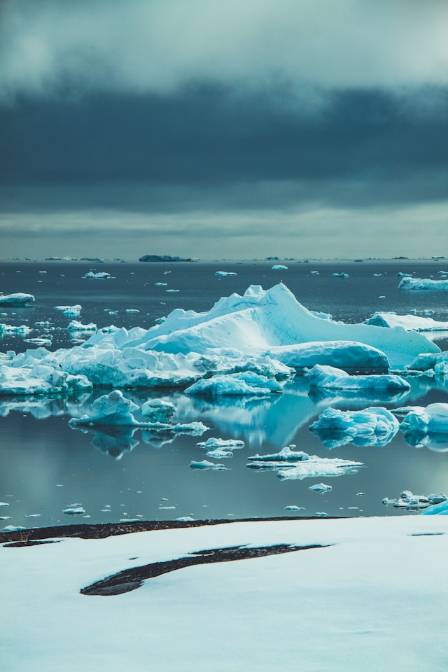
Glaciers are massive bodies of dense ice formed over millennia from accumulated snowfall. When such glacial ice expands to cover more than 20,000 square miles (50,000 square kilometers) of land, it is classified as an ice sheet. These frozen reservoirs are dynamic geological features critical to Earth’s freshwater supply and climate stability.
T
Theodore Davis
Writer
Lounge note
Settle in — the full story and key updates are below.
Desk
Entertainment
Glaciers are massive bodies of dense ice formed over millennia from accumulated snowfall. When such glacial ice expands to cover more than 20,000 square miles (50,000 square kilometers) of land, it is classified as an ice sheet. These frozen reservoirs are dynamic geological features critical to Earth’s freshwater supply and climate stability.
What Are Glaciers?
Glaciers originate in polar regions and high altitudes where winter snowfall exceeds summer melt. Over time, layers of snow compress into granular ice called firn. As new snow adds weight, the firn undergoes metamorphism, forming solid ice crystals. Due to this formation process, the U.S. Geological Survey (USGS) categorizes glacial ice as a mono-mineralic metamorphic rock.
Once snow accumulation outpaces ablation (loss), gravity drives the ice to flow downhill as a "river of ice." This movement is imperceptibly slow, often taking centuries for ice formed at the summit to reach the terminus. The oldest known glacier, located in Antarctica, dates back nearly one million years.
What Are Ice Sheets?
Earth currently hosts two major ice sheets: the Greenland Ice Sheet and the Antarctic Ice Sheet. Together, they span over 10 million square kilometers and contain more than 99% of the planet's freshwater ice. During the Last Glacial Maximum, similar sheets covered much of North America and Scandinavia.
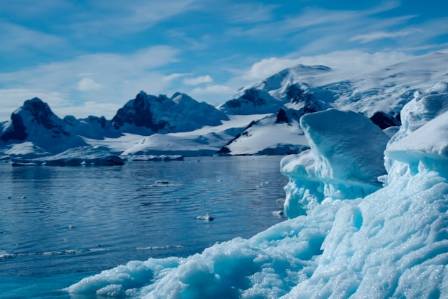
Unlike valley glaciers, ice sheets are dome-shaped, with ice flowing outward from the center. Internal stress and friction with bedrock cause the leading edges to fracture, forming crevasses and triggering calving—the breaking off of icebergs. These sheets often terminate in the sea as ice shelves, ice tongues, or tidewater glaciers.
Recent research in Greenland reveals how surface meltwater impacts flow rates. Each spring and summer, glacial lakes form atop the ice. As these lakes expand, fissures can open at their base, draining massive volumes of water directly to the bedrock. This water acts as a lubricant—likened to "grease on a railroad track"—dramatically accelerating the glacier's slide toward the ocean.
Why Are They Important?
Glaciers and ice sheets are vital for several reasons:
-
Freshwater Supply: Mountain glaciers feed rivers that provide drinking water and hydroelectric power to billions of people downstream.
-
Sea Level Regulation: Melting ice contributes directly to sea level rise. Since 1993, global sea levels have risen approximately 6.6 cm (2.6 inches). This trend threatens the roughly 10% of the global population living within five meters of the high tide line, increasing the frequency of coastal flooding and storm surges.
-
Ocean Circulation: The influx of freshwater from melting ice sheets, particularly in Greenland, reduces ocean salinity. This could potentially weaken the Atlantic Meridional Overturning Circulation (AMOC)—including the Gulf Stream—which distributes heat globally. A slowdown would drastically alter weather patterns across Europe and the Northern Hemisphere.
Monitoring and Research
Scientists monitor these ice masses to predict structural changes and future sea level impacts. By comparing snowfall accumulation against ice outflow, researchers determine if an ice sheet is stable, growing, or shrinking. Satellite technology allows for precise measurements of volume, velocity, melt rates, and overall mass balance. Current data indicates that Greenland and Antarctica are losing up to 120 gigatons of ice annually, with the rate of loss accelerating.
Additionally, glaciologists extract ice cores to study paleoclimatology. Trapped air bubbles preserve ancient atmospheric samples, while particulates record historical events like volcanic eruptions and dust storms. As ice melts at unprecedented rates, securing these cores for future research has become a race against time.
More to explore
· en
Fun Facts About Clownfish
Sophie Hayes

· en
8 Little-Known Facts About Independence Hall
Ethan Clark
· en
The Symbolism of Koi Fish in Asian Cultures You Should Know
Roy
· en
Top 10 Best Houseplants for Cleaner, Healthier Indoor Air
Shirely

· en
Five Most Mind-Blowing Facts About The Umbrellabird
Nora Whitman
· en
The most beautiful sea sunsets to see in Calabria
Rowan Blake