Feature story
Eurasian Red Squirrel Facts
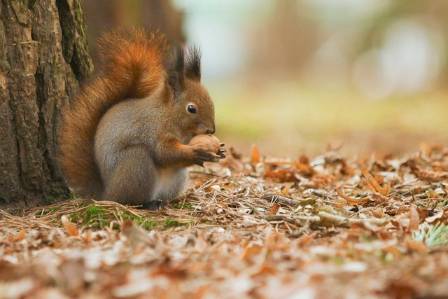
Countries often choose national animals that are famous for their strength or ability to hunt, but Denmark has selected a much more modest representative. The red squirrel symbolizes a legendary messenger: clever, alert, small in size, yet remarkably successful. In Norse mythology, this animal was said to travel up and down the world tree, carrying messages between the creatures living among its branches and those beneath its roots.
Elara Wynn
Writer
Lounge note
Settle in — the full story and key updates are below.
Desk
Entertainment
Countries often choose national animals that are famous for their strength or ability to hunt, but Denmark has selected a much more modest representative. The red squirrel symbolizes a legendary messenger: clever, alert, small in size, yet remarkably successful. In Norse mythology, this animal was said to travel up and down the world tree, carrying messages between the creatures living among its branches and those beneath its roots.
Red squirrels are widely distributed across Europe and Siberia, although their population in Britain has become seriously threatened. These arboreal rodents depend heavily on forests and woodlands for survival. They inhabit coniferous forests containing pines and spruces as well as broadleaf woodland, where they construct nests from twigs.
Their diet is mainly herbivorous and consists largely of tree seeds, nuts, berries, flowers, and young shoots. On occasion, they may also consume bird eggs and nestlings.
The dramatic decline of red squirrels in the United Kingdom will require substantial conservation work to reverse, but their situation also provides an important lesson about biodiversity and how ecological problems can be prevented in other regions.
These charming tree-dwelling specialists contribute far more to forest ecosystems than their appearance might suggest.
Interesting Red Squirrel Facts
1. They Are Highly Specialized for Life in Trees
It may seem obvious that a squirrel would be comfortable in trees, but not every squirrel species spends as much of its life in the canopy as the Eurasian red squirrel.
The Eurasian red squirrel differs considerably from the North American red squirrel. Although both belong to the same family, the North American species belongs to a different genus from both the Eurasian red squirrel and the invasive American gray squirrel. All of them are tree squirrels, but the Eurasian red squirrel is particularly well adapted to an arboreal lifestyle.
Its small body, exceptional agility, and constant appetite for nuts allow it to remain high among the branches, where it can avoid many predators. This tree-based lifestyle is also closely connected to the species' ecological importance and its conservation in Britain.
2. Nuts Are a Major Part of Their Lives
Finding food is one of the red squirrel's most important daily activities. Few animals fit the classic image of a nut-loving squirrel better than this species. Red squirrels spend large portions of the morning and evening searching for, collecting, and consuming nuts.
They construct untidy-looking nests made from twigs, known as dreys, usually placing them in the forks of tree branches. During spring and summer, they often use these nests as resting places around the middle of the day, particularly while waiting for the hottest part of the day to pass. They are generally solitary because of their shy nature, although several squirrels may sometimes share a nest during winter to conserve body heat.
Winter changes their routine considerably. Instead of spending long periods resting during the day, they devote much of their available daylight to searching for food, although the winter day itself is shorter.
Most of their activities take place high in the trees, but red squirrels also bury seeds for later use. Because they sometimes fail to recover their hidden food, they unintentionally perform an important ecological service.
3. They Help Plant New Trees
Red squirrels collect and hide large quantities of seeds, and some of these caches are inevitably forgotten. When a buried seed is left behind under suitable conditions, it can eventually germinate and develop into a new tree.
In this way, red squirrels act as effective ecosystem engineers. They regularly transport mature seeds away from their original locations and place them into the soil, sometimes leaving behind natural fertilizer as well.
Seed dispersal is essential for healthy forest communities. By spreading seeds away from the parent tree, animals such as squirrels reduce excessive crowding and help prevent closely related young trees from growing in the same immediate area. Their behavior therefore contributes directly to the long-term health and regeneration of forests.
4. Survival Is Difficult for Them
Despite their important ecological role, red squirrels face difficult conditions from the moment they are born. The chances of surviving their first year are relatively low.
As many as 85% of young squirrels may fail to survive their first winter. Their chances depend partly on the availability of seeds and partly on how successfully their parents have remembered the locations of food stores.
Surviving that first winter does not guarantee a long life. Wild red squirrels have an average life expectancy of only around three years, although individuals living under favorable and protected conditions can reach a natural lifespan of approximately ten years.
Even after reaching adulthood, each subsequent winter remains dangerous, with an estimated 50% chance of death during each winter period.
5. Woodpeckers Can Provide Useful Shelter
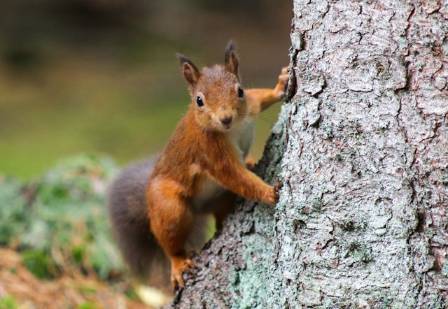
Finding an existing shelter is an effective way for an animal to conserve energy and improve its chances of surviving the winter. Rather than constructing every shelter from scratch, red squirrels can sometimes take advantage of cavities that have already been created in trees.
Woodpeckers are particularly helpful in this regard. The holes and hollow spaces they excavate in tree trunks can later be used by red squirrels as sheltered resting or nesting sites.
6. Habitat Fragmentation Creates Problems
The condition of their habitat is another major factor influencing red squirrel survival. Unfortunately, forests around the world are increasingly affected by fragmentation and deterioration.
The size of a woodland and how isolated it is can influence reproductive success in red squirrels. Larger forests with better connections between habitat patches generally provide young squirrels with better chances of surviving their first winter.
This problem is especially significant in Britain, where woodland is more fragmented and divided into smaller areas than in many other parts of Europe.
7. Their Numbers Have Fallen Dramatically in Britain
Red squirrels were once widespread throughout Britain, but their distribution has contracted severely. In England, they have largely disappeared from much of their former range and are now concentrated mainly in the north, while Scotland still supports relatively widespread populations.
Even where they remain present, however, their numbers represent only a fraction of their historical abundance.
Habitat loss is one major problem, but competition and disease associated with the introduction of American gray squirrels have made the situation considerably worse. Gray squirrels do not necessarily attack red squirrels directly, but they compete strongly for food and can carry squirrelpox, a disease that can be devastating to red squirrels.
Britain once had an estimated 3.5 million red squirrels. Today, England's population has fallen to approximately 40,000, while Scotland is estimated to have around 120,000.
Although the most severe effects of gray squirrels have occurred in Britain, their expanding populations also create concerns elsewhere in Europe as the invasive species continues to spread.
8. Pine Martens May Help Red Squirrels Recover
Another species that was once driven out of much of its former range in the British Isles may now be contributing to red squirrel conservation.
The pine marten has been gradually returning to parts of Britain through deliberate reintroduction programs and protection of populations within areas where the species historically occurred.
Interestingly, although pine martens are predators of red squirrels, they also prey on American gray squirrels. Gray squirrels tend to be larger and slower than red squirrels and spend more time on the ground, which can make them easier targets for pine martens.
As pine martens recover, their presence may therefore place greater pressure on gray squirrels while indirectly reducing one of the major threats facing native red squirrels.
9. Red Squirrels Show Why Biodiversity Matters
Ecologists and conservationists frequently emphasize the importance of biodiversity, and the relationship between red squirrels, gray squirrels, and pine martens provides a particularly clear example of why diverse ecosystems can be more resilient.
Biodiversity is not simply about preserving a collection of attractive animals. It represents the interconnected structure that allows ecosystems to withstand environmental changes and disturbances.
Pine martens and red squirrels are natural predator and prey, yet the removal of pine martens from parts of Britain ultimately contributed to a situation in which red squirrels faced greater long-term pressure from invasive gray squirrels.
The introduction and expansion of gray squirrels nearly eliminated red squirrels from large parts of Britain. In an unexpected ecological chain, restoring a native predator such as the pine marten has helped create an additional protective factor for red squirrel populations by putting pressure on their invasive competitor.
As red squirrel numbers recover, their seed-caching behavior can also increase the dispersal and regeneration of trees. More trees provide additional resources and habitat for insects, birds, mammals, and many other organisms, creating further ecological connections.
The broader lesson is that ecosystems with a greater variety of native organisms are generally better equipped to absorb change. When one species declines or disappears, other components of a healthy and diverse ecosystem may help compensate for the disruption.
The opposite is also true. Ecosystems with low biodiversity can be particularly fragile. A single disturbance, such as the introduction of a disease-carrying gray squirrel, a raccoon or domestic cat arriving on an isolated island without natural predators, can have disproportionately large consequences when few species are available to stabilize the system.
This principle extends far beyond charismatic mammals. It also applies to the countless invertebrates that pollinate crops, the microorganisms responsible for maintaining fertile soils, and the microbial communities associated with human skin and digestive systems.
Healthy ecosystems depend heavily on biological diversity, yet practices such as large-scale monoculture, excessive use of harmful fertilizers, and careless antibiotic use have placed many of these communities under significant pressure.
Restoring ecosystems that have been heavily altered or damaged by human activity is therefore an important part of addressing many ecological and even climate-related challenges. The red squirrel is a small example of a much larger lesson: protecting biodiversity means maintaining the complex relationships that allow nature to remain resilient.
More to explore
· en
Fascinating Realities of a Day in the Life of a Historic Lighthouse Keeper
Lucy Marshall
· en
A classical Chinese garden
Avery Rowan
· en
Bottlenose Dolphin Facts
Rachel Murphy
· en
Top 8 Essential Tips for Safe and Comfortable Mountain Travel
Becky
· en
Different Varieties Of Transmission Towers
Kellan Reed

· en
How to Make a Latte
Zane Holloway