Feature story
Different Varieties Of Transmission Towers
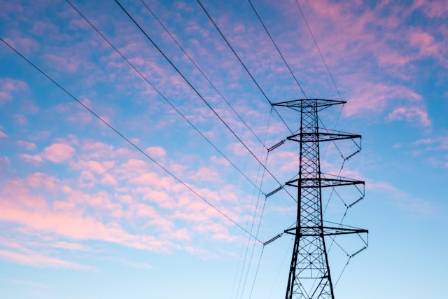
Every overhead high-voltage transmission line relies on a transmission tower for structural support. Also referred to as a power transmission tower, power tower, or electricity pylon, a transmission tower is a tall, specially engineered structure, most often constructed from a steel lattice framework, that carries high-voltage conductors along overhead power routes.
Kellan Reed
Writer
Lounge note
Settle in — the full story and key updates are below.
Desk
Entertainment
Every overhead high-voltage transmission line relies on a transmission tower for structural support. Also referred to as a power transmission tower, power tower, or electricity pylon, a transmission tower is a tall, specially engineered structure, most often constructed from a steel lattice framework, that carries high-voltage conductors along overhead power routes.
These structures are a fundamental part of large-scale electrical networks. They allow electricity to move securely and efficiently from generating facilities to substations across long distances.
Unlike ordinary utility poles, which are generally used to distribute electricity over shorter, local routes, transmission towers are designed to carry large amounts of electrical power through multiple high-voltage circuits. They may span rivers, valleys, industrial areas, and other difficult landscapes.
Their structural configuration, material strength, and geometric design allow them to withstand severe weather, substantial mechanical forces, and long conductor spans. Because of these demanding requirements, selecting experienced and dependable transmission tower manufacturers is essential for ensuring the safety and reliability of the power grid.
Types of Transmission Towers
Transmission towers can be divided into several major categories according to technical specifications, transmission-line requirements, and the conditions of the route.
Suspension Towers
Suspension towers are high-voltage structures primarily used when a transmission line follows a relatively straight path. Their main purpose is to support the conductors vertically, carrying the weight of the wires while experiencing relatively limited horizontal forces.
Depending on the voltage level and engineering design, conductors may be connected to suspension towers using I-shaped strings, V-shaped strings, or a combination of both.
These towers are generally installed along routes where the change in direction is less than approximately 5 degrees. Because straight-line sections make up much of many transmission corridors, suspension towers are among the most frequently used tower designs.
Transposition Towers
Transposition towers are important for maintaining electrical balance along extended transmission routes. In a three-phase transmission system, the positions of the conductors are periodically exchanged to help reduce electromagnetic effects, limit electrical imbalance, and preserve overall power quality.
These structures generally consist of a main tower body, cage section, and peak. Their configuration provides sufficient clearance between conductors and the tower's cross-arms, preventing unwanted contact.
Because conductor tension creates additional forces, transposition towers are designed to withstand both greater vertical and horizontal loads than some ordinary suspension structures.
Tension and Angle Towers
Tension towers, also known as angle towers, are used at points where a transmission line changes direction by more than approximately 5 degrees. At these locations, the conductors exert considerable sideways forces on the tower, resulting in higher mechanical stress.
To maintain structural stability, these towers incorporate stronger reinforcement and anchoring arrangements capable of resisting conductor tension and the resulting loads.
The portion of a transmission route located between two angle towers is known as a span section. Its length depends on several factors, including the characteristics of the terrain, available land, and the alignment of the transmission corridor.
Special Towers
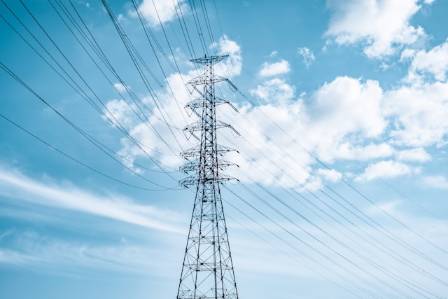
Special transmission towers are individually engineered for projects that present unusual structural or environmental challenges. Their designs are adapted to meet requirements that standard tower configurations cannot adequately address.
They may be required for large river crossings and valley crossings
They can be used in locations exposed to strong winds or irregular terrain
They are suitable for transmission routes requiring exceptionally long spans
They may be designed to cross above or below existing power lines
They can be engineered for areas exposed to severe weather conditions
They can also take the form of gantry structures at substations or connection and tapping points
Environmental conditions have a major influence on the design of these specialized structures. Factors such as wind pressure, soil conditions, ice accumulation, seismic activity, and other site-specific characteristics must be evaluated during engineering.
For complex projects, working with capable transmission tower manufacturers is important to ensure that customized structures are accurately designed, manufactured, and installed to the required standards.
Final Thoughts
Transmission towers are indispensable components of modern electrical infrastructure and play a vital role in maintaining a continuous supply of electricity. A weakness in their engineering, materials, manufacturing, or installation can result in serious outages, reduced operational efficiency, and significant safety risks.
A strong and properly engineered transmission network helps ensure that homes, businesses, industries, and public facilities can continue operating reliably without unnecessary interruptions.
For this reason, selecting experienced transmission tower manufacturers is an important consideration for any power transmission project. Reliable tower design and construction provide the structural foundation needed for a safe, stable, and dependable electricity grid.
More to explore
· en
8 Little-Known Facts About Independence Hall
Ethan Clark

· en
The Three Cities of Malta: A Journey into Living History
Jack Peterson
· en
Sydney Opera House: Iconic Landmark and Cultural Hub
Kairo Bennett

· en
Top 8 Fascinating Secrets of Baku’s Maiden Tower
Jack

· en
Twenty Two Fascinating Hidden Secrets You Might Not Know About Everyday Squirrels
Cooper Sebastian
· en
The world’s most realistic humanoid robots ever
Vincent Hale