Feature story
That Heady Scent of Spring: Lilacs
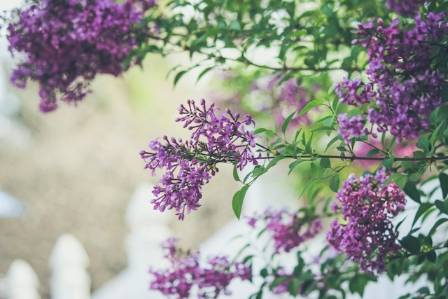
Lilacs were introduced to America by the earliest settlers and have remained beloved landscape shrubs ever since, and there are plenty of reasons for their lasting popularity. They are hardy, drought-tolerant, generally healthy, and capable of living for many years. They also produce abundant, beautiful flowers, and most varieties offer a wonderful fragrance. Even in the dry air of Colorado, the rich scent of lilacs can travel a considerable distance.
Kieran Mercer
Writer
Lounge note
Settle in — the full story and key updates are below.
Desk
Entertainment
Lilacs were introduced to America by the earliest settlers and have remained beloved landscape shrubs ever since, and there are plenty of reasons for their lasting popularity. They are hardy, drought-tolerant, generally healthy, and capable of living for many years. They also produce abundant, beautiful flowers, and most varieties offer a wonderful fragrance. Even in the dry air of Colorado, the rich scent of lilacs can travel a considerable distance.
When I was young, I was much more fascinated by insects than flowers, but one of my earliest memories of a flower comes from lying on a grassy hillside beside a lilac hedge covered in blossoms. The strong, sweet fragrance of the common lilac made an unforgettable impression. That powerful perfume is one of the plant's greatest attractions and one of the main reasons gardeners are willing to overlook some of its less convenient traits, including its large size and tendency to produce suckers.
The ability of lilacs to sucker, together with how easily they can be transplanted, helped them spread rapidly throughout America. By the 1650s, lilacs were already growing throughout the colonies, and pioneers later carried them westward. I recently pruned lilacs that had been planted by miners in the rocky foothills above Boulder. It is easy to imagine a rugged traveler, driven by dreams of gold and enduring the Colorado sun, giving some of his drinking water to a young lilac sucker.
Lilac Origins and Characteristics
Lilacs are native to the colder parts of southeastern Europe as well as northern China and Korea. The plant commonly known as Common Lilac, Syringa vulgaris, originated in Romania, Yugoslavia, and Bulgaria. This long-flowering species occurs in purple and white forms and is particularly valued for its fragrance. It can reach approximately 12–15 feet in height and spread into broad clumps, making it useful as a screening plant.
Because Common Lilac naturally occurs in limestone regions, it performs especially well in alkaline soils. Its considerable hardiness allows it to withstand Colorado conditions. Published references generally place it in Zone 4, while local growers report that it can survive in Zone 3 or even Zone 2 and at elevations reaching 10,000 feet.
Lilacs have undergone extensive hybridization, resulting in a remarkable range of flower colors and growth forms. At least 1,500 cultivars have been developed from Syringa vulgaris.
French Lilac Breeding
Beginning in the 1880s, French horticulturist Victor Lemoine began selecting and crossbreeding lilacs. The work became a family undertaking, with Victor directing the effort, Madame Lemoine climbing ladders to carry out the actual cross-pollination, and their son Emile eventually taking over the family business.
Together, they developed 214 successful varieties, now commonly referred to as French Lilacs. Both Victor and Madame Lemoine have had outstanding lilac varieties named in their honor.
After the work of the Lemoines, numerous other breeders continued developing lilacs, including several in the United States. One notable American breeder was Father John Fiala, who wrote the important reference book Lilacs: The Genus Syringa.
Notable Syringa Vulgaris Cultivars
‘Albert Holden’ produces deep violet flowers with silvery undersides, has a pleasant fragrance, and generally reaches 7–8 feet.
‘Arch McKean’ produces magenta-colored flowers, produces very few suckers, and grows to approximately 7–8 feet.
‘Beauty of Moscow’ (‘Krasavitsa Moskvy’) has fragrant, double white flowers and reaches around 10–12 feet. Fiala described it as “one of the finest lilacs in commerce.”
‘President Grevy’ produces excellent double blue flowers arranged in very large panicles.
‘Edith Cavell’ is considered an excellent cultivar, with double white flowers that create a particularly impressive display.
‘Monge’ has single, deep-purple flowers and is considered exceptionally showy. It grows to approximately 10–12 feet and has been thriving at the neglected Cheyenne Station in Wyoming.
‘Sensation’ is especially striking, producing purple flowers with contrasting white edges.
‘Marie Frances’ produces true soft-pink flowers with a strong, pleasant fragrance.
Other Lilac Species
In addition to Syringa vulgaris, the genus contains 22 other species, all originating in Asia. While not every species is well suited to gardens, several have contributed valuable characteristics to modern hybrid breeding, while others make attractive landscape shrubs on their own.
Syringa laciniata is occasionally available and is particularly attractive because of its deeply cut leaves and lavender flowers. It has a long flowering period and produces very few suckers.
Syringa meyeri is a compact species, and the cultivar ‘Palabin’ is available locally. It reaches about 5 feet, requires little pruning, and performs well in loose soils. Its deep-purple buds open into lavender-blue flowers, and the plant can thrive under dry conditions.
Syringa microphylla ‘Superba’ has the small leaves suggested by its name. It grows slowly to approximately 6–8 feet and spreads broadly. Small clusters of dark-pink, sweetly fragrant flowers appear during its main flowering period, with some additional blooms possible in summer and fall.
Syringa Oblata and Hyacinthiflora Lilacs
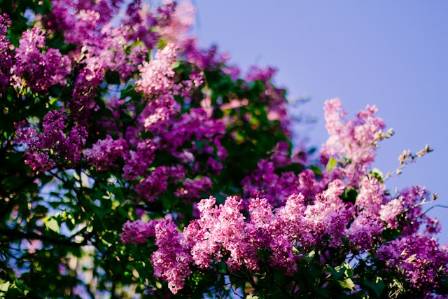
Syringa oblata is occasionally available. Although it flowers early, it is less vulnerable to freezing temperatures than S. vulgaris, making it a relatively dependable choice. Its flowers are pale purple, while the foliage turns wine red in autumn.
The variety dilatata is considered a superior form and produces very fragrant purple flowers. The cultivar ‘Cheyenne’ is also exceptionally fragrant.
Syringa x hyacinthiflora is a hybrid produced by crossing Syringa oblata with S. vulgaris. These plants flower approximately 7–10 days earlier than the French vulgaris hybrids. Their fragrant flowers may be white, lavender, or purple, while their autumn foliage becomes wine red.
These hybrids can form large, dense shrubs that perform well in Colorado, reaching about 10–12 feet. They can also serve as hedges because their leaves and flowers extend down toward the lower branches.
Although they are hardy to approximately 9,000 feet, their early flowering means they should not be planted in frost pockets or beside walls or buildings where warmth can cause the flowers to open prematurely and then become damaged by frost.
Locally available selections include ‘Mount Baker’, which produces very fragrant pure-white flowers; ‘Assissippi’, an especially early cultivar with fragrant lavender flowers; and ‘Pocahontas’, which has deep-violet, fragrant flowers.
Miss Kim Lilac
Syringa patula is a late-flowering species native to the mountains of South Korea. The selection ‘Miss Kim’ is known for its attractive compact growth habit and highly fragrant ice-blue to lavender flowers.
Its foliage develops a burgundy color in autumn, and the plant performs best in well-drained soil.
Preston Lilac Hybrids
Syringa x prestoniae represents a group of hybrids developed from Syringa villosa and S. reflexa. Canadian hybridizer Isabella Preston was responsible for creating these abundant bloomers.
They flower approximately 10–14 days later than S. vulgaris and have a spicy fragrance often described as “oriental.” These lilacs are extremely hardy, tolerating Zone 2 conditions and elevations of approximately 9,000–10,000 feet.
Unlike many other lilacs, they do not produce suckers and can be pruned into small, multi-stemmed trees.
Some cultivars available locally include ‘Isabella’, with lavender flowers; ‘James Macfarlane’, with pink flowers; ‘Miss Canada’, with deep-pink flowers; and ‘Minuet’, with purple flowers. Both ‘Miss Canada’ and ‘Minuet’ grow to approximately 6–9 feet.
Japanese Tree Lilac
Another favorite for Colorado landscapes is Syringa reticulata, commonly called the Japanese Tree Lilac. It can reach approximately 15–25 feet and produces white flowers in very late spring.
The cultivar ‘Ivory Silk’ has a more compact growth habit while retaining the species' attractive cinnamon-brown peeling bark. Its fragrance resembles that of privet rather than the sweet perfume associated with many other lilacs. It is hardy to Zone 4 and elevations around 6,500 feet.
Growing Conditions for Lilacs
Lilacs perform best in fertile, well-drained soil containing plenty of organic matter and receiving full sunlight. Common Purple and Common White lilacs can still perform well in lean, gravelly soil with very little organic material, but hybrids generally benefit from greater fertility, which encourages longer flowering periods and larger numbers of bigger flowers.
Father Fiala emphasized that commercial fertilizer cannot replace two-year-old manure and compost. Organic materials improve soil structure, help retain moisture, and support beneficial soil microorganisms.
Poor drainage, shade, and heavy subsoil are among the most unfavorable conditions for lilacs. If the available soil is heavy, wet clay, Father Fiala recommends creating a mound approximately 3 feet high using gravel, topsoil, manure, and compost, then planting the lilac at the top of the mound.
Another suitable approach is to plant near the upper portion of a slope rather than at its lowest point. Syringa vulgaris and its hybrids are among the lilacs most tolerant of heavy clay, but even these plants cannot tolerate soil that remains waterlogged.
Pruning Lilacs
The most useful pruning approach is to remove dead, damaged, and very old wood. Many suckers should also be removed, although the largest ones can be retained when they are not overcrowded.
Once a lilac shrub reaches maturity, remove approximately one-quarter to one-third of the oldest wood each year. The tallest branches can be reduced by about 10–20 percent, cutting them back to a side branch that grows outward.
Pruning should be completed soon after flowering. This timing helps ensure that the flower buds being formed for the following year are not accidentally removed.
Rejuvenating Old Lilacs
An old lilac that has stopped flowering well or has been neglected for many years can often be brought back to health if its root system remains healthy.
Begin by working composted manure into the upper 2 inches of soil, then apply a mulch layer approximately 3 inches deep.
Remove the oldest canes. If the shrub contains a large amount of dead wood, another option is to cut the entire plant back to ground level in early spring before new leaves emerge.
This severe pruning can renew the plant, but if the root system is already rotten, the shrub may not survive. A weak lilac should never be cut completely to the ground during summer because doing so could cause the plant to die.
Removing Spent Flowers
There is some disagreement about whether removing faded lilac flowers is worthwhile, but Father Fiala and the Arnold Arboretum both consider dead-heading beneficial when it is performed immediately after flowering.
Removing spent flower clusters can redirect the plant's energy and may contribute to better flowering and overall health in the following season. Although removing all the old flowers can be a substantial task, even removing approximately half of the spent blooms can make a noticeable difference.
Common Lilac Problems
Lilacs are generally healthy plants when they receive adequate drainage, appropriate pruning, and some organic matter. However, they can still encounter several problems.
In Colorado, a warm February and March followed by a sudden freeze in April or May can damage flower buds or open blossoms, potentially ruining an entire year's floral display.
Powdery mildew is another possible problem. It can cover the foliage with a nearly white coating. When the plant is otherwise vigorous, the disease usually does not cause serious damage. Removing and raking up fallen diseased leaves can help reduce the problem.
Several varieties, including Syringa meyeri, S. microphylla, S. reticulata, ‘Mme. Lemoine’, and ‘Pocahontas’, have resistance to powdery mildew.
The disease can also be treated with a non-toxic mixture of horticultural oil and baking soda. Use one tablespoon of each in one gallon of water. Another option is Green Cure, a product related to baking soda.
Lilac borers can create another potential problem by tunneling into the wood, which may weaken or eventually kill stems. Healthy, vigorous plants should be less vulnerable. Some growers have also reported that coating the lower trunks with a mixture of wood ash and water can discourage these insects.
Why Lilacs Are Worth Growing
Like every plant, lilacs have both advantages and disadvantages, but their positive qualities greatly outweigh their limitations. They are especially sustainable shrubs for Colorado because they are tough, drought-tolerant, and resistant to fire.
Gardeners can choose from an impressive range of plant forms, flower colors, flowering periods, and fragrances. By combining early-, mid-, and late-season varieties, it is possible to extend the period during which lilacs are in bloom.
A useful way to choose among the many options is to visit nurseries during spring when the plants are flowering. Seeing the different forms and colors in person and experiencing their fragrances can help you select the lilacs that appeal to you most.

More to explore
· en
How Long Is a Tamandua’s Tongue?
Seren Blake

· en
The Bund: Classical Architecture in Shanghai
Raphael Sinclair

· en
Exploring the Unique World of Elephant-Created Artworks
Augustus Wilder

· en
Discovering Grace Bay: A Turquoise Treasure of the Caribbean
Alex

· en
Viral Mango Mousse Cake
Henry Clark
· en
Steps to a Happy, Colorful Home
Lucy Warren