Feature story
Exploring Solar Sail: Next-Gen Propulsion for Interstellar Travel
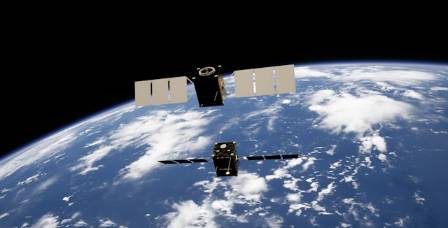
For generations, humanity has imagined traveling to other star systems. However, the enormous distances separating the stars make such journeys extremely difficult. Conventional rocket engines that rely on chemical fuel cannot achieve the tremendous speeds required for practical interstellar missions. Because of this limitation, researchers have been investigating new forms of propulsion, and solar sails have emerged as one of the most exciting possibilities.
Nathan Cole
Writer
Lounge note
Settle in — the full story and key updates are below.
Desk
Entertainment
For generations, humanity has imagined traveling to other star systems. However, the enormous distances separating the stars make such journeys extremely difficult. Conventional rocket engines that rely on chemical fuel cannot achieve the tremendous speeds required for practical interstellar missions. Because of this limitation, researchers have been investigating new forms of propulsion, and solar sails have emerged as one of the most exciting possibilities.
Solar sail technology uses enormous, lightweight reflective membranes that capture the momentum carried by light particles. Rather than burning fuel to create thrust, these sails are pushed forward by photons from the Sun or from powerful laser beams. This innovative concept offers a highly efficient method of space travel and could transform the future of deep-space exploration.
How Solar Sail Technology Works
The operation of a solar sail is based on radiation pressure. Although photons have no rest mass, they carry momentum. When light strikes a reflective surface, it transfers a tiny amount of force to that surface.
A solar sail takes advantage of this effect by deploying a vast mirror-like sheet in space. Each individual photon produces only a minute push, but the combined effect of countless photons over long periods can gradually accelerate a spacecraft to impressive velocities.
One of the greatest strengths of solar sails is their ability to continue accelerating without consuming fuel. Traditional rockets lose efficiency as their propellant supply decreases, while a solar sail can keep gaining speed as long as it receives light. In the near-vacuum of space, this continuous acceleration can eventually produce speeds that conventional propulsion systems cannot realistically achieve.
Solar Sails and Interstellar Missions
Scientists have proposed several mission concepts that rely on solar sail propulsion to reach nearby star systems.
A particularly promising approach combines solar sails with high-powered laser arrays located on Earth. Intense laser beams could provide a powerful and focused source of momentum, allowing spacecraft to accelerate to a significant fraction of light speed. At such velocities, journeys to neighboring stars could potentially be completed within decades rather than centuries.
One of the best-known proposals is the Breakthrough Starshot initiative. This concept envisions launching a fleet of miniature spacecraft equipped with ultra-light solar sails toward the nearby Alpha Centauri system.
Using an enormous ground-based laser network, these tiny probes could theoretically reach speeds approaching 20 percent of the speed of light. At that rate, they could travel to Alpha Centauri in only a few decades, making one of humanity’s first true interstellar missions possible.
Challenges That Must Be Solved
Despite its tremendous potential, solar sail propulsion still faces several significant obstacles.
Engineers must develop reliable methods for deploying extremely large sails in space without damage. Precise navigation will also be essential, especially for missions traveling vast distances between stars. Maintaining communication with spacecraft that may be trillions of kilometers away presents another major challenge.
Additionally, the materials used for solar sails must be exceptionally thin, lightweight, and durable enough to survive long-term exposure to space radiation and micrometeoroids.
Addressing these issues will require major advances in engineering, materials science, and spacecraft design.
Progress in Solar Sail Research
Research into solar sail propulsion continues to move forward. Scientists are conducting experiments, simulations, and technology demonstrations aimed at improving sail performance and reliability.
Advances in lightweight materials, nanotechnology, and manufacturing techniques are helping make solar sails more practical than ever before. As these technologies mature, the feasibility of using solar sails for ambitious deep-space missions continues to improve.
Each new development brings researchers closer to creating spacecraft capable of traveling far beyond the boundaries of our solar system.
A New Era of Space Exploration
Solar sails represent one of the most promising technologies for future interstellar travel. By harnessing the power of light rather than carrying vast amounts of fuel, they offer a fundamentally different approach to propulsion.
Although considerable technical challenges remain, the concept provides a realistic pathway toward exploring neighboring star systems. Projects such as Breakthrough Starshot demonstrate how solar sails could dramatically shorten travel times and open entirely new frontiers for humanity.
As scientific knowledge and technology continue to advance, solar sails may one day transform interstellar exploration from a distant dream into a practical reality. With every breakthrough, humanity moves one step closer to reaching the stars and uncovering the mysteries that lie beyond our solar neighborhood.
More to explore

· en
8 Little-Known Facts About Independence Hall
Ethan Clark

· en
Strategies for Selecting the Premier Rotisserie Chicken
Logan Patrick Montgomery

· en
Things we love about lemurs!
Freya Lennox

· en
10 Fun Facts About Kanazawa
Sophia Turner

· en
10 Famous Ships in History and How to Stay Safe on the Water
Paul

· en
A Comprehensive Guide to the Flavors of Vietnam
Gladys Irene Price